Ad Performance & Creative Testing
Prompts and testing systems for ads: hooks, angles, creatives, ad copy, iteration workflows, and ROAS/CPA diagnostics across platforms like Meta, Google, and LinkedIn.
Creative Ad Variations Made Easy With Prompt-Based Ideation
Creative Variation Prompts
Table of Contents
Creative Variation Prompts
Creative variation prompts are a simple way to generate more ad angles, hooks, and headlines without relying on last-minute inspiration. When you use creative variation prompts consistently, ad creation stops feeling like brute force and starts feeling like a repeatable system.

If you have ever stared at a blank screen trying to come up with yet another ad angle, headline, or hook, you already know how real creative fatigue is. It creeps in quietly. One day your ideas feel sharp and effortless, and the next day everything sounds recycled, forced, or strangely familiar. This is not because you suddenly became less creative. It is because modern advertising demands volume, speed, and constant novelty, all at the same time.
Platforms reward freshness. Audiences scroll fast. Attention windows shrink. What worked last month feels stale today, even if it technically performed well. That is why ad variations are no longer optional. They are the engine that keeps campaigns alive. Multiple hooks, multiple emotional angles, multiple visual and copy combinations allow you to test, learn, and adapt without burning everything down and starting over.
The problem is that most people try to create variations by brute force. They tweak a word here, swap an emoji there, change the background color, and call it a new version. Over time, this becomes exhausting. Worse, it leads to shallow variations that look different but feel the same. Audiences can sense that. Algorithms can sense that too.
This is where prompt-based ideation changes the game. Instead of relying on raw inspiration or last-minute pressure, prompts give you a structured way to think creatively. They act like rails that guide your imagination rather than limiting it. A good prompt does not tell you what to create. It tells you how to think about creating.
Prompt-based ideation works because it externalizes the thinking process. Instead of holding everything in your head, you use language frameworks to explore angles, emotions, contexts, and constraints. This reduces cognitive load and increases output quality at the same time. You are no longer asking, “What ad should I make?” You are asking, “What if I approached this ad from curiosity instead of urgency?” or “What would this message sound like if it came from a skeptic instead of a believer?”
When you adopt this mindset, creative fatigue becomes less of a wall and more of a signal. It tells you that you need a new lens, not more effort. Creative variation prompts provide those lenses on demand. It turns ad creation into a repeatable system instead of a daily struggle for inspiration.
Understanding Prompt-Based Ideation Without Making It Complicated
Prompt-based ideation sounds technical, but at its core, it is simple. A prompt is just a structured instruction that nudges your thinking in a specific direction. The magic comes from how specific and intentional that nudge is. Generic prompts lead to generic ideas. Thoughtful prompts lead to surprisingly original outcomes.
Think of prompts as creative constraints. Constraints are powerful because they narrow the field of possibilities. When everything is possible, nothing stands out. When you limit perspective, tone, audience awareness, or emotional intent, your brain starts making interesting connections.
For example, instead of asking for “five ad headlines,” a prompt might ask for “five ad headlines written as if the reader is already skeptical but curious.” That single shift changes word choice, pacing, and emotional weight. Suddenly the ad speaks to resistance instead of ignoring it.
Prompt-based ideation also works because it separates ideation from execution. Most people mix these two stages, judging ideas while they are still forming. Prompts create psychological safety for bad ideas, weird ideas, and half-formed ideas. Once you have volume, you can refine. Without volume, refinement becomes impossible.
Another important aspect is that prompts can be reused, remixed, and stacked. One prompt can generate multiple angles. Multiple prompts can explore the same angle in different ways. Over time, you build a personal prompt library that reflects your brand voice, audience, and goals.
What makes prompt-based ideation especially effective for ads is its adaptability. You can design prompts around emotions like curiosity, fear, relief, pride, or urgency. You can design prompts around formats like testimonials, confessions, contrasts, or micro-stories. You can design prompts around objections, desires, or unspoken frustrations.
Here are some common categories prompts tend to fall into when used for ad variations:
- Perspective-based prompts that change who is speaking or observing
- Emotion-driven prompts that anchor the message to a specific feeling
- Contextual prompts that place the product in a situation or moment
- Constraint prompts that limit length, tone, or structure
- Reversal prompts that flip assumptions or expectations
The goal is not to find the perfect prompt. The goal is to create a system where prompts continuously unlock new angles without draining your creative energy. Once you understand this, ideation stops feeling like guesswork and starts feeling like exploration. That is the real value of creative variation prompts.
Building Ad Variations Systematically Using Creative Variation Prompts
Once you grasp the concept, the next step is turning prompt-based ideation into a repeatable workflow. This is where many people fall back into old habits, using prompts randomly or only when they feel stuck. The real power shows up when creative variation prompts are baked into your creative process from the beginning.
Start by anchoring everything to a single core message. This might be your primary value proposition, offer, or transformation. The mistake is trying to reinvent the core idea for every ad. Instead, you want to keep the core stable and vary the framing around it.
From there, you can generate variations by applying different prompt frameworks to the same core message. Each framework acts like a different lens, revealing aspects you might not have noticed before.
One effective framework is the angle expansion framework. This focuses on how the message is positioned rather than what it says. Prompts here might explore curiosity, urgency, contrast, simplicity, or specificity. The same benefit can sound entirely different depending on which angle you amplify.
Another framework is the audience mirror framework. This forces the ad to reflect how the audience already thinks, speaks, or feels. Prompts might ask you to write as if the reader has already tried alternatives, already failed once, or already doubts bold promises. These variations often feel more authentic and grounded.
You can also use the tension and release framework. This revolves around identifying a friction point and resolving it. Prompts in this category highlight pain, confusion, hesitation, or trade-offs before offering clarity or relief. These ads work well because they feel emotionally complete rather than overly promotional.
Story-driven frameworks are another powerful option. Even short ads can carry narrative weight. Prompts here might compress a before-and-after moment, a single decision point, or a quiet realization. Story-based variations often outperform because they invite the reader to participate mentally.
To make this practical, many creators use a simple system:
- Define one core message
- Choose three to five prompt frameworks
- Generate multiple variations per framework
- Select and refine the strongest options
- Test and iterate based on feedback
The key is that you are not inventing ideas from scratch each time. You are running a creative engine with different inputs. This makes scaling ad production far more sustainable. Creative variation prompts keep the engine running without burning you out.
It also helps to separate idea generation from editing. During ideation, volume matters more than polish. During editing, clarity and alignment matter more than novelty. Prompt-based systems support this separation naturally.
Over time, patterns emerge. You start noticing which prompt types consistently produce strong results for your brand or niche. That insight becomes strategic leverage. You are no longer guessing what might work. You are building on what already does.
Making Prompt-Based Ideation a Long-Term Creative Advantage
The final shift is mindset. Prompt-based ideation is not just a tool for creating ads faster. It is a way of thinking that turns creativity into a renewable resource instead of a limited one. When used consistently, it compounds.
One of the biggest long-term benefits is reduced burnout. When you stop relying on sudden inspiration, creative work feels lighter. You approach it with curiosity instead of pressure. Even on low-energy days, prompts give you a starting point. Momentum follows action, not the other way around.
Another advantage is brand consistency. Because prompts can be designed around your voice and values, variations stay aligned even when they explore different angles. This solves a common problem where ads feel disconnected from each other despite promoting the same thing.
Prompt-based ideation also improves collaboration. Teams can share prompt libraries, frameworks, and results. Instead of debating subjective taste, discussions become more structured. “This version came from a skepticism prompt” is more useful than “I just liked how it sounded.”
There is also a learning loop built into the process. Every campaign teaches you something about which prompts resonate with your audience. That feedback informs future ideation. Over time, your prompts become smarter, sharper, and more predictive.
To make this sustainable, treat prompts as living assets. Review them regularly. Retire the ones that no longer spark good ideas. Evolve the ones that do. Add new prompts based on insights from comments, messages, and performance patterns.
Here are a few habits that help reinforce prompt-based ideation as a long-term advantage:
- Keep a running document of high-performing prompts
- Tag prompts by emotion, format, or objective
- Schedule ideation sessions separate from execution
- Reflect on which prompts feel energizing versus draining
- Continuously refine language to match your audience
When you do this, creative ad variations stop feeling like a chore. They become a natural byproduct of a well-designed thinking system. Instead of asking how to come up with more ideas, you start asking which direction you want to explore next.
That is the real promise of prompt-based ideation. It does not replace creativity. It protects it. It gives structure to imagination and momentum to execution. In a world where attention is scarce and expectations are high, that combination is not just helpful. It is essential.
Related Prompt Libraries
- Creative Angles Prompts
- High-Impact Ad Copy Prompts
- Google Ads Optimization Prompts
- The Complete Prompt Workflow for Improving Conversion Rates
Further Reading
Advanced Targeting Prompts to Improve Audience Quality
Advanced Targeting Prompts
Table of Contents
Advanced Targeting Prompts
If you have ever felt frustrated by high traffic that never converts, then advanced targeting prompts are what you need. Many creators, marketers, and business owners spend years chasing bigger numbers, only to realize that visibility without relevance leads to wasted effort. Audience quality is the difference between people who casually scroll past your content and people who stop, read, engage, and eventually take action. When your audience feels like you are speaking directly to them, trust builds naturally, and trust is what drives meaningful results.
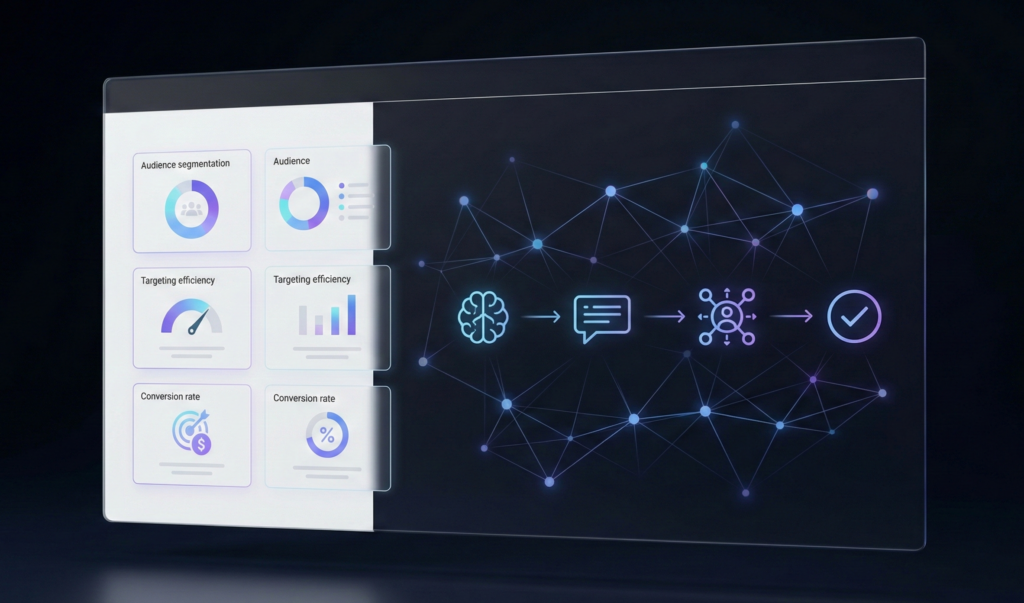
Audience quality matters because attention has become expensive. People are overwhelmed with content, offers, and messages competing for their time. When your message is too broad, it blends into the background noise. When it is precise, it feels personal. Advanced targeting prompts allow you to sharpen your messaging so it resonates with the right people instead of trying to appeal to everyone.
High-quality audiences tend to share common traits. They recognize themselves in your examples. They nod along when you describe a problem. They feel understood rather than sold to. This is not accidental. It is the result of intentional targeting at the prompt level, where you guide the AI to think like your ideal audience member rather than a generic reader.
Another reason audience quality matters is sustainability. A smaller, well-aligned audience often outperforms a massive but disengaged one. These people are more likely to return, recommend you to others, and stick around even when trends shift. Advanced targeting prompts help you build this kind of audience by filtering out mismatched readers before the content is even created.
Some common signs of low audience quality include high bounce rates, vague comments, low retention, and confusion about what you actually offer. On the other hand, high-quality audiences ask thoughtful questions, reference specific points you made, and see your content as relevant to their situation. This is where precise prompts come into play.
To understand the difference, think about the intent behind your content. Are you trying to impress everyone, or are you trying to connect with someone specific? Advanced targeting prompts push you to make that decision early. Instead of asking an AI to write for “business owners,” you guide it to write for a very particular type of person with specific challenges, goals, and constraints.
Here are a few mindset shifts that help clarify why audience quality should be your priority:
- Relevance beats reach every time when the goal is conversion
- Specific language creates emotional connection
- The right audience needs less convincing
- Precision reduces wasted effort
- Clear targeting builds long-term loyalty
When you focus on audience quality, your content feels calmer and more confident. You stop trying to shout louder and start speaking clearer. Advanced targeting prompts are the tool that helps you do exactly that, shaping every piece of content to attract people who are already aligned with what you offer.
What Makes a Targeting Prompt Advanced
Not all prompts are created equal. A basic prompt tells an AI what topic to write about. An advanced targeting prompt tells it who to write for, how to think, what to prioritize, and what to avoid. This difference might seem subtle at first, but it has a massive impact on the final output.
An advanced targeting prompt goes beyond surface-level demographics. Instead of only specifying age or profession, it dives into mindset, emotional triggers, experience level, and real-world context. It treats the audience as a living person rather than a data point.
For example, a simple prompt might say, “Write an article about improving marketing results.” An advanced targeting prompt would guide the AI to speak to a specific reader, such as someone who has already tried multiple strategies, feels burned out, and wants clarity instead of hype. The tone, examples, and structure immediately change.
Advanced targeting prompts also set boundaries. They tell the AI what not to include, which is just as important as what to include. This prevents generic advice, buzzwords, and filler content that dilute audience connection. Clear constraints lead to sharper messaging.
Another key trait of advanced targeting prompts is perspective control. You can instruct the AI to write from a certain point of view, such as a seasoned practitioner speaking to peers or a guide speaking to someone who feels stuck. This helps maintain consistency and credibility throughout the content.
Advanced targeting prompts also account for stage of awareness. Someone who is new to a topic needs reassurance and clarity. Someone experienced needs nuance and validation. Mixing these audiences leads to confusion, so advanced prompts clearly define where the reader stands.
Another element is language calibration. High-quality prompts specify whether the audience prefers simple explanations, strategic depth, or reflective insights. This avoids mismatched tone, such as overly technical content for beginners or oversimplified advice for experts.
To build advanced targeting prompts, you often combine several layers:
- Audience role or identity
- Current challenge or pain point
- Desired outcome or transformation
- Emotional state or motivation
- Preferred tone and depth
When these layers work together, the AI produces content that feels intentional rather than accidental. Readers sense that the message was meant for them, which dramatically improves engagement and retention.
Advanced Targeting Prompt Frameworks You Can Use
Creating advanced targeting prompts does not require guesswork. There are repeatable frameworks you can use to guide the AI toward higher audience quality. These frameworks act as mental checklists that ensure you are not missing critical context.
One effective framework is the “Situation-Emotion-Outcome” model. This approach forces you to think about where the reader is now, how they feel about it, and what they want to achieve. When included in a prompt, it produces content that feels empathetic and purposeful.
Another powerful framework is the “Before and After” perspective. This helps the AI contrast the reader’s current state with their desired future state. The content naturally becomes more motivating and clear because it highlights transformation rather than abstract advice.
You can also use a “Constraints and Reality” framework. This is especially useful for experienced audiences who are tired of unrealistic promises. By acknowledging limitations such as time, budget, or past failures, you immediately build credibility.
Here are several advanced targeting prompts frameworks you can experiment with:
Situation-Emotion-Outcome framework
- Before-and-After transformation framework
- Awareness-level targeting framework
- Constraint-aware realism framework
- Identity and values alignment framework
Each framework serves a different purpose, but all of them improve audience quality by narrowing focus. Instead of writing for an imaginary average reader, you write for a real person in a real situation.
You can also stack frameworks for even stronger results. For example, combining awareness level with constraints creates content that meets readers where they are while respecting their reality. This layered approach often leads to the highest engagement.
Language cues play an important role here. Advanced targeting prompts guide word choice, pacing, and structure. They encourage the AI to use examples that reflect the audience’s world rather than generic scenarios. This is where content starts to feel lived-in instead of theoretical.
Here is an example of how frameworks influence prompt depth:
Basic prompt: Write about improving audience engagement
Advanced prompt: Write for creators who already publish consistently but feel their audience is passive, acknowledge their frustration, avoid hype, and focus on practical shifts they can implement this month
The second version produces content that feels grounded and respectful of the reader’s experience. This is what improves audience quality over time.
Another framework worth mentioning is the “Objection and Belief” model. This helps address unspoken doubts that high-quality audiences often have. By guiding the AI to acknowledge skepticism or past disappointment, you reduce resistance and increase trust.
Advanced targeting prompts are not about complexity for its own sake. They are about clarity. The clearer you are about who you are speaking to, the easier it becomes for the AI to deliver content that attracts the right people and filters out the rest.
Applying Advanced Targeting Prompts for Long-Term Results
Using advanced targeting prompts is not a one-time tactic. It is a habit that shapes your entire content strategy. When applied consistently, it improves not only individual pieces of content but also the overall quality of your audience over time.
One of the biggest long-term benefits is alignment. Your content, offers, and messaging begin to attract people who already resonate with your approach. This reduces friction and shortens the path from discovery to trust. People feel like they know you because your content consistently reflects their reality.
Another benefit is feedback quality. As audience quality improves, so does the feedback you receive. Comments become more thoughtful. Questions become more specific. This creates a positive loop where audience insights help you refine your prompts even further.
Advanced targeting prompts also help you avoid content burnout. When you know exactly who you are writing for, ideas come more easily. You are no longer guessing what might work. Instead, you respond to real needs and patterns you observe in your audience.
To apply these prompts effectively, start by documenting your ideal audience in detail. Not just who they are, but how they think, what frustrates them, and what they value. Use this as a reference when crafting prompts so each piece of content builds on the last.
Here are practical ways to integrate advanced targeting prompts into your workflow:
- Keep a running list of audience pain points and desires
- Update prompts based on audience feedback and behavior
- Use consistent tone and perspective across content
- Review outputs for relevance before publishing
- Refine prompts rather than fixing content after the fact
Consistency is key. One well-targeted article helps, but a series of well-targeted pieces builds authority. Over time, your audience begins to self-select. People who are not aligned drift away, while those who are stay and engage more deeply.
It is also important to revisit and evolve your prompts. As your audience grows or changes, their needs shift. Advanced targeting prompts should be living tools that adapt rather than rigid templates you never touch again.
Another long-term advantage is efficiency. High-quality audiences require less persuasion. Your content does not need to overexplain or oversell. This makes your messaging cleaner and more confident, which further strengthens trust.
In the end, advanced targeting prompts are about respect. Respect for your audience’s time, intelligence, and experience. When people feel respected, they respond with attention and loyalty. That is the foundation of audience quality.
Related Prompt Libraries
- Ad Headline Prompts
- Creative Angles Prompts
- Creative Variation Prompts
- Google Ads Optimization Prompts
Further Reading
Ad Fatigue Detection Prompts to Refresh Your Campaigns in Minutes
Ad Fatigue Detection Prompts
Table of Contents
Ad Fatigue Detection Prompts Overview
Ad fatigue is one of those problems marketers feel before they can clearly explain it. Your ads are still running, the budget is still spending, but results quietly slide downhill. Click through rates dip, conversions slow down, and costs creep higher even though nothing “broke” technically. This is usually the moment when ad fatigue has already set in. Ad fatigue detection prompts can be used to get past this common hurdle.

At its core, ad fatigue happens when the same audience sees the same creative too many times. People stop noticing it, stop trusting it, or actively ignore it. In some cases, they even feel annoyed by it, which can hurt brand perception. The scary part is that ad fatigue rarely announces itself loudly. It shows up as small performance leaks that add up fast.
Many advertisers assume fatigue only affects large accounts running massive budgets. In reality, smaller campaigns can experience fatigue even faster because the audience pool is limited. If you are running ads to a tight interest group or retargeting a warm audience, repetition happens quickly. What worked beautifully for two weeks can suddenly feel invisible.
Traditional ad fatigue detection relies on manually checking dashboards. You watch metrics like frequency, CTR, CPC, CPA, and ROAS. While this works, it takes time and experience to interpret correctly. It also tends to be reactive instead of proactive. By the time you notice fatigue, you have already wasted spend.
This is where AI becomes incredibly useful. AI does not get emotionally attached to winning creatives. It can analyze patterns, compare time windows, and surface early warning signs without bias. When paired with ad fatigue detection prompts, AI can act like a second set of eyes that never gets tired.
Key early warning signs of ad fatigue that AI can help spot include:
- Rising frequency with flat or declining conversions
- Gradual CTR decay over several days
- Increasing CPC without targeting changes
- Stable impressions but declining engagement
- Comments or reactions shifting negative or indifferent
The mistake many marketers make is assuming ad fatigue means “kill the ad.” In reality, most fatigue can be fixed with smart refreshes. Sometimes it is the headline. Sometimes it is the hook in the first three seconds. Sometimes it is simply a new angle that reframes the same offer.
Ad fatigue detection prompts help you detect not just that fatigue is happening, but why it is happening. They give you clarity fast, without needing hours of manual analysis. That speed matters because every extra day of fatigue costs money and momentum.
When you understand ad fatigue as a pattern recognition problem rather than a creative failure, everything changes. Instead of guessing what to fix, you start making informed, fast adjustments. This sets the foundation for using AI prompts effectively.
Using Ad Fatigue Detection Prompts to Diagnose Ad Fatigue in Minutes
The real power of AI in ad fatigue detection is not automation. It is interpretation. AI can read performance data, summarize trends, and highlight anomalies faster than a human scanning dashboards. But it only works well if you ask the right questions.
Most marketers ask AI vague questions like “Why is my ad not performing?” That usually leads to generic answers. Strong prompts are specific, structured, and grounded in real metrics. They guide the AI to look for fatigue signals instead of guessing.
A simple diagnostic workflow starts with exporting recent performance data. This could be a 7 day versus 30 day comparison, or pre fatigue versus current performance. You do not need perfect data. You need directional clarity.
Once you have that data, ad fatigue detection prompts can help you interpret it through focused questions. For example, instead of asking what went wrong, you ask what changed and why it matters. This shift alone produces better insights.
Examples of diagnostic AI prompts include:
- Analyze this ad performance data and identify signs of audience saturation or creative fatigue.
- Compare CTR, CPC, and conversion trends over time and explain which metric indicates fatigue first.
- Based on frequency and engagement decline, estimate whether fatigue is creative, audience based, or offer related.
- Identify which elements of this ad are likely losing attention based on performance decay patterns.
These prompts push AI to act like a performance analyst rather than a copywriter. That distinction is important. At this stage, you are not refreshing ads yet. You are diagnosing the problem accurately.
One underrated advantage of AI is pattern comparison. AI can compare multiple ads or ad sets and tell you which ones are fatiguing faster and why. This helps you avoid blanket changes across campaigns when only one creative is the problem.
You can also use AI to simulate “what if” scenarios. For example, you can ask how performance might change if you refreshed visuals but kept copy the same, or if you expanded the audience but reused the creative. While not perfect, these simulations help guide smarter decisions.
Common fatigue diagnosis mistakes AI helps prevent include:
- Killing ads that are still profitable but temporarily flat
- Refreshing targeting when the issue is creative
- Refreshing creative when the issue is offer mismatch
- Overreacting to short term volatility instead of trends
The speed factor cannot be overstated. A skilled marketer might need 30 to 60 minutes to analyze multiple campaigns thoroughly. AI can surface the same insights in minutes, allowing you to spend your time fixing instead of diagnosing.
Once AI identifies likely fatigue causes, the next step becomes much easier. You are no longer guessing what to refresh. You are acting with direction, supported by ad fatigue detection prompts that keep your analysis structured.
AI Prompts That Instantly Refresh Fatigued Ads
Refreshing ads does not mean starting from scratch. In fact, starting from scratch often wastes valuable learning. The smartest refreshes preserve what works while changing what the audience has grown numb to. Ad fatigue detection prompts are perfect for this kind of controlled creativity.
The first rule of refreshing is to change one major variable at a time. This allows you to measure what actually improves performance. AI can generate variations quickly while staying anchored to proven elements.
Creative refresh prompts focus on specific components. You might refresh the hook, the headline, the visual concept, or the call to action. Each requires a different type of prompt.
Examples of hook focused AI prompts include:
- Rewrite the opening hook of this ad to feel new while keeping the same core promise.
- Generate five alternative first lines that create curiosity without changing the offer.
- Create hooks that target the same audience pain point but use different emotional angles.
Headline refresh prompts are slightly different because they must remain clear and compliant while feeling fresh. Good prompts guide AI toward variety without exaggeration.
Examples of headline refresh prompts include:
- Generate headline variations that keep the same benefit but use different phrasing styles.
- Rewrite this headline using a question based format instead of a statement.
- Create headlines that emphasize speed, ease, or simplicity without changing the claim.
Visual fatigue is often overlooked because performance dashboards focus on text metrics. AI can still help here by suggesting new visual angles rather than designing assets.
Visual refresh prompts include:
- Suggest new visual concepts that communicate the same message differently.
- Generate ideas for pattern interrupts in the first three seconds of a video ad.
- Propose visual storytelling approaches that refresh this ad without reshooting everything.
Offer fatigue is trickier. Sometimes the audience has not lost interest in the message, but in the incentive. AI can help reframe offers without reducing value.
Offer related prompts include:
- Reframe this offer to emphasize outcomes instead of features.
- Suggest alternative bonuses or framing that increase perceived value.
- Rewrite this offer for urgency without adding discounts.
One of the biggest advantages of AI is rapid iteration. You can generate multiple refresh options, review them quickly, and deploy the best ones the same day. This shortens the fatigue recovery cycle dramatically.
When using AI for refreshes, it helps to give it context. Include the original ad, the audience description, and the performance goal. The more grounded the prompt, the better the output.
Effective refresh strategies AI supports include:
- Rotating multiple hooks while keeping the same body copy
- Testing emotional versus logical framing
- Switching from problem focused to outcome focused messaging
- Introducing social proof angles when attention drops
- Refreshing CTAs to reduce friction
The goal is not to overwhelm the system with endless variations. The goal is to restore attention and relevance. AI simply makes that process faster and more systematic, especially when guided by ad fatigue detection prompts that keep your refresh focused.
Building a Repeatable AI Driven Ad Fatigue System
The real win is not fixing ad fatigue once. It is building a system that prevents it from hurting your campaigns long term. AI makes this possible even for small teams or solo marketers.
A repeatable system starts with routine monitoring. Instead of waiting for performance to collapse, you schedule regular AI check ins. This might be daily for high spend campaigns or weekly for smaller budgets.
A simple weekly workflow might look like this:
- Export last 7 days and last 30 days performance data
- Run ad fatigue detection prompts to identify early fatigue signals
- Flag ads approaching fatigue thresholds
- Generate refresh variations in advance
- Rotate refreshed creatives before performance drops
This proactive approach keeps campaigns feeling fresh without constant panic changes. It also helps maintain stable learning in ad platforms.
AI also helps with documentation and learning. You can ask it to summarize which refresh strategies worked best over time. This builds institutional knowledge instead of relying on memory.
Examples of learning focused prompts include:
- Summarize which creative refreshes reduced fatigue fastest in these campaigns.
- Identify patterns in which hooks fatigue faster than others.
- Analyze historical data to recommend ideal refresh timing.
Another powerful use of AI is audience segmentation insights. Fatigue does not always hit all audiences equally. AI can help identify which segments need refreshes sooner.
System level prompts include:
- Identify which audience segments show fatigue earliest and why.
- Recommend different refresh strategies for cold versus warm audiences.
- Analyze whether fatigue is driven by frequency or message mismatch.
Over time, this system changes how you think about ads. Instead of hoping winners last forever, you expect fatigue and plan for it. That mindset alone improves performance consistency.
It also reduces emotional decision making. When performance dips, you already have a playbook. Diagnose, refresh, rotate, measure. No panic, no guessing.
Perhaps the most underrated benefit is speed. Markets move fast. Attention spans are shorter than ever. AI allows you to respond in minutes instead of days, which often makes the difference between a temporary dip and a full blown campaign collapse.
Ad fatigue is not a failure. It is a signal. With the right ad fatigue detection prompts, that signal becomes actionable insight instead of frustration. When you build fatigue detection and refresh into your workflow, campaigns become more resilient, more scalable, and far less stressful to manage.
In the end, the advantage is not that AI replaces creativity. It is that AI protects your creativity from burning out, both for your audience and for you.
Related Prompt Libraries
Further Reading
The Ultimate Prompt Toolkit for High-Performance Facebook Ads
If you have run Facebook ads for any length of time, you already know that the platform is not what it used to be. Costs are higher, competition is tighter, and attention spans are shorter than ever. The old approach of writing a catchy headline and hoping for the best does not cut it anymore. What separates high-performance campaigns from average ones today is precision. That precision starts with facebook ads prompts you can reuse, refine, and scale.
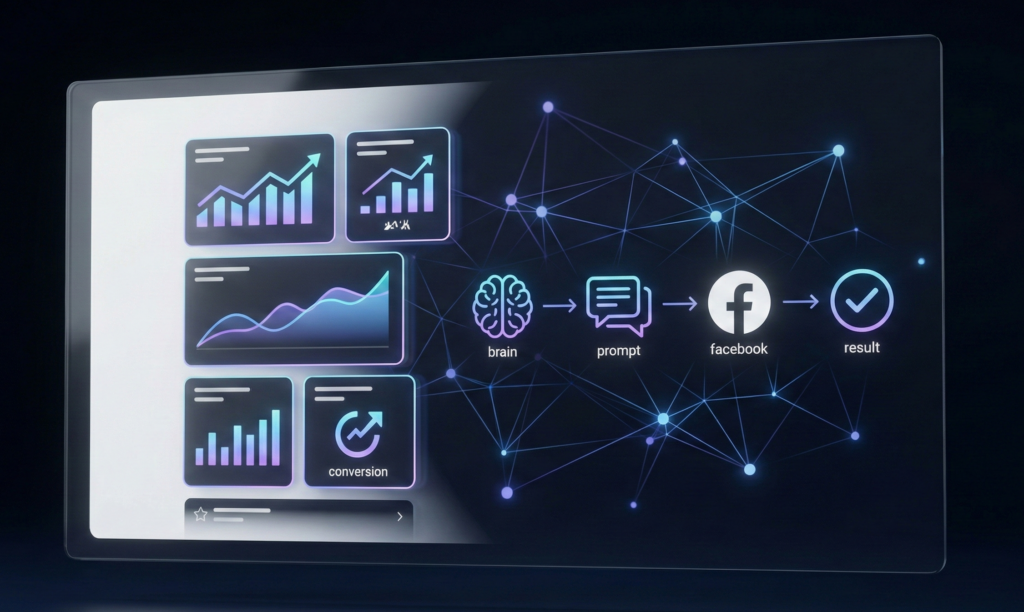
Prompts are the instructions you give to AI tools to generate ideas, copy, angles, hooks, and variations. Think of them as the strategy layer behind the words people actually see in the ad. A weak prompt produces generic, forgettable copy. A strong facebook ads prompts toolkit produces messaging that feels human, relevant, and persuasive. When used correctly, facebook ads prompts become a repeatable system for performance, not just a creative shortcut.
Facebook ads are especially sensitive to messaging quality because users are not there to shop. They are scrolling to relax, connect, or kill time. Your ad interrupts that experience. Facebook ads prompts help you design that interruption in a way that feels natural instead of annoying. They force you to clarify who you are talking to, what problem you are solving, and why it matters right now.
Another reason facebook ads prompts matter is speed. Facebook rewards rapid testing. You cannot rely on one ad idea and hope it scales forever. You need multiple hooks, formats, and angles running at the same time. Writing all of that manually slows you down. A solid prompt toolkit allows you to generate variations quickly while keeping message quality consistent—especially when you pair it with Meta Ads Manager and a clean testing routine.
Prompts also reduce creative fatigue. Many advertisers hit a wall after writing ads for the same product over and over. You feel like you have already said everything. Facebook ads prompts push you to explore new perspectives, emotions, objections, and benefits that you might overlook on your own. They act like a creative partner that never gets tired. (If you’re actively seeing performance decay, you’ll also want to review ad fatigue detection prompts alongside this toolkit.)
To understand the real value of facebook ads prompts, it helps to look at what high-performance Facebook ads have in common. They usually share these traits:
- They speak directly to a specific person, not a broad audience.
- They focus on one main problem or desire at a time.
- They use simple, conversational language.
- They lead with emotion before logic.
- They test multiple hooks instead of relying on one idea.
Facebook ads prompts help you bake all of these traits into your ad creation process. Instead of guessing, you are guiding the output intentionally. Over time, this turns your Facebook ads into a system instead of a guessing game.
Facebook Ads Prompts: Core Prompt Categories Every Facebook Advertiser Needs
A high-performance facebook ads prompts toolkit is not just a random collection of instructions. It is organized by purpose. Each category supports a specific part of the Facebook ad creation process. When you understand these categories, you can quickly pull the right facebook ads prompts for the job instead of forcing one prompt to do everything.
The first essential category is audience clarity prompts. These prompts help you define exactly who you are talking to. Facebook ads fail most often because the message is too vague. Audience prompts force specificity. They focus on demographics, psychographics, daily frustrations, desires, and language patterns.
Examples of what audience clarity prompts aim to uncover include:
- What keeps this person up at night.
- What they have already tried that failed.
- What they secretly want but rarely say out loud.
- What words they naturally use to describe their problem.
Once the audience is clear, the next category is problem and pain point prompts. These go deeper than surface-level issues. Instead of saying someone wants to lose weight, you explore why. Is it confidence, health, social pressure, or energy levels? Facebook ads prompts perform better when they connect to emotional pain, not just logical needs.
Problem prompts often explore:
- The consequences of not solving the problem.
- The frustration of repeated failure.
- The emotional weight of the issue.
- The urgency of the situation.
The third category is hook and scroll-stopper prompts. These are designed for the first one to three lines of your ad. This is where attention is won or lost. Hook prompts help you experiment with different opening styles, such as curiosity, shock, relatability, or direct benefit.
Common hook prompt angles include:
- Calling out a specific mistake.
- Asking a bold question.
- Sharing an unexpected insight.
- Highlighting a counterintuitive result.
Next are benefit and transformation prompts. These focus on outcomes, not features. People do not care about what your product is. They care about what life looks like after using it. Facebook ads prompts help translate features into real-world improvements.
Transformation prompts often highlight:
- Before and after scenarios.
- Time saved or stress reduced.
- Emotional relief or confidence gained.
- Tangible results that feel achievable.
Another critical category is objection-handling prompts. Every audience has doubts. They worry about price, time, trust, or whether something will work for them. High-performance ads address these concerns directly instead of pretending they do not exist. Objection prompts help you surface and respond to resistance within the ad copy itself.
Typical objections explored include:
- “This won’t work for someone like me.”
- “I’ve tried similar things before.”
- “I don’t have the time or skills.”
- “It sounds too good to be true.”
Finally, you need call-to-action prompts. These guide the reader toward the next step without sounding pushy. Facebook users resist hard selling, but they respond well to clear and confident direction. CTA-focused facebook ads prompts help you strike that balance.
Strong CTA prompts focus on:
- Low-friction next steps.
- Clear expectations.
- Emotional reassurance.
- A sense of momentum.
When these categories work together, your ads feel cohesive and intentional. You are not just throwing copy into the feed. You are guiding the reader through a short but powerful journey, from attention to action.
Facebook Ads Prompts: High-Performance Prompt Frameworks You Can Reuse
The real power of facebook ads prompts comes from frameworks. A framework is a repeatable structure that you can apply across products, offers, and niches. Instead of reinventing the wheel every time, you tweak inputs while keeping the underlying logic the same. This section breaks down prompt frameworks that consistently perform well in Facebook advertising.
One of the most effective frameworks is the problem agitation solution framework. The prompt instructs the AI to first describe a relatable problem, then intensify the emotional discomfort, and finally introduce the solution. This works because people take action to escape pain more than to chase pleasure.
A typical prompt using this framework focuses on:
- Describing the problem in the audience’s own words.
- Highlighting the frustration of staying stuck.
- Positioning the offer as relief, not hype.
Another strong framework is the before after bridge framework. This one paints a clear picture of life before the product and life after the product, then explains how the transition happens. It is especially effective for products with visible or emotional transformations.
This framework emphasizes:
- A vivid but realistic before state.
- A desirable and believable after state.
- A simple bridge that connects the two.
The curiosity gap framework is also powerful for Facebook ads. Instead of giving away everything upfront, the prompt instructs the AI to hint at an insight or result without fully explaining it. This encourages clicks and engagement.
Curiosity-based prompts often include:
- An unexpected statement.
- A partial explanation.
- A reason to keep reading or click.
Another high-performing framework is the authority and credibility framework. This is useful in competitive or trust-sensitive markets. The prompt focuses on experience, results, or unique perspectives that build confidence without bragging.
Authority prompts usually highlight:
- Lessons learned from experience.
- Mistakes made and corrected.
- Insights gained from real-world use.
- Proof through specificity rather than claims.
The social proof framework is closely related. Humans look to others when making decisions. Prompts based on this framework ask the AI to frame the ad around shared experiences, testimonials, or common success stories, even without naming specific people.
Social proof prompts often explore:
- “People like you” scenarios.
- Common patterns among successful users.
- Group identity and belonging.
- Normalizing success.
Below is a simple table showing how these frameworks map to ad goals:
Framework Name | Best Used For | Emotional Trigger | Ideal Funnel Stage
Problem Agitation Solution | Cold traffic | Relief and urgency | Awareness
Before After Bridge | Warm traffic | Hope and clarity | Consideration
Curiosity Gap | Cold to warm | Intrigue | Awareness
Authority and Credibility | Competitive niches | Trust | Consideration
Social Proof | Retargeting | Belonging | Conversion
The key is not to rely on just one framework. High-performance advertisers rotate these frameworks to avoid fatigue and reach different segments of their audience. Facebook ads prompts make it easier to rotate frameworks quickly without losing consistency. (If you want to formalize this, pair these frameworks with split testing prompts so you can isolate what actually drives results.)
When you build facebook ads prompts around frameworks, you also gain better control over testing. You are not just testing random ads. You are testing ideas, emotions, and structures. That makes optimization much easier and more strategic. For additional policy-safe guidance on creative best practices, Meta’s guidance is a useful baseline: Meta Business Help Center.
How to Build and Scale Your Own Prompt Toolkit
Building your own facebook ads prompts toolkit is not about collecting hundreds of prompts. It is about creating a small, flexible library that you can adapt over time. The goal is usability and performance, not volume. This section walks through how to build, refine, and scale a toolkit that supports high-performance Facebook ads.
Start by documenting what already works. Look at your best-performing ads and break them down. Identify the hook style, emotional angle, audience language, and structure. Then reverse-engineer facebook ads prompts that could recreate those elements. This ensures your toolkit is grounded in real results, not theory.
Next, standardize your prompts. A good prompt should be clear, specific, and reusable. Avoid one-off instructions that only work for a single product. Instead, create templates where you can swap inputs like audience, product, or outcome.
For example, a standardized hook prompt might include:
- Target audience description.
- Main pain point.
- Desired emotional response.
- Tone and length guidance.
Organization is critical. Store your facebook ads prompts by category and framework. This saves time and reduces friction when creating ads under pressure. Many advertisers fail here and end up rewriting prompts every time instead of building systems.
Another important step is version control. As you test ads, note which prompts lead to strong performance. Update those prompts with small improvements. Over time, your toolkit evolves based on data, not guesswork.
Scaling your toolkit also means adapting it to different ad formats. Facebook supports images, videos, carousels, and text-heavy ads. Your prompts should account for format differences. A video hook prompt may focus on spoken language and pacing, while a text ad prompt may focus on scannability.
As you scale, avoid the trap of overcomplicating. More complex facebook ads prompts do not always produce better ads. In many cases, simpler prompts lead to clearer, more relatable copy. The best toolkits balance structure with flexibility.
Finally, treat your prompt toolkit as a living asset. Markets change, audiences evolve, and platform dynamics shift. Revisit your prompts regularly. Remove what no longer works and refine what does. This mindset keeps your Facebook ads fresh and competitive.
A high-performance Facebook ad strategy is no longer just about targeting and budgets. It is about messaging at scale. Facebook ads prompts give you leverage. They allow you to think once and execute many times. When built correctly, a prompt toolkit becomes one of the most valuable assets in your advertising stack.
Split Testing Prompts That Help You Find Winning Creatives Faster
Split Testing Prompts
If you have ever felt stuck guessing which creative will work, split testing prompts can feel like a breath of fresh air. Instead of relying on instinct or copying what others are doing, you start making decisions based on real responses. This shift alone can save hours of work and reduce frustration. When you split test prompts, you are not just testing ideas. You are testing how people think, react, and engage.
Table of Contents
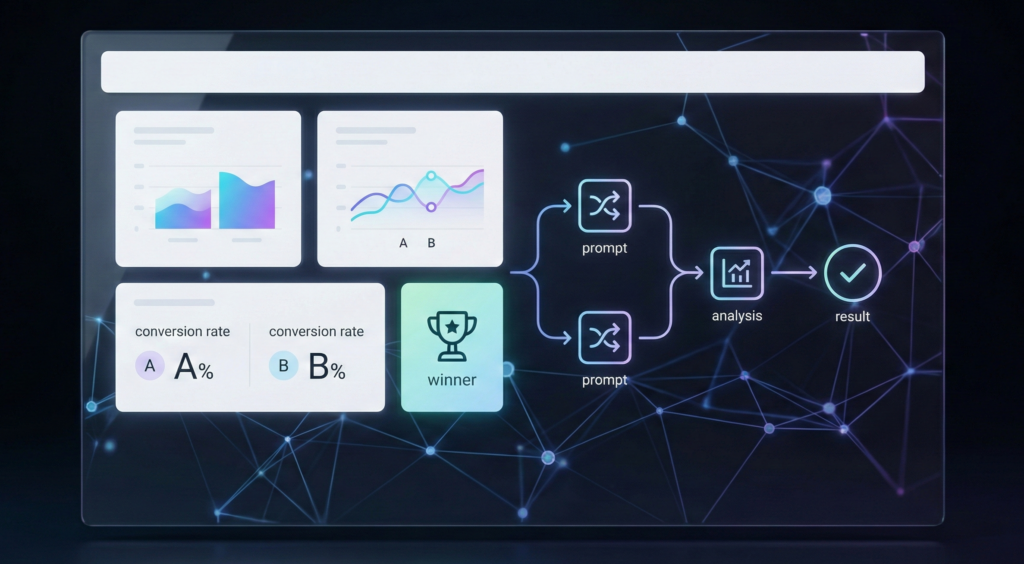
Many creators focus heavily on visuals, hooks, or captions, but the prompt behind the creative often decides the final output. A small wording change can lead to a completely different result. That is why prompt split testing is so powerful. It helps you understand which instructions generate clarity, emotion, and relevance. Over time, this turns creative work into a repeatable process rather than a guessing game.
Another reason split testing prompts matters is speed. Instead of creating ten different creatives from scratch, you can generate variations quickly by adjusting prompts. This allows you to compare outputs side by side and spot patterns faster. You begin to notice which phrases trigger better storytelling, stronger calls to action, or more engaging visuals.
Split testing also removes emotional attachment from the process. When you test prompts, you stop defending ideas just because you like them. The output speaks for itself. This mindset is especially helpful when you are working with clients, brands, or campaigns where results matter more than personal preference.
Here are a few reasons creators rely on split testing prompts:
- It reduces creative burnout by narrowing down what works
- It creates consistency across campaigns
- It reveals hidden patterns in audience preferences
- It speeds up content production
- It improves ROI by focusing on proven directions
At its core, split testing prompts is about control. You control the variables instead of letting randomness dictate results. Once you understand this, creating winning creatives becomes faster and more predictable.
Helpful resources: If you want a clean primer on A/B testing basics (and how to think about variables), this guide is a solid reference: Optimizely’s A/B testing overview. For platform-level experimentation concepts, this is also useful: Meta guidance on testing/experiments.
Also, if you’re pairing prompt tests with creative refresh cycles, you’ll probably want to read these related posts on PerformancePrompts:
How to Structure Split Testing Prompts for Clear Results
Split testing only works when your structure is intentional. Randomly changing words without a plan leads to confusing results. The goal is to isolate one variable at a time so you can clearly see what made the difference. This is where most people go wrong. They change too much at once and end up unsure why one creative performed better.
Start by defining what you are testing. This could be tone, format, audience angle, or storytelling style. Once you choose one variable, everything else stays the same. This creates a clean comparison and makes insights easier to spot.
A simple way to structure split testing prompts is to keep a base prompt and modify only one line per version. For example, the base instruction stays the same, but the emotional angle changes. One version might focus on curiosity, while another leans into urgency. The rest of the prompt remains untouched.
Common prompt elements you can split test include:
- Tone, such as casual versus authoritative
- Perspective, such as first person versus second person
- Length, such as short punchy output versus detailed explanations
- Emotional trigger, such as fear, excitement, or relief
- Format, such as list-based versus narrative
Consistency is critical. Use the same platform, same creative goal, and same evaluation criteria. This way, your comparison remains fair and useful.
Practical Split Testing Prompt Frameworks You Can Reuse
Once you understand the basics, the next step is using frameworks you can repeat. Reusable frameworks save time and reduce decision fatigue. They also help teams stay aligned when multiple people are generating creatives.
One effective framework is the single-variable swap. You create one base prompt and swap out only one line each time. This is ideal for beginners and produces clean data.
Another framework is the audience angle test. In this approach, the prompt remains the same except for who it speaks to. One version might target beginners, another speaks to experienced users. This helps you understand which audience responds more strongly.
A third framework focuses on outcome framing. You test whether people respond better to results-based messaging or process-based messaging. Both can work, but one often outperforms the other depending on the context.
Here are three reusable prompt frameworks you can apply immediately:
Framework 1: Single Variable Swap
- Keep the main instruction the same
- Change only one descriptor such as tone or emotion
- Compare outputs side by side
Framework 2: Audience Angle Test
- Version A speaks to beginners
- Version B speaks to experienced users
- Measure relatability and clarity
Framework 3: Outcome Versus Process
- Version A highlights final results
- Version B explains the journey
- Measure trust and engagement
When using these frameworks, document your results. Even simple notes can reveal trends over time. You might discover that your audience consistently prefers direct language or shorter explanations. These insights become creative shortcuts in future campaigns.
Split testing prompts is not about finding a single perfect prompt. It is about building a library of proven directions. Over time, this library becomes one of your most valuable creative assets.
Turning Split Test Results Into Faster Creative Wins
The real value of split testing prompts comes after the test. Many people stop once they pick a winner, but the deeper insight lies in understanding why it won. This reflection helps you apply the lesson to future projects without starting from zero.
Start by reviewing winning prompts and identifying patterns. Look for repeated elements such as tone, sentence length, or emotional triggers. These patterns become guidelines for future creatives. You no longer need to guess because you have evidence.
Another important step is iteration. A winning prompt is not the end. It becomes the new base for the next test. By stacking small improvements, you gradually refine your creatives until they feel effortless and effective.
To turn results into faster wins, follow this simple process:
- Identify the winning prompt
- Break down what made it effective
- Apply those elements to new prompts
- Test again with a new variable
- Repeat the cycle
Speed improves naturally with practice. As your intuition aligns with data, you will make better decisions faster. You will also waste less time on ideas that do not resonate.
Split testing prompts also improves collaboration. When working with teams or clients, you can show why a creative direction was chosen. This builds trust and reduces back-and-forth revisions. Decisions feel grounded instead of subjective.
In the long run, prompt split testing changes how you think about creativity. You stop chasing trends and start building systems. Winning creatives become less about luck and more about process. When you reach this stage, creating high-performing content feels lighter, faster, and far more sustainable.
By committing to split testing prompts consistently, you give yourself a competitive edge. You move faster, learn quicker, and create with confidence. Over time, that advantage compounds, and finding winning creatives becomes second nature rather than a struggle.
The Best AI Prompts to Boost Ad Performance and Lower CPA
Running ads today is not just about having a good product or a catchy headline. Platforms are crowded, attention spans are short, and costs rise fast when performance slips. This is exactly where prompts to lower CPA start to matter. Not because AI magically makes ads profitable, but because the quality of your prompts directly controls the quality of the output you get.
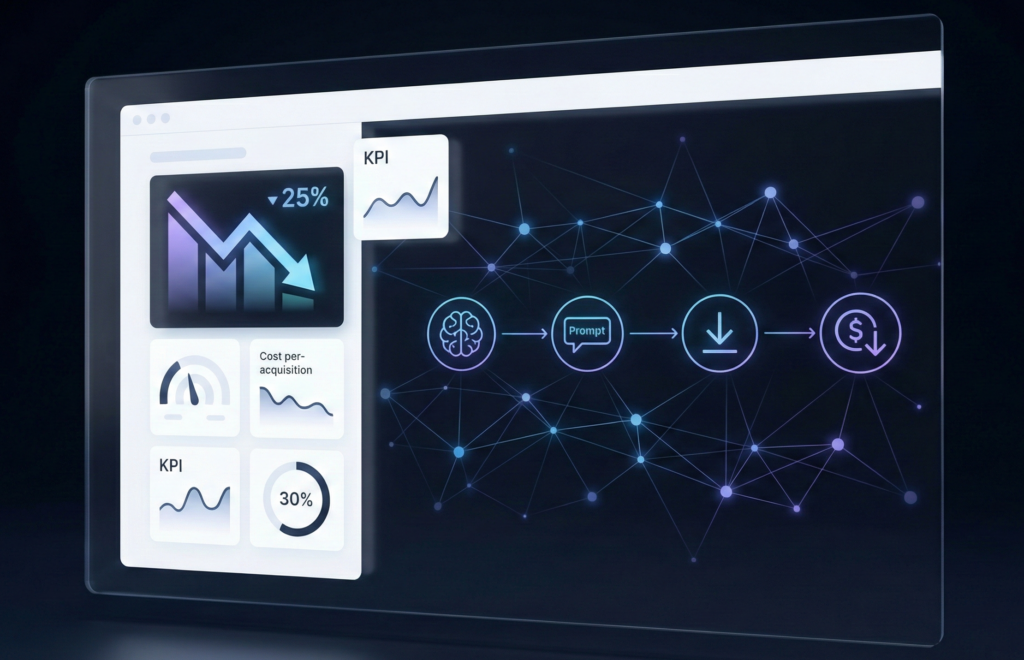
Most advertisers who say AI does not work are really saying their prompts do not work. They type vague instructions, accept generic results, and wonder why their ads feel bland or expensive. When you guide AI with precision, context, and intent, it becomes a powerful assistant that can help improve click through rates, conversion rates, and ultimately lower your CPA.
AI prompts act like a briefing you would give a professional copywriter or strategist. If your briefing is weak, the output is weak. If your briefing is detailed, focused, and aligned with real ad goals, the output improves dramatically. This is especially important for ads where small improvements can create large financial differences. The best prompts to lower CPA do not “sound smart,” they force clarity and make testing easier.
Another reason prompts matter is speed. Traditional ad testing can take days or weeks. With AI, you can generate dozens of angles, hooks, and variations in minutes. The prompt determines whether those variations are usable or useless. If you want faster iteration, you will also want a variation system you can reuse—see creative variation prompts and split testing prompts for that workflow.
AI prompts also help you think more clearly about your audience. When you instruct AI to focus on specific pain points, emotional triggers, objections, or buying stages, you are forced to define those elements clearly. This clarity often improves your ads even before AI produces a single line of copy.
Here are the core reasons AI prompts impact ad performance so heavily:
- They control the clarity and relevance of ad messaging
- They influence emotional resonance with the target audience
- They speed up creative testing without increasing workload
- They help structure offers and calls to action more effectively
- They reduce wasted spend by improving alignment with intent
When advertisers struggle with high CPA, the problem is rarely the platform alone. It is usually mismatched messaging, unclear offers, or weak hooks. Prompts to lower CPA allow you to attack these issues systematically instead of guessing.
This is not about replacing human judgment. It is about enhancing it. The best advertisers use AI as a thinking partner that helps refine ideas, stress test angles, and uncover new perspectives. Prompts are the language that makes that partnership productive.
Before diving into specific prompts, it is important to understand one mindset shift. You are not asking AI to write ads for you. You are asking it to help you think like a better advertiser. That shift alone changes the quality of results you get.
Prompts to Lower CPA: High Performance Prompt Frameworks for Ad Creative
One of the biggest mistakes advertisers make is asking AI for finished ads too early. High performing prompts usually start by shaping thinking before writing copy. This section focuses on prompt frameworks that consistently lead to stronger creative and lower CPA.
A powerful starting point is the audience clarity prompt. Instead of asking for ads, you ask AI to deeply understand who the ad is for. This improves everything that follows.
Examples of audience clarity prompts include:
- Describe the core frustrations of a person actively searching for this product
- List the emotional triggers that push this audience to buy now instead of later
- Identify the biggest objections this audience has before purchasing
- Explain how this product fits into their daily life and priorities
Once the audience is clear, the next framework focuses on hooks. Hooks determine whether people stop scrolling or keep moving. AI is excellent at generating hook variations when guided correctly. If headlines are your bottleneck, pair these prompts to lower CPA with a dedicated headline set like ad headline prompts.
Effective hook prompts include:
- Generate ten scroll stopping opening lines based on fear of loss
- Create curiosity driven hooks without using clickbait language
- Write hooks that mirror the exact thoughts of a frustrated buyer
- Develop hooks that feel conversational and natural, not salesy
Another high impact framework is benefit translation. Features do not sell. Outcomes do. AI can help translate technical or boring features into emotional and practical benefits.
Useful benefit prompts include:
- Turn these features into emotional benefits for a beginner user
- Explain how each feature solves a specific daily problem
- Rewrite this feature list from the perspective of saved time or reduced stress
- Translate this technical feature into a simple everyday advantage
Offer clarity prompts are also critical. Many ads fail not because the product is bad, but because the offer is confusing or weak. AI can help you sharpen and reposition offers quickly.
Strong offer prompts include:
- Rewrite this offer to sound clearer and more valuable
- Suggest ways to reduce perceived risk in this offer
- Identify what makes this offer different from competitors
- Improve this offer by emphasizing immediacy and relevance
Finally, call to action prompts often get overlooked. Small changes here can have an outsized impact on CPA.
Examples include:
- Generate calls to action that feel helpful rather than pushy
- Create calls to action for cold traffic versus warm traffic
- Rewrite this call to action to reduce hesitation
- Suggest alternative calls to action focused on curiosity
These frameworks work because they break ad creation into logical pieces. Instead of hoping AI writes a perfect ad in one shot, you guide it through the same thinking process a skilled advertiser would use.
When you combine these frameworks, you start seeing patterns. Certain hooks consistently perform better. Certain benefits resonate more strongly. Over time, your prompts become assets you can reuse and refine.
Advanced Prompts to Lower CPA for Testing, Scaling, and Lowering CPA
Once you have solid creative foundations, AI prompts become even more valuable during testing and scaling. This is where many advertisers leave money on the table by relying on intuition instead of structured experimentation.
One advanced use of AI is creative variation without creative dilution. Instead of random variations, you use prompts to maintain message consistency while testing different angles. If you want a structured refresh workflow, you can also use ad fatigue detection prompts to catch decay early.
Examples include:
- Create five variations of this ad while keeping the core message intact
- Rewrite this ad for a skeptical audience without changing the offer
- Adapt this ad for mobile first consumption
- Shorten this ad while preserving emotional impact
Another powerful application is angle expansion. Often a product has multiple valid angles, but advertisers focus on only one. AI can help you uncover and organize these angles quickly.
Angle discovery prompts include:
- List different emotional angles for this product
- Identify logical versus emotional selling angles
- Suggest angles based on common customer complaints
- Create ads focused on lifestyle improvement rather than features
AI is also effective for diagnosing poor performance. Instead of guessing why CPA is high, you can ask AI to analyze potential issues. If targeting is the issue, pair these prompts to lower CPA with advanced targeting prompts.
Diagnostic prompts include:
- Analyze this ad copy and suggest why it might not convert
- Identify where this ad may cause confusion or mistrust
- Suggest improvements to align this ad with buyer intent
- Rewrite this ad to address objections more clearly
Scaling prompts are another advanced category. When an ad performs well, scaling often breaks it. AI can help you expand without losing what works.
Scaling focused prompts include:
- Generate new creatives based on this winning ad
- Adapt this ad for a broader audience while keeping relevance
- Create variations that test different emotional intensities
- Rewrite this ad for different stages of awareness
Lowering CPA often requires improving post click alignment as well. Ads do not exist in isolation. AI prompts can help align ad copy with landing pages and funnels.
Alignment prompts include:
- Rewrite this ad to match the tone of the landing page
- Identify mismatches between this ad and the page content
- Suggest headline variations that align with this ad promise
- Improve message consistency across ad and page
One overlooked area is fatigue prevention. Ads often perform well initially and then decay. AI can help refresh creatives without starting over.
Fatigue reduction prompts include:
- Refresh this ad without changing the core message
- Rewrite this ad using different phrasing but same intent
- Create alternative openings for this ad
- Adjust tone slightly to reengage the audience
These advanced prompts turn AI into a performance optimization tool rather than just a writing assistant. Over time, they help you build a repeatable system for creative improvement and lower CPA more consistently.
How to Build a Repeatable Prompt System for Long Term Results
The real power of AI prompts shows up when you stop treating them as one time tools and start treating them as a system. A repeatable prompt system helps you improve ad performance consistently, not just occasionally.
The first step is documenting what works. When a prompt produces strong results, save it. Slightly refine it. Reuse it across campaigns. Over time, you build a personal prompt library tailored to your niche and audience. (If you want a broader system for efficiency and consistency, see performance optimization prompt library.)
A simple system might include:
- Audience research prompts
- Hook generation prompts
- Benefit translation prompts
- Offer optimization prompts
- Scaling and testing prompts
Each category serves a specific purpose. Together, they form a workflow that mirrors professional ad strategy.
The second step is pairing prompts with performance data. AI does not replace metrics. It enhances them. When you feed AI real performance insights, its output becomes sharper.
Examples include:
- Rewrite this ad based on low click through rate
- Improve this ad to increase conversion rate
- Adjust this messaging to reduce CPA
- Analyze what this winning ad does differently
The third step is iteration. Prompts improve with use. You learn which instructions produce usable output and which do not. Over time, you naturally write better prompts without thinking about it.
Another important element is consistency of voice. Many advertisers struggle with AI sounding generic. This usually happens because they do not define tone clearly.
Helpful tone prompts include:
- Write in a conversational and confident tone
- Avoid hype and exaggerated claims
- Sound like a helpful expert, not a salesperson
- Use simple language and short sentences
You can also create prompts that reflect your brand identity. This ensures ads feel cohesive even when generated quickly.
Brand alignment prompts include:
- Write this ad in our brand voice
- Match the tone used in previous winning ads
- Avoid aggressive sales language
- Focus on clarity and trust
Finally, remember that prompts to lower CPA work best when paired with human judgment. You decide what to test, what to keep, and what to discard. AI accelerates the process but does not replace strategic thinking.
When used correctly, AI prompts help you spend less time staring at blank screens and more time optimizing what matters. They allow faster testing, clearer messaging, and smarter scaling. All of this contributes directly to better ad performance and lower CPA.
The advertisers who win are not the ones using the most tools. They are the ones using tools with intention. Strong AI prompts are not about complexity. They are about clarity, structure, and focus.
Once you build a prompt system that fits your workflow, AI stops feeling like a novelty and starts feeling like a competitive advantage. That is when lower CPA stops being a lucky outcome and becomes a predictable result.
Further Reading and Resources
If you want official guidance to pair with these prompts to lower CPA, here are a few helpful references (these are standard links and should count as external links):