Ad Performance & Creative Testing
Prompts and testing systems for ads: hooks, angles, creatives, ad copy, iteration workflows, and ROAS/CPA diagnostics across platforms like Meta, Google, and LinkedIn.
Scaling Your Campaigns: AI Prompts That Reveal Hidden Growth Opportunities
AI prompts to scale campaigns help you uncover growth you’re currently missing—new segments, overlooked use cases, hidden funnel friction, and messaging that stopped working without you noticing. This guide shows the exact prompt types and frameworks that surface those insights, so you can scale without guessing or simply “spending more.”
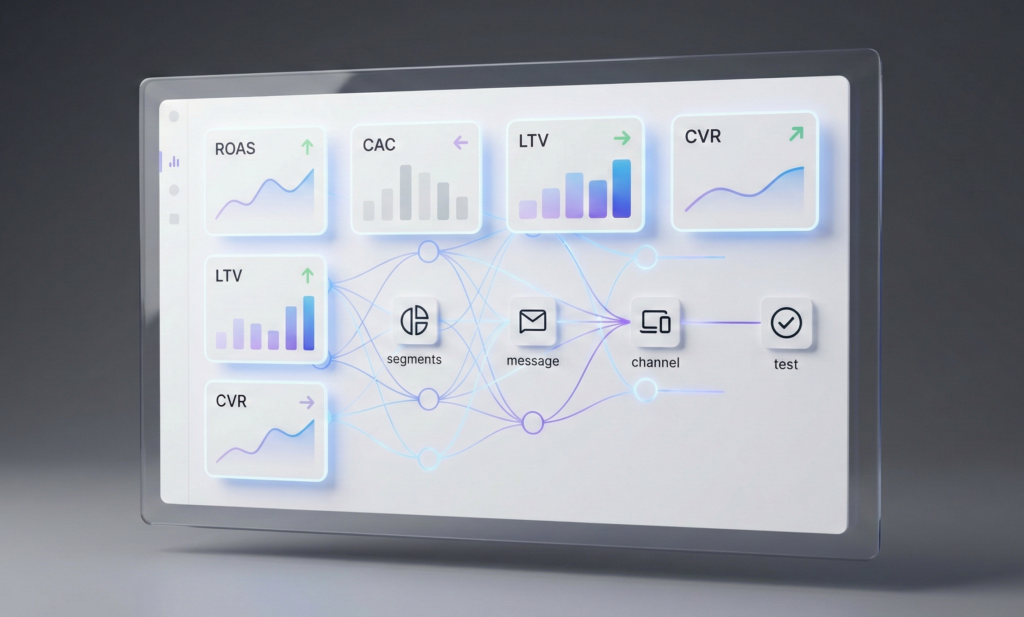
Table of Contents
Most campaigns do not fail because the idea was weak. They stall because the way decisions are made stops evolving. You launch strong, results look promising, and then growth flattens. At that point, teams often assume the market is saturated or the audience is tired. In reality, what usually happens is that the same thinking keeps getting recycled while conditions quietly change around it.
Scaling is not just about spending more, publishing more, or automating faster. It is about asking better questions at each stage of growth. This is where AI prompts become more than productivity tools. They become lenses that help you see patterns you were missing when you relied only on dashboards and gut instinct.
When campaigns are small, intuition works well. You know your audience personally, you read every comment, and you feel the energy of each launch. As things scale, that intimacy disappears. Data replaces feelings, but data without the right questions becomes noise. AI does not magically create growth. What it does is respond precisely to how you frame your prompts. Poor prompts give you generic advice. Thoughtful prompts surface blind spots.
Here is the uncomfortable truth most teams avoid. Scaling problems are often thinking problems. You might be optimizing the wrong metric, talking to the wrong segment, or doubling down on a message that worked once but now limits expansion. AI can expose this, but only if you ask it to challenge your assumptions instead of confirming them.
Hidden growth opportunities usually live in places like:
- Audience segments you lumped together too early
- Secondary use cases you never marketed directly
- Friction points customers tolerate but never praise
- Messaging angles that feel obvious internally but unclear externally
- Channels you tested briefly and abandoned too fast
When you use AI prompts correctly, you stop asking “What should I do next?” and start asking “What am I not seeing yet?” That shift alone changes how scaling feels. Instead of pushing harder, you start pulling insights out of your existing assets.
Another reason scaling feels hard is because success creates habits. You find a funnel that works, a hook that converts, a cadence that feels predictable. Over time, that success becomes a constraint. AI is useful here because it has no emotional attachment to your past wins. It will happily point out where repetition has turned into stagnation.
In this section, the goal is simple. Understand that scaling is not a volume problem. It is a perspective problem. Using AI prompts to scale campaigns well is the fastest way to widen that perspective without rebuilding everything from scratch.
AI Prompts to Scale Campaigns: The Anatomy of High-Leverage Prompts for Growth Discovery
Not all prompts are created equal. Most people use AI as a faster Google or a brainstorming buddy. That is fine for early ideation, but it rarely uncovers hidden opportunities. High-leverage prompts are designed to surface tension, contrast, and contradiction. They are meant to feel slightly uncomfortable because they question what you assume is already working.
A growth-focused prompt has three essential components. First, context. Second, constraint. Third, curiosity.
Context tells the AI what environment it is operating in. Instead of saying “Help me scale my campaign,” you describe your market, audience maturity, and current bottleneck. Constraint forces the AI to think creatively instead of offering safe answers. Curiosity pushes the output toward discovery rather than execution.
Here are examples of how prompt framing changes outcomes.
Low-leverage prompt:
“Give me ideas to scale my marketing campaign.”
High-leverage prompt:
“Based on a campaign targeting mid-level professionals who convert well but churn within 60 days, identify growth opportunities that do not rely on increasing ad spend or content volume.”
The second prompt invites analysis. It hints at a retention issue, introduces a time constraint, and removes the obvious solution of spending more.
To help you internalize this, here is a list of prompt categories that consistently reveal overlooked growth angles.
Diagnostic prompts
These prompts help you understand why something works or stops working.
- What assumptions does this campaign rely on that might no longer be true?
- Where does conversion happen easily but satisfaction drop later?
- Which parts of the funnel receive attention but little experimentation?
Contrast prompts
These prompts compare opposites to surface insight.
- How would this campaign look if it were designed for the opposite audience segment?
- What would a competitor do differently if they had our data?
- How would this message fail if it were shown to someone unfamiliar with our brand?
Deconstruction prompts
These prompts break success into parts.
- Which element of this campaign drives most results, and which elements are just supportive?
- If we removed one step from the funnel, which one would improve performance?
- What parts of this campaign are optimized by habit rather than evidence?
Expansion prompts
These prompts look beyond the original intent.
- What secondary problems does this campaign accidentally solve?
- Which adjacent audiences could benefit from the same offer for different reasons?
- How could this campaign succeed in a channel we previously dismissed?
When you use these categories consistently, patterns emerge. You stop treating campaigns as fixed assets and start treating them as evolving systems. AI becomes a strategic mirror rather than a tactical assistant.
One mistake to avoid is asking AI to replace judgment. The value is not in blindly following outputs. The value is in noticing which responses make you pause and rethink. Those moments usually point to hidden growth opportunities.
Another important detail is iteration. The first answer is rarely the best one. High-performing teams treat AI like a conversation partner, not a vending machine. They refine prompts based on what feels incomplete or too obvious.
For example:
- Ask for three unpopular opinions about your campaign.
- Ask what a skeptical customer would criticize.
- Ask which metric you are overvaluing and which you ignore.
These layers of questioning create depth. Growth rarely comes from one big idea. It comes from many small insights stacked together over time.
Prompt Frameworks You Can Use to Scale Without Guessing
Once you understand how prompts work, the next step is systemization. Scaling requires consistency, and that includes how you think. Prompt frameworks give you repeatable ways to explore growth without starting from zero every time.
Below are several practical frameworks you can adapt to your own campaigns. If you want a complementary method for clean experiments, see our guide on split testing prompts.
The Bottleneck Reveal Framework
This framework focuses on identifying where momentum slows.
- Describe the campaign goal and current performance.
- Ask where effort and outcome feel misaligned.
- Ask which improvement would unlock the biggest downstream impact.
A sample use case might involve realizing that traffic quality matters more than volume, or that onboarding clarity matters more than acquisition.
The Segment Split Framework
This framework challenges audience assumptions.
- Ask AI to divide your audience into smaller behavioral segments.
- Explore what each segment values differently.
- Identify which segment is underserved by current messaging.
This often reveals that your “ideal customer” is actually multiple customers sharing only surface similarities.
The Message Mutation Framework
This framework helps evolve communication without losing identity.
- Ask for alternative narratives using the same core offer.
- Test emotional, practical, and aspirational angles.
- Identify which version aligns with long-term retention rather than quick wins.
Scaling campaigns often fail because the message never matures. This framework keeps it alive—and it’s one of the most reliable AI prompts to scale campaigns when performance plateaus.
The Channel Reframing Framework
This framework revisits dismissed platforms.
- Ask how the campaign would succeed if one primary channel disappeared.
- Explore unconventional formats within familiar platforms.
- Identify low-competition environments where your message fits naturally.
Hidden growth often lives in channels you labeled as “not for us” too early.
The Feedback Loop Framework
This framework uses existing data differently.
- Ask AI to analyze customer feedback for patterns you ignored.
- Identify repeated language customers use that you never adopted.
- Translate complaints into positioning opportunities.
What customers tolerate silently is often where differentiation lives.
Turning AI Insights Into Sustainable Campaign Growth
Insights alone do not scale campaigns. Action does. The final step is learning how to translate AI-generated discoveries into decisions without overwhelming your team or diluting focus.
The biggest mistake here is trying to implement everything at once. When AI reveals multiple opportunities, it can feel like you have been sitting on a gold mine. That excitement often leads to scattered execution. Sustainable growth requires restraint.
Start by ranking insights based on effort versus impact.
- Low effort, high impact ideas come first.
- Medium effort ideas get scheduled.
- High effort ideas get validated with small tests.
Another critical step is ownership. Each insight needs a clear owner. AI may surface the opportunity, but humans still drive outcomes. Assign responsibility so ideas do not die in shared documents.
You also want to document prompt outcomes over time. Patterns emerge when you review past insights. You might notice that the same issue keeps appearing under different prompts. That repetition is a signal worth paying attention to.
When integrating AI prompts into your scaling process, consistency matters more than intensity. A weekly prompt review beats a quarterly deep dive. Growth compounds when reflection becomes routine—and using AI prompts to scale campaigns on a consistent cadence is where the compounding shows up.
Here is a practical way to structure this rhythm:
- Weekly: One diagnostic prompt on current performance
- Biweekly: One framework-based exploration
- Monthly: One assumption-challenging prompt
- Quarterly: One big-picture scaling question
This cadence keeps your thinking fresh without distracting from execution.
Another key element is storytelling. AI insights often need translation before they resonate with stakeholders. Do not present raw outputs. Turn them into narratives that explain the why, not just the what.
For example, instead of saying “AI suggests targeting a new segment,” say “We discovered a group that already benefits from our offer but feels unseen by our messaging.” That framing creates buy-in.
Finally, remember that hidden growth opportunities are not always glamorous. Sometimes they involve improving clarity, simplifying steps, or removing friction. These changes rarely feel exciting, but they compound quietly and powerfully.
Scaling your campaigns is not about chasing every new tactic. It is about developing a sharper way of seeing. AI prompts, when used intentionally, sharpen that vision. They help you notice what success has taught you to ignore.
When you stop asking AI to work harder and start asking it to think deeper, growth stops feeling mysterious. It becomes something you can explore, understand, and repeat.
That is how campaigns scale without burning out teams or budgets. Not by doing more, but by seeing more.
Further reading: For a trusted overview of experimentation and measurement concepts that support scaling decisions, see Google’s guide to A/B testing in Google Analytics.
FAQs
What are AI prompts to scale campaigns?
They are structured prompts designed to uncover bottlenecks, hidden segments, retention friction, and messaging gaps—so you can make better scaling decisions than simply increasing spend or volume.
Do AI prompts replace a strategist or marketer?
No. Prompts accelerate insight, but humans still decide priorities, interpret nuance, and run experiments.
What data should I include for better AI answers?
Include your audience, offer, channel mix, funnel steps, creative examples, and any relevant metrics (CTR, CVR, CAC, LTV, retention, churn) plus snippets of customer feedback.
How often should I run a prompt review?
Weekly works well: one diagnostic prompt, one experiment prompt, and one messaging prompt. Consistency compounds.
What’s the fastest way to find hidden growth opportunities?
Use contrast and deconstruction prompts: compare opposite segments, rewrite the narrative, identify what’s optimized by habit, and translate complaints into positioning.
ROAS Optimization Prompts Every Media Buyer Should Be Using
ROAS optimization prompts help media buyers diagnose performance issues faster, reduce guesswork, and make better decisions under uncertainty. If you are a media buyer today, ROAS is no longer just about choosing the right audience or setting the right budget. The way platforms behave has changed, the way data is reported has changed, and the way decisions are made has changed too. AI tools are now sitting right next to ad managers, spreadsheets, and dashboards. The difference between average results and strong ROAS often comes down to how clearly you can ask the right questions.

Table of Contents
Prompting is not a trendy add-on skill. It is becoming a core competency. Media buyers who can explain problems clearly, break down performance logically, and request specific insights are the ones getting better decisions faster. Poor prompts lead to generic advice. Strong prompts lead to actionable steps.
At its core, ROAS optimization is decision-making under uncertainty. You are constantly balancing limited data, delayed conversions, creative fatigue, and algorithm learning phases. AI tools help, but only when they are guided properly. This is where prompts come in. They act like instructions you would give to a junior media buyer, analyst, or strategist.
Many buyers make the mistake of asking AI vague questions like “How do I improve ROAS?” The answer to that will always be broad and obvious. The real value comes from prompts that include context, constraints, and goals. You want the AI to think inside your situation, not give textbook advice.
What Good ROAS Prompting Looks Like
Before diving into specific ROAS optimization prompts, it helps to understand what good prompting looks like for ROAS work. A strong prompt usually includes:
- The platform being used
- The campaign objective
- The time frame
- The current ROAS or benchmark
- The constraint or problem
- The desired outcome
For example, instead of asking for general optimization tips, you guide the analysis by stating what is actually happening in the account. This mirrors how senior media buyers think. They do not look at ads in isolation. They look at performance in context.
Prompting also helps reduce emotional decision-making. When performance drops, panic leads to random changes. Using structured prompts forces you to slow down and analyze before acting. This alone can protect ROAS more than constant tinkering.
Another reason prompting matters is speed. Media buyers are expected to manage more accounts, more platforms, and more creatives than ever before. You do not always have time to manually analyze every angle. Well-built ROAS optimization prompts allow you to surface insights faster, shortlist hypotheses, and prioritize actions.
This is especially useful when working with junior buyers or teams. Prompts can be standardized and reused, creating a consistent thinking framework across accounts. Over time, this leads to better decision quality and more predictable ROAS outcomes.
To ground this section, here is a simple comparison of weak versus strong ROAS-related prompts.
| Weak Prompt | Strong Prompt |
|---|---|
| How can I improve ROAS? | Analyze a Meta conversion campaign with a 1.8 ROAS over the last 14 days and suggest 3 specific optimization actions without increasing budget. |
| Why is my ad not converting? | Diagnose possible causes of low conversion rate for a cold audience campaign targeting interests with CTR above 1.5%. |
| What creatives work best? | Based on a DTC brand selling skincare, suggest creative angles that typically maintain ROAS during scaling. |
The difference is clarity. Strong prompts give the AI something to work with. Weak prompts outsource thinking entirely.
In the next sections, you will see ROAS optimization prompts designed for specific problems media buyers face daily. These are not generic ideas. They are structured prompts you can reuse, tweak, and adapt depending on the account.
ROAS Optimization Prompts for Diagnosing Drops & Performance Plateaus
One of the most stressful moments for a media buyer is seeing ROAS drop without an obvious reason. Sometimes spend is stable, creatives are unchanged, and targeting is the same, yet performance slides. This is where diagnostic ROAS optimization prompts become extremely useful.
Instead of immediately changing bids or killing ads, you can use prompts to walk through a logical diagnosis. The goal here is not to get a final answer but to narrow down likely causes and next steps.
A good diagnostic prompt focuses on isolating variables. It asks the AI to think like a media buyer, not like a marketer writing blog advice.
Prompt example for sudden ROAS decline:
“Act as a senior media buyer. ROAS dropped from 2.5 to 1.6 over the last 7 days on a purchase-optimized campaign. Budget, creatives, and targeting stayed the same. List the most likely causes in order of probability and the first action to validate each cause.”
This prompt works because it prioritizes probability and validation, not just speculation.
Another common issue is performance plateauing. ROAS is stable but not improving, even when you want to scale.
Prompt example for performance plateau:
“Analyze a campaign with stable ROAS at 2.0 for the past 21 days. No creative testing has been done in that period. Suggest optimization actions that could improve ROAS before increasing budget.”
You can also diagnose platform-specific issues.
Prompt for learning phase and volatility:
“Explain how learning phase resets can impact ROAS on Meta and suggest how to stabilize performance after frequent ad edits.”
Here is a list of diagnostic prompt categories media buyers should regularly use:
- Attribution and tracking issues
- Audience fatigue
- Creative fatigue
- Landing page mismatch
- Budget distribution problems
- Algorithm learning disruptions
You can turn each category into a reusable prompt template.
Audience fatigue diagnosis:
“Based on declining ROAS and rising CPMs over 30 days, analyze whether audience fatigue is likely and suggest refresh strategies without expanding targeting.”
Creative fatigue diagnosis:
“CTR has dropped from 1.8% to 0.9% while CPC increased. Analyze whether creative fatigue is the primary issue and recommend creative testing angles.”
Landing page diagnosis:
“High CTR but low conversion rate is impacting ROAS. Analyze possible landing page issues and suggest CRO improvements aligned with ad intent.”
These ROAS optimization prompts help you stay methodical instead of reactive.
Another useful technique is comparison prompts. These ask the AI to compare time periods or segments.
Comparison prompt example:
“Compare ROAS drivers between the last 7 days and the previous 14 days and identify which metrics contributed most to the decline.”
When diagnosing issues, always remember that ROAS is an output metric. Prompts should focus on input metrics like CTR, CVR, CPC, CPM, and AOV. Strong prompts guide the analysis from inputs to output.
Prompts for Creative, Audience, and Budget Optimization
Once you understand why ROAS is struggling, the next step is optimization. This is where prompts become more tactical. Instead of broad advice, you want specific actions you can test.
Creative optimization is often the biggest lever for ROAS, especially in competitive auctions. AI can help generate angles, hooks, and testing frameworks when prompted correctly.
Creative prompt example:
“Act as a performance creative strategist. For a product priced at $49 targeting cold audiences, suggest 5 creative angles focused on problem awareness that historically protect ROAS.”
You can also optimize for different stages of the funnel.
Top-of-funnel creative prompt:
“Suggest creative messaging that balances engagement and conversion for cold traffic without sacrificing ROAS.”
Bottom-of-funnel creative prompt:
“Generate retargeting ad angles that maximize ROAS by addressing objections and urgency.”
Audience optimization prompts are equally important. Many buyers hesitate to change targeting because of fear of disrupting performance. Prompts can help you plan controlled tests.
Audience testing prompt:
“Propose a structured audience testing plan to improve ROAS while keeping total spend constant.”
Broad versus interest testing prompt:
“Compare broad targeting versus stacked interests for ROAS stability and suggest when to transition between them.”
Budget optimization prompts help prevent ROAS collapse during scaling.
Budget pacing prompt:
“Suggest a budget scaling strategy that minimizes ROAS volatility for a campaign currently spending $500 per day.”
Budget reallocation prompt:
“Analyze how to redistribute budget across ad sets to improve blended ROAS.”
Here is a table showing common optimization goals and example prompts.
| Optimization Area | Prompt Focus |
|---|---|
| Creative | New angles that maintain efficiency |
| Audience | Testing without disrupting learning |
| Budget | Scaling while protecting ROAS |
| Funnel | Matching message to intent |
| Offers | Improving AOV to lift ROAS |
Offer optimization is often overlooked. Improving AOV can increase ROAS even if conversion rate stays the same.
Offer prompt example:
“Suggest offer variations that could increase AOV without lowering conversion rate for an ecommerce brand.”
Another powerful category is scenario prompts. These ask the AI to simulate outcomes.
Scenario prompt example:
“If CPC increases by 20%, suggest adjustments to creatives or offers to maintain ROAS.”
Optimization prompts work best when used iteratively. You test one idea, feed the results back into the next prompt, and refine further. Over time, this creates a feedback loop that improves decision quality.
Prompts for Reporting, Learning, and Long-Term ROAS Improvement
ROAS optimization is not just about fixing problems. It is about building systems that improve over time. Reporting and learning prompts help you extract insights that compound.
Many media buyers look at reports only to decide what to turn off. Prompts can help you turn reports into learning assets.
Reporting analysis prompt:
“Summarize key ROAS drivers from this week’s performance and highlight what should be repeated next week.”
Learning-focused prompt:
“Based on the last 30 days of data, identify patterns that consistently improve ROAS.”
You can also use prompts to improve communication with clients or stakeholders.
Client explanation prompt:
“Explain the reason for ROAS fluctuation in simple terms suitable for a non-technical client.”
Post-test analysis prompts are especially valuable.
Post-test prompt:
“Analyze results from a creative test and summarize which elements contributed most to ROAS improvement.”
Scaling readiness prompt:
“Evaluate whether this campaign is ready for scaling based on ROAS stability and supporting metrics.”
Another powerful category is prompt-driven documentation. Instead of relying on memory, you can create logs of what worked.
Documentation prompt:
“Create a short learning log summarizing what improved ROAS in this campaign and what should be avoided in future tests.”
Over time, this builds a private playbook unique to your accounts.
Here is a list of long-term ROAS prompt uses:
- Weekly performance summaries
- Monthly learning reviews
- Creative angle libraries
- Audience testing frameworks
- Scaling readiness checklists
Finally, prompts can help you think strategically, not just tactically.
Strategy prompt:
“Based on historical performance, suggest a 90-day ROAS optimization roadmap.”
ROAS optimization is not about finding one perfect setting. It is about making better decisions consistently. Prompts are simply tools that sharpen your thinking, speed up analysis, and reduce guesswork.
Media buyers who treat prompting as a skill will outperform those who treat AI as a shortcut. The ROAS optimization prompts shared here are not meant to replace expertise. They are meant to amplify it.
If you build the habit of using structured prompts for diagnosis, optimization, and learning, ROAS becomes less mysterious and more manageable. Over time, the compounding effect of better decisions shows up not just in dashboards, but in confidence, clarity, and results.
External reference: If you want a quick definition of ROAS and how it’s typically described, see Return on advertising spend (ROAS).
FAQs
What are ROAS optimization prompts?
ROAS optimization prompts are structured instructions you give AI tools to diagnose ROAS changes, prioritize hypotheses, and generate testable actions specific to your platform, objective, and constraints.
How many ROAS optimization prompts should I use per week?
A simple rhythm is 3 per week: one diagnostic prompt (what changed), one tactical prompt (what to test next), and one learning prompt (what to document and repeat).
What inputs produce the best ROAS analysis from AI?
Share the platform, objective, time range, spend, ROAS trend, and supporting metrics (CPM, CTR, CPC, CVR, AOV) plus notes on recent edits, creative changes, or landing page changes.
Will these prompts work for Meta, Google, TikTok, and YouTube ads?
Yes. The structure is universal. Swap the platform context and include platform-specific constraints (learning phase behavior, attribution windows, conversion lag, and creative formats).
What’s the fastest way to diagnose a ROAS drop?
Use a probability-ranked prompt (likely causes first) and require a “validation action” for each cause. This keeps you from guessing and prevents random account changes.
Related Performance Prompt Guides
- AI Prompts to Boost Ad Performance and Lower CPA (great when ROAS drops due to rising costs)
- Split Testing Prompts That Help You Find Winning Creatives Faster (use when creative fatigue is hurting ROAS)
- Performance Review Prompts to Audit Campaigns Like a Pro (use to diagnose ROAS declines with a structured audit)
Performance Scaling Prompts for When Your Campaigns Plateau
Performance scaling prompts help you break campaign plateaus by changing how you explore, test, and expand—not by doing more of the same. If you have been running campaigns for a while, you already know this feeling. Results are steady. Clicks are coming in. Sales are not crashing. But nothing is growing anymore. No matter how many small tweaks you make, performance feels stuck. This is what a plateau looks like, and it happens more often than people admit.

Table of Contents
Why Campaigns Plateau After Early Success
Campaign plateaus usually show up after early success. You launch something new, it performs well, and momentum carries you forward. Then one day, growth slows down. You check your metrics, and everything looks fine on the surface. Costs are stable. Conversion rates are not terrible. Yet scale refuses to happen. This is the moment when most people panic or overreact.
One common reason campaigns plateau is prompt fatigue. The same ideas, angles, and instructions are reused over and over. Even if the output still works, it no longer surprises the audience. Platforms reward novelty and relevance, and repeated patterns slowly lose their edge. Prompts that once produced strong creatives now deliver average results.
Another reason is invisible complexity. As campaigns grow, more variables get added. Different audiences, multiple offers, layered messaging, and platform rules all stack on top of each other. At some point, your prompts stop accounting for that complexity. They stay simple while your campaign reality becomes complex.
There is also a mindset issue that causes plateaus. Many marketers optimize for safety instead of performance. They keep prompts narrow because they do not want to break what is already working. Over time, this creates a ceiling. The campaign survives, but it never stretches beyond its comfort zone.
Performance scaling prompts exist to break this ceiling. They are not about rewriting everything from scratch. They are about changing how you instruct systems to think, test, and explore. When campaigns plateau, you do not need more effort. You need better direction.
Early warning signs your prompts are holding campaigns back:
- Outputs feel predictable and repetitive
- New creatives perform the same as old ones
- Testing cycles produce small or no gains
- Your team tweaks execution but avoids new angles
- Performance improves briefly, then flattens again
When you see these signs, scaling prompts become less about creativity and more about strategy. You are no longer asking for content. You are asking for leverage.
How Performance Scaling Prompts Change the Way Campaigns Grow
Most prompts are built to execute a task. Write a headline. Create ad copy. Suggest hooks. These prompts are useful, but they are limited. They assume the direction is already correct. When campaigns plateau, that assumption becomes dangerous.
Performance scaling prompts are designed to challenge direction, not just execution. They ask the system to analyze patterns, identify limits, and explore new paths. Instead of saying “do this better,” they say “what else is possible?”
One key difference is that scaling prompts operate at a higher level of abstraction. They do not focus on one output. They focus on systems, feedback loops, and decision logic. This allows you to unlock growth without constantly increasing spend or workload.
Another difference is intent. Basic prompts aim for correctness. Scaling prompts aim for discovery. They accept that not every output will win, but that learning will compound. This mindset shift alone often breaks plateaus.
Simple comparison:
- Execution prompts complete a task (incremental improvement)
- Optimization prompts refine performance (short-term gains)
- Scaling prompts expand potential (new growth paths)
Scaling prompts also encourage divergence before convergence. That means you explore widely before narrowing down. Many plateaued campaigns skip this step. They test small variations of the same idea instead of exploring new categories of ideas.
Scaling prompts often include instructions like:
- Identify assumptions that may no longer be true
- Generate alternatives outside current constraints
- Analyze why past winners worked, not just that they worked
- Propose tests that challenge comfort zones
- Simulate outcomes at higher spend levels
These instructions force the system to think like a strategist instead of a copywriter. That is critical when growth stalls.
Performance Scaling Prompt Patterns That Break Plateaus
When campaigns plateau, you need prompts that do more than generate more of the same. You need prompts that force change in thinking, testing, and execution.
1) The Assumption Breaker Prompt
This pattern challenges beliefs that quietly limit scale. You list assumptions behind your current campaign, then ask what happens if each assumption is wrong. This reveals hidden constraints that no longer apply.
2) The Audience Expansion Prompt
Many plateaus happen because campaigns talk to the same people in the same way. This pattern identifies adjacent audiences with similar problems but different motivations, then explores the messaging shifts needed to reach them.
3) The Angle Inversion Prompt
Instead of pushing benefits, this prompt flips the narrative toward risks avoided, mistakes prevented, or costs of inaction. It often unlocks emotional triggers that benefit-driven ads miss.
4) The Scale Stress-Test Prompt
This pattern simulates what happens when spend or volume increases dramatically. It identifies weak points that would break under pressure so you can fix structural issues before pushing harder.
5) The Winner Deconstruction Prompt
Rather than copying past winners, this prompt dissects them. You extract principles instead of formats so you can create new winners without repeating old ones.
What these patterns unlock:
- Challenge stale thinking and habits
- Expand creative and strategic range
- Identify overlooked opportunities
- Reduce fear around testing bold ideas
- Create structured learning loops
When using scaling prompts, clarity matters more than length. Define context, constraints, and the goal. Vague prompts produce vague insights. Specific prompts produce leverage.
Another tip: separate exploration from execution. Use scaling prompts in dedicated sessions instead of mixing them into daily production tasks. This mental separation helps teams think bigger without pressure.
Document insights even if you do not act immediately. Plateaus rarely break in one move. They break through accumulated insight.
Building a Workflow That Prevents Future Plateaus
Breaking a plateau once feels good. Preventing the next one is even better. This is where performance scaling prompts move from a rescue tool to a growth system.
1) Schedule scaling thinking. Most teams only think about scale when performance drops. Instead, build regular sessions dedicated to exploration. These sessions are not about fixing problems. They are about expanding possibilities.
2) Separate optimization and scaling tracks. Optimization keeps campaigns healthy. Scaling pushes them forward. Mixing the two often leads to safe decisions that favor stability over growth.
3) Build a prompt library. When a scaling prompt works well, save it, refine it, and reuse it across campaigns. Over time, this library becomes a strategic asset.
4) Connect prompts to metrics. Tie insights to specific KPIs you want to influence. This turns ideas into action and keeps scaling grounded in results.
5) Normalize bold testing. Plateaus often persist because teams fear risk. Scaling prompts reduce fear by making exploration structured and intentional, increasing buy-in and execution speed.
Long-term habits that maintain momentum:
- Regularly question what is no longer true
- Rotate prompt styles to avoid stagnation
- Treat plateaus as signals, not failures
- Document learnings even from losing tests
- Design campaigns with scale in mind from the start
Performance scaling prompts are not magic. They do not guarantee wins. What they do is restore movement when things feel stuck. They replace guesswork with curiosity and fear with structure.
When campaigns plateau, the problem is rarely effort. It is direction. Better prompts change direction without burning everything down.
If you build scaling prompts into how you think, test, and plan, plateaus become shorter and less stressful. Instead of asking why growth stopped, you start asking where it should go next.
That shift is what turns stalled campaigns into scalable ones.
Related Performance Prompts Guides
- AI Prompts to Scale Campaigns
- Split Testing Prompts That Help You Find Winning Creatives Faster
- Ad Fatigue Detection AI Prompts to Refresh Your Campaigns in Minutes
External reference: For a solid overview of ad fatigue and creative refresh concepts that often cause plateaus, see Meta Business Help Center: Creative best practices.
FAQs
What are performance scaling prompts?
Performance scaling prompts are strategic prompt frameworks designed to break campaign plateaus by exploring new audiences, angles, assumptions, and test paths—not just generating more copy or creatives.
How do I know if my campaign is plateaued?
A plateau usually shows up as stable metrics with no growth: ROAS/CPA hold steady, but spend cannot increase profitably and new tests produce minimal gains.
What should I run first to break a plateau?
Start with an assumption breaker prompt to surface hidden constraints, then run an audience expansion prompt or angle inversion prompt to widen the creative and strategic space.
How often should I run scaling prompts?
Run them on a schedule, not only when performance drops. Monthly sessions work well for most teams; larger accounts may benefit from quarterly deep dives and biweekly light exploration.
How do I prevent future plateaus?
Separate optimization vs scaling work, build a prompt library, document learnings, and keep a steady cadence of bold-but-structured testing.
Retargeting Prompts to Capture More Conversions With Less Spend
Retargeting prompts help you capture more conversions with less spend by converting people who already showed intent. If you have ever felt frustrated watching ad spend disappear on cold audiences that barely click, you are not alone. Cold traffic is expensive, unpredictable, and often driven by curiosity rather than real buying intent. Retargeting works because it focuses on people who already raised their hand in some way. They visited your site, watched your video, clicked an email, or interacted with a post. That small action changes everything.

Table of Contents
Why Retargeting Converts Better Than Cold Traffic
Retargeting is not about convincing strangers from scratch. It is about continuing a conversation that already started. When someone has seen your offer before, your job is no longer to explain everything. Your job is to remind, clarify, and remove hesitation. This is where prompts become powerful. A well written retargeting prompt acts like a gentle tap on the shoulder instead of a loud sales pitch.
Many businesses overspend because they treat retargeting the same way they treat cold ads. They recycle the same copy, the same angle, and the same pressure. The result is wasted impressions and rising costs. Retargeting prompts should feel more personal, more relevant, and more timely. They should sound like you remember the person, not like you are shouting at a crowd.
One reason retargeting converts better is trust. Even minimal exposure creates familiarity. People are far more likely to buy from a brand they recognize, even if they cannot remember exactly where they saw it before. Retargeting prompts lean into that familiarity. They do not reintroduce the brand. They pick up where the user left off.
Another overlooked factor is mental momentum. Someone who clicked but did not buy is often closer to a decision than you think. They may have been distracted, unsure, or waiting for the right moment. Retargeting prompts give them a reason to re engage without starting over. This saves you money because you are paying to convert, not to educate.
Effective retargeting also shortens the decision cycle. Instead of weeks of content consumption, the user may only need one or two well timed messages to move forward. That is how less spend leads to more conversions. You are not buying attention from scratch. You are reactivating attention that already exists.
Common retargeting situations where prompts matter most include abandoned carts, product page views without purchase, lead magnet downloads with no follow up action, video viewers who did not click, and email openers who did not respond. Each of these moments represents a pause, not a rejection. Prompts help restart the momentum.
To understand retargeting prompts properly, it helps to stop thinking in terms of ads and start thinking in terms of conversations. Imagine someone walking into your store, picking up a product, then leaving. You would not yell the same opening pitch at them when they came back. You would say something more specific. Retargeting prompts do exactly that in digital form.
The Psychology Behind High-Converting Retargeting Prompts
Retargeting works because it aligns with how people actually make decisions. Most purchases are not instant. They happen in stages, with pauses, doubts, and internal debates along the way. Retargeting prompts are effective when they speak directly to those moments of hesitation rather than pushing harder.
One of the strongest psychological drivers in retargeting is resolution of uncertainty. When someone does not convert the first time, it is usually because something was unclear. The price felt risky, the benefit was vague, the outcome uncertain, or the timing wrong. Good prompts do not repeat features. They answer the unspoken question that stopped the conversion.
Another powerful principle is cognitive ease. The brain prefers familiar things because they require less effort to process. Retargeting prompts that reference what the user already saw create that ease. Phrases that imply continuity make the decision feel lighter. Instead of introducing something new, you are reminding them of something known.
Social validation also plays a major role. When someone hesitates, they often wonder if others like them have succeeded. Retargeting prompts that subtly reference outcomes, results, or shared experiences reduce that doubt. This does not require testimonials or proof blocks. Even a simple prompt that frames the offer as commonly chosen can be effective.
Loss aversion is another driver that works especially well in retargeting. People feel the pain of missing out more strongly than the pleasure of gaining something new. Retargeting prompts that remind users of what they are leaving behind tend to outperform generic urgency. The key is subtlety. It should feel like a reminder, not a threat.
Context matching is often ignored but incredibly important. The best retargeting prompts align with the specific action the user took. Someone who viewed pricing needs a different message than someone who watched a tutorial. When the prompt reflects their exact behavior, it feels relevant instead of intrusive.
Emotional timing matters as well. Retargeting prompts should acknowledge the pause without shaming it. Many high performing prompts validate the delay before guiding the next step. This makes the brand feel understanding rather than aggressive. People respond better when they feel respected.
Common psychological triggers that retargeting prompts can activate:
- Reducing uncertainty by clarifying outcomes
- Reinforcing familiarity and recognition
- Providing reassurance through implied social proof
- Highlighting what is lost by not acting
- Matching the user’s last known intent
- Validating hesitation instead of pushing against it
When these triggers are combined thoughtfully, retargeting prompts feel natural. They do not interrupt. They continue the decision process. This is why they often convert at a fraction of the cost of cold traffic campaigns.
Practical Retargeting Prompt Frameworks You Can Use Immediately
Knowing the psychology is helpful, but execution is where conversions actually happen. Retargeting prompts work best when they follow simple frameworks that match the user’s stage of awareness. You do not need clever wordplay or complex storytelling. You need clarity and relevance.
One effective framework is the reminder plus benefit approach. This prompt gently reminds the user what they looked at and highlights the primary benefit again. It works well for product viewers and cart abandoners. The key is to keep it short and specific.
Another framework is the hesitation resolver. This prompt assumes the user paused because of a common objection. It addresses that concern directly without asking if it was the real reason. This works particularly well for higher priced offers or subscriptions.
The next framework is the next step nudge. Instead of asking for a purchase, the prompt suggests a smaller action. This reduces pressure and rebuilds momentum. It is useful when users interacted but did not fully engage.
There is also the timing reframe framework. This prompt acknowledges that now might be a better moment than before. It works well when retargeting over several days or weeks. The language should suggest readiness rather than urgency.
Retargeting prompt examples organized by intent type:
For product page viewers:
- You were checking this out earlier. Want to see how most people use it?
- Still considering this option? Here is what it helps solve best.
- A quick reminder of what caught your attention the first time.
For abandoned carts:
- Looks like you were almost done. Need one more look before deciding?
- Your selection is still waiting if you want to finish up.
- Sometimes a second look makes the decision easier.
For content or video viewers:
- You watched part of this earlier. Want to continue where you left off?
- If this topic interested you, the next step is worth seeing.
- Many people who watched this went on to take this action.
For lead magnet downloaders:
- You grabbed this resource earlier. Ready to apply it?
- The next step after reading this is often the most valuable.
- If this helped, here is how to go deeper.
For email openers who did not click:
- You saw this earlier but may not have had time.
- In case you wanted to revisit this idea.
- A quick follow up on what we shared with you.
Each of these prompts works because it respects the user’s previous action. None of them assume disinterest. They assume timing or clarity was the issue.
Another important tip is to rotate prompts instead of repeating the same one. Repetition without variation leads to banner blindness. Small changes in phrasing can reset attention without increasing spend.
You should also limit the number of retargeting prompts a user sees in a short period. Too many messages create fatigue and resistance. A few well timed prompts perform better than constant reminders.
How to Spend Less While Getting More From Retargeting Prompts
The biggest advantage of retargeting is efficiency, but only if it is managed intentionally. Many advertisers overspend not because retargeting is expensive, but because it is unfocused. Prompts allow you to tighten your messaging so every impression works harder.
One way to reduce spend is to segment audiences more narrowly. Instead of one large retargeting group, create smaller groups based on behavior. This allows you to match prompts more precisely, which improves conversion rates and lowers cost per result.
Another strategy is to shorten retargeting windows. Not everyone needs to see your message for thirty days. Often the highest intent exists within the first few days after interaction. Focusing spend on these windows increases efficiency.
Prompt sequencing is another overlooked tactic. Rather than showing the same message repeatedly, design a simple sequence. The first prompt reminds, the second clarifies, and the third nudges action. This mirrors natural decision making and reduces wasted impressions.
You can also reduce spend by shifting some retargeting prompts into owned channels. Email, push notifications, and in app messages often cost nothing compared to ads. The same prompt frameworks apply, but without the media cost.
Testing is essential, but it does not need to be complex. Instead of testing dozens of variables, test intent alignment. Compare prompts that match the user’s last action against generic reminders. The difference in performance is often dramatic.
Frequency control matters more than most people realize. Even the best prompt stops working if it appears too often. Setting limits protects your brand and your budget.
Practical ways to capture more conversions with less spend using retargeting prompts:
- Segment audiences based on specific actions
- Match each prompt to a clear intent stage
- Use short retargeting windows for high intent users
- Rotate prompts instead of repeating them
- Sequence messages to guide decisions naturally
- Move some prompts into owned channels
- Control frequency to avoid fatigue
Retargeting prompts are not about clever copy. They are about relevance, timing, and respect for the user’s journey. When done well, they feel helpful rather than pushy. That is why they convert better and cost less.
In the end, the goal of retargeting is not to chase people around the internet. It is to meet them at the moment they are already considering a decision. Prompts give you the words to do that efficiently. When you stop spending money on cold persuasion and start investing in warm reminders, conversions become easier and more predictable.
Related Performance Prompts Guides
- ROAS Optimization Prompts Every Media Buyer Should Be Using
- Ad Fatigue Detection AI Prompts to Refresh Your Campaigns in Minutes
- Split Testing Prompts That Help You Find Winning Creatives Faster
External reference: For a quick primer on remarketing basics (useful when framing audiences and windows), see Google Ads remarketing.
FAQs
What are retargeting prompts?
Retargeting prompts are message frameworks (ads, email, SMS, or in-app) designed to re-engage people who already showed intent—so you convert warm audiences without paying to educate cold traffic.
Which retargeting prompts convert best?
The best performers match the user’s last action. A pricing-page viewer needs clarity and reassurance. A cart abandoner needs a gentle nudge. A video viewer needs continuity and a next step.
How long should retargeting windows be?
Start with shorter windows for high intent actions (1–3 days for cart/pricing) and expand only if frequency stays controlled and incremental conversions remain profitable.
How many messages should retargeting include?
Keep it simple: a short sequence works well—(1) reminder, (2) hesitation resolver, (3) next-step nudge. More than that can create fatigue.
How do I lower retargeting spend without losing conversions?
Segment audiences tightly, shorten windows, cap frequency, rotate prompts, and move part of the sequence into owned channels like email or in-app messages.
How to Craft High-Performance UGC Ads Using Prompt Templates
UGC ad prompts help you move from “reporting” to decisions by forcing clarity, comparison, and next steps. Use this post as a prompt library you can reuse across accounts and platforms.

Table of Contents
UGC Ad Prompts
If you have ever stared at a blank screen trying to write a UGC ad that feels real, relatable, and conversion-ready, you already know the quiet truth. The best UGC ads are not born from sudden inspiration. They are constructed. Carefully. Intentionally. Repeatedly. User-generated content ads work because they feel human. They sound like someone scrolling their phone, talking to a friend, or recording a quick thought before forgetting it.
In this guide, you’ll get a repeatable system for writing UGC ad prompts that feel natural, hold attention, and convert.
But here is the part most marketers miss. Natural does not mean unplanned. In fact, the more natural an ad feels, the more structure is hiding underneath. High-performance UGC ads succeed because they hit three things at the same time. They hook attention in the first few seconds. They maintain emotional relevance without sounding scripted. And they land a clear action without pressure. Doing all three consistently is hard without a framework.
This is where prompt templates change everything. Prompt templates remove guesswork. Instead of asking an AI or a creator to “make a UGC ad,” you give them a blueprint that already understands human behavior, platform algorithms, and buying psychology. The prompt does the heavy lifting so the output feels effortless.
UGC ads also fail for predictable reasons. Knowing these helps explain why templates matter so much. Common reasons UGC ads underperform include:
- The opening line sounds like an ad, not a thought
- The creator explains too much, too fast
- The product is introduced before the problem feels real
- The tone is either too polished or too chaotic
- The call to action feels forced or salesy
Prompt templates solve these problems by forcing discipline without killing personality. They guide structure while leaving room for voice.
Another overlooked advantage of prompt templates is speed. When you rely on creativity alone, every new ad feels like starting over. When you rely on templates, each ad is a variation, not a reinvention. This allows you to test faster, iterate smarter, and scale without burnout.
High-performing UGC is not about luck. It is about repeatable patterns. Prompt templates turn those patterns into assets.
Once you accept that UGC ads are engineered, not improvised, everything shifts. You stop chasing viral moments and start building systems that produce consistent results. And that is where the real advantage begins.
The Anatomy of a High-Converting UGC Ad
Before you can craft effective prompt templates, you need to understand the internal mechanics of a winning UGC ad. Not just what it says, but why each part exists. Every strong UGC ad follows a sequence. The creator may look casual, the tone may feel spontaneous, but the structure is intentional.
At its core, a high-performance UGC ad has five core elements. First is the pattern interrupt. This is the moment that stops the scroll. It is usually a statement, question, or observation that feels slightly unexpected but deeply relatable. It does not explain anything yet. It creates curiosity or recognition.
Second is the problem amplification. This is where the creator describes a frustration, pain point, or situation the viewer already knows. The key is specificity. Vague problems do not convert. Specific experiences do.
Third is the discovery moment. This is where the product enters the story, not as a hero, but as a discovery. The tone is important here. It should feel like “I tried this” instead of “you should buy this.”
Fourth is the proof or transformation. This can be emotional, practical, or visual. It answers the silent question in the viewer’s mind, which is “Did it actually work for someone like me?”
Fifth is the soft action. The call to action in UGC ads works best when it feels optional, not aggressive. The creator invites curiosity instead of demanding clicks.
When prompt templates include all five elements, performance becomes predictable. Here is a simplified breakdown of these elements and their purpose.
| Element | Purpose |
|---|---|
| Pattern Interrupt | Stop the scroll and create curiosity |
| Problem Amplification | Create emotional relevance and identification |
| Discovery Moment | Introduce the product naturally |
| Proof or Transformation | Build trust and credibility |
| Soft Action | Encourage low-resistance engagement |
Without a template, creators often rush this sequence or skip parts entirely. They may jump straight to the product or over-explain features. Templates prevent that.
Prompt templates also allow you to adapt this anatomy to different platforms. A TikTok UGC ad might compress these steps into 30 seconds. A Facebook feed video might stretch them slightly. The sequence remains the same, only the pacing changes.
Another benefit of understanding this anatomy is that it helps you debug underperforming ads. If an ad is getting views but no clicks, the soft action may be weak. If it is not holding attention, the pattern interrupt may be generic. Prompt templates allow you to isolate and improve each component without rewriting everything from scratch.
Once you understand that every high-performing UGC ad is simply a well-paced story, templates become less about automation and more about storytelling discipline. And that is where prompts start becoming strategic assets.
Crafting Prompt Templates That Creators and AI Actually Perform With
A prompt template is not just a list of instructions. It is a communication tool. It tells the creator or the AI how to think, not just what to say. The biggest mistake people make when writing prompts for UGC ads is being too vague or too controlling. Both kill performance.
A good prompt template balances clarity with freedom. It sets boundaries while encouraging natural expression. To do this, every high-performance UGC prompt template should include five core components.
The first component is role framing. You are not asking for an ad. You are assigning a role. For example, a real customer, a first-time user, a skeptical buyer, or a busy parent. Roles anchor tone automatically.
The second component is context. This explains the situation the creator is in. Context makes the message grounded. It prevents generic output.
The third component is emotional direction. This tells the creator how they feel, not what to feel. Frustrated, relieved, surprised, cautious optimism. Emotions guide language patterns naturally.
The fourth component is structural guidance. This is where you outline the flow without scripting lines. You guide the order of ideas, not the exact words.
The fifth component is constraint. Constraints improve creativity. Time limits, word limits, platform style, or audience awareness all sharpen output.
Here is an example of how these components work together, shown in table form for clarity.
| Prompt Component | What It Does | Why It Matters |
|---|---|---|
| Role Framing | Assigns identity to the speaker | Prevents generic ad voice |
| Context | Grounds the story in a situation | Creates realism |
| Emotional Direction | Guides tone and language | Improves authenticity |
| Structural Guidance | Controls pacing and flow | Increases retention |
| Constraint | Limits scope and style | Improves clarity and focus |
When building prompt templates, avoid commands like “sell,” “promote,” or “advertise.” These words trigger unnatural phrasing. Instead, use language like “share,” “talk about,” “describe,” or “explain what surprised you.”
It is also important to write prompts in plain language. Overly technical prompts often confuse creators and produce stiff results. The goal is to sound like how you would brief a human, not how you would write documentation.
Here are practical tips for improving prompt performance.
- Write prompts as if you are texting a creator, not briefing a lawyer
- Avoid mentioning the word “UGC” inside the prompt
- Encourage imperfections like pauses or casual phrasing
- Specify what not to do as clearly as what to do
- Test small prompt variations instead of rewriting everything
Another overlooked strategy is building prompt libraries instead of single prompts. A library includes variations for different hooks, emotions, and buyer awareness levels. This allows you to rotate creative angles without reinventing structure.
High-performance teams treat prompt templates like living documents. They refine them based on performance data, not assumptions. When an ad performs well, the prompt becomes a reference point. When it fails, the prompt is adjusted, not discarded.
Once prompt templates are dialed in, they become one of the most valuable assets in your creative system. They allow anyone, human or AI, to produce on-brand, conversion-ready UGC without endless revisions. That consistency is what unlocks scale.
Scaling, Testing, and Evolving UGC Ads With Prompt Systems
Once you have solid prompt templates, the real work begins. Scaling UGC ads is not about producing more content randomly. It is about testing intelligently and evolving systematically. Prompt templates make scaling possible because they introduce control into a creative process that is usually chaotic.
Instead of testing entirely new ads each time, you test variables. One prompt, multiple hooks. One structure, different emotional tones. One creator role, different contexts. This turns UGC creation into a performance system rather than a creative gamble.
A smart scaling approach starts with batch creation. You generate multiple variations from the same template by changing one element at a time. This allows you to identify what actually moves metrics. For example, you might keep the structure identical but test:
- A curiosity-based hook versus a frustration-based hook
- A skeptical tone versus an enthusiastic tone
- A first-day experience versus a 30-day result
Prompt templates make these variations easy because the base framework stays intact.
Another advantage is faster feedback loops. When performance data comes in, you know which part of the prompt influenced the result. This makes optimization actionable instead of speculative.
Scaling also requires alignment between marketing and creators. Prompt templates act as a shared language. Everyone knows what a “discovery moment” or “soft action” means because it is built into the prompt.
As you scale, it is important to evolve prompts based on audience fatigue. Even the best UGC angles burn out eventually. The solution is not abandoning the system, but refreshing the inputs. Ways to evolve prompt templates over time include:
- Updating role framing as audience awareness increases
- Shifting emotional direction from pain to payoff
- Adjusting constraints to match new platform trends
- Introducing objections into the story flow
- Shortening or tightening structure for faster consumption
Prompt templates also help maintain brand consistency without micromanagement. Instead of rewriting scripts, you encode brand voice into the prompt itself. This ensures alignment while preserving authenticity.
One of the most powerful long-term uses of prompt templates is onboarding. New creators, freelancers, or team members can produce quality UGC almost immediately because the thinking has already been done for them.
Over time, your prompt system becomes a creative operating system. It reflects what you have learned about your audience, your product, and your market.
High-performance UGC ads are not about chasing trends or copying competitors. They are about building a repeatable way to tell believable stories that move people to act.
Prompt templates are not shortcuts. They are multipliers. When used intentionally, they turn creativity into a scalable advantage. They allow you to test faster, learn quicker, and perform better without sacrificing authenticity.
Once your library of UGC ad prompts is dialed in, you can scale output without sacrificing authenticity.
That is how UGC ads stop being a gamble and start becoming a growth engine.
Related Performance Prompts Guides
- Ad Headline Prompts That Outperform Competitors
- High-Impact Ad Copy Prompts for Better CTR
- Creative Angles & Hooks Prompts
External reference: FTC Endorsements & Reviews guidance:
https://www.ftc.gov/business-guidance/advertising-marketing/endorsements-influencers-reviews
FAQs
Why do prompt templates matter for UGC ads?
Prompt templates remove guesswork and force structure while leaving room for voice, so the output feels natural without being unplanned.
What are the core elements of a high-performance UGC ad?
Pattern interrupt, problem amplification, discovery moment, proof or transformation, and soft action.
What’s the biggest mistake when writing prompts for UGC ads?
Being too vague or too controlling. Both kill performance.
How do you scale UGC using prompt systems?
Test variables by changing one element at a time (hook, tone, context) while keeping the core template structure intact.
Performance Marketing Prompts That Instantly Improve Your Ad Results
Performance marketing prompts help you move from “reporting” to decisions by forcing clarity, comparison, and next steps. Use this post as a prompt library you can reuse across accounts and platforms.

Table of Contents
Performance Marketing Prompts
Performance marketing used to be about who had the biggest budget, the best targeting, and the most aggressive bidding strategy. That is no longer the case. Today, what separates average ad results from high-performing campaigns often comes down to how clearly and strategically the message is crafted. This is where prompts come in, especially when using AI tools to generate ad copy, creatives, hooks, and even campaign strategies.
A prompt is not just an instruction. It is the thinking layer behind the output. When prompts are vague, the results are generic. When prompts are specific, structured, and rooted in marketing psychology, the output becomes sharper, more persuasive, and more aligned with conversion goals. This is why marketers who understand prompting are seeing better click-through rates, lower cost per acquisition, and stronger engagement without increasing ad spend.
One of the biggest mistakes marketers make is treating AI like a copywriter they can dump tasks on. Performance marketing does not work that way. AI responds best when it is guided like a strategist. That means prompts should include context, audience awareness, emotional triggers, and desired outcomes. The better the input, the better the ad performs.
Another reason prompts matter is speed. Performance marketing is iterative. You test, analyze, adjust, and relaunch. Strong prompts allow you to generate multiple variations of hooks, headlines, and calls to action in minutes instead of hours. This speed gives you more testing opportunities and a better chance of finding winning ads before competitors do.
Prompts also help remove creative bias. Many marketers unknowingly reuse the same messaging angles because they feel safe or familiar. A well-structured prompt forces exploration. It pushes the AI to think from different emotional angles like fear, aspiration, urgency, curiosity, or relief. This leads to more diverse creatives and stronger testing data.
Here are a few reasons prompts directly impact ad results:
- They influence how clearly the value proposition is communicated
- They control the emotional tone of the ad
- They determine whether the copy speaks to pain points or features
- They affect how compelling the hook is within the first few seconds
- They shape the strength of the call to action
When performance marketers start treating prompts as a core skill instead of an afterthought, ad quality improves almost immediately. The goal is not to sound clever. The goal is to sound relevant, specific, and emotionally aligned with the audience’s current situation.
High-Converting Prompt Structures for Ad Copy and Hooks
Not all prompts are created equal. Some generate fluffy copy that sounds nice but does not convert. Others are built specifically to drive action. High-converting prompts follow a structure that mirrors how people make decisions. They start with context, move into tension, and end with a clear resolution.
A strong performance marketing prompt usually includes four elements: the audience, the problem, the desired outcome, and the tone. Leaving out any one of these often results in copy that feels disconnected or generic.
Here is a basic structure that works well for ad copy prompts:
- Define the target audience clearly
- State the main pain point or frustration
- Highlight the transformation or benefit
- Specify the tone and platform
For example, instead of asking for ad copy for a fitness product, the prompt focuses on who the person is, what they are struggling with, and what result they want.
High-performing hook prompts also benefit from constraints. Asking for one hook often produces safe output. Asking for multiple hooks with different emotional angles produces better options. Performance marketers should treat hooks like experiments, not final answers.
Effective hook-focused prompts often ask for variations based on:
- Fear of loss
- Desire for improvement
- Time-saving benefits
- Social proof
- Unexpected insights
Here is a breakdown of common prompt types used for performance ads:
| Prompt Type | What It Improves | Best Use Case |
|---|---|---|
| Pain-based prompts | Click-through rate | Cold audiences |
| Benefit-driven prompts | Conversion rate | Warm audiences |
| Curiosity prompts | Scroll stopping | Short-form video ads |
| Objection-handling prompts | Lower CPA | Retargeting ads |
| Urgency prompts | Immediate action | Limited-time offers |
Another powerful structure is the before-and-after prompt. This helps the AI generate copy that contrasts the audience’s current state with their desired state. Performance marketing thrives on contrast because it makes the value tangible.
Marketers should also include platform context in their prompts. Copy that works on search ads is very different from copy that works on short-form video. Mentioning the platform helps shape length, tone, and pacing.
The key takeaway here is that prompts should mirror the decision-making process of the audience. The more closely the prompt aligns with how people think and feel, the better the ad performs.
Prompts for Testing, Optimization, and Scaling Campaigns
Performance marketing is not about launching one perfect ad. It is about testing fast, learning faster, and scaling what works. Prompts can play a major role in every stage of this process, especially during optimization.
Many marketers only use AI at the creation stage. This leaves a lot of value on the table. Prompts can also be used to analyze results, generate optimization ideas, and identify scaling opportunities.
At the testing stage, prompts should focus on variation. The goal is to explore different messaging angles while keeping the core offer consistent. This allows marketers to isolate what actually drives performance.
Testing-focused prompts often ask the AI to:
- Generate multiple headlines using different emotional triggers
- Rewrite the same ad for different audience segments
- Create alternative calls to action
- Adjust tone from aggressive to conversational
Once data starts coming in, prompts can help interpret results. Instead of guessing why an ad underperformed, marketers can feed performance summaries into a prompt and ask for insights. While AI does not replace human judgment, it can surface patterns and hypotheses faster.
Optimization prompts are especially useful for:
- Improving low click-through rates
- Addressing high cost per acquisition
- Reducing ad fatigue
- Refreshing creatives without changing the offer
Scaling prompts, on the other hand, focus on consistency and expansion. When an ad performs well, the goal is to replicate success across formats, platforms, and audiences without losing what made it work.
Here is how prompts can support scaling:
- Adapt winning copy for different platforms
- Expand a single hook into a full creative concept
- Create lookalike-friendly messaging
- Maintain brand voice while increasing volume
A common mistake during scaling is changing too much at once. Well-crafted prompts help maintain the core message while allowing controlled variation. This keeps performance stable as spend increases.
The most effective performance marketers treat prompts like part of their optimization toolkit. They are used repeatedly, refined over time, and improved based on real results. Over time, these prompts become assets that consistently produce strong ads.
Building a Personal Prompt System for Long-Term Ad Success
The real power of performance marketing prompts is unlocked when marketers stop using random one-off instructions and start building a system. A prompt system is a collection of reusable frameworks that reflect your audience, your brand voice, and your conversion goals. This system does not need to be complex. It simply needs to be intentional.
The best prompt systems evolve from real campaign data, not theory. Start by identifying what consistently works in your ads. Look at your highest-performing campaigns and break them down into components. Focus on hooks, emotional triggers, language patterns, and calls to action. These insights should shape your future prompts.
A solid prompt system usually includes:
- Core audience definition prompts
- Hook generation prompts
- Objection-handling prompts
- Offer positioning prompts
- Scaling and adaptation prompts
Each prompt should be written clearly and saved for reuse. Over time, these prompts can be refined as new data comes in. This creates a feedback loop where performance improves not just because of better ads, but because of better thinking.
Another advantage of a prompt system is consistency. When multiple people work on the same campaigns, prompts help maintain message alignment. This reduces brand confusion and improves learning across tests.
Marketers should also review prompts regularly. Language changes, audience awareness evolves, and offers mature. A prompt that worked six months ago may need updating. Treat prompts like living documents, not fixed instructions.
Finally, remember that prompts are tools, not shortcuts. The goal is not to replace strategic thinking but to amplify it. When prompts are grounded in real customer insight and performance data, they become one of the most powerful assets in a marketer’s toolkit.
Performance marketing rewards clarity, relevance, and speed. Strong prompts support all three. By mastering how to structure, test, and systemize prompts, marketers can improve ad results faster and more consistently, even in highly competitive markets.
Related Performance Prompts Guides
- ROAS Optimization Prompts for Media Buyers
- Performance Analytics Prompts for Quick Insight Extraction
- Data-Driven Ad Strategy Using AI Prompts
External reference: For measurement, reporting, and analytics references used when auditing performance, start here: https://support.google.com/analytics/
FAQs
What are performance marketing prompts?
Performance Marketing Prompts are structured questions you can reuse to diagnose what’s happening, identify the most likely drivers, and produce testable next steps instead of generic advice.
How do I get better answers from AI?
Add context (platform, objective, timeframe, metrics), add constraints (what you can’t change), and ask for ranked hypotheses plus validation steps.
How often should I run these prompts?
Weekly works best: one diagnostic prompt, one exploration prompt, and one decision prompt. Consistency beats intensity.
What should I do with the output?
Turn outputs into small tests. Pick the top 1–3 recommendations, define success metrics, run controlled experiments, and document what you learn.
Creative Angles & Hooks Prompts That Drive Higher Click-Through Rates
Creative Angles Prompts
Table of Contents
Why Creative Angles and Hooks Matter
If you have ever stared at analytics wondering why solid content is getting ignored, the answer usually sits at the very top of the page. Angles and hooks decide the fate of your content long before anyone reads your first paragraph. You can have the best insights, the strongest research, and the clearest writing, but without a compelling angle and hook, none of that matters. People do not click content because it is good. They click because something about it feels immediately relevant, intriguing, or urgent.
That is exactly why creative angles prompts matter. Creative angles prompts help you generate fresh perspectives, and they also help you turn those perspectives into hooks that stop the scroll. When you use creative angles prompts consistently, you stop guessing what will earn attention and start testing angles on purpose.
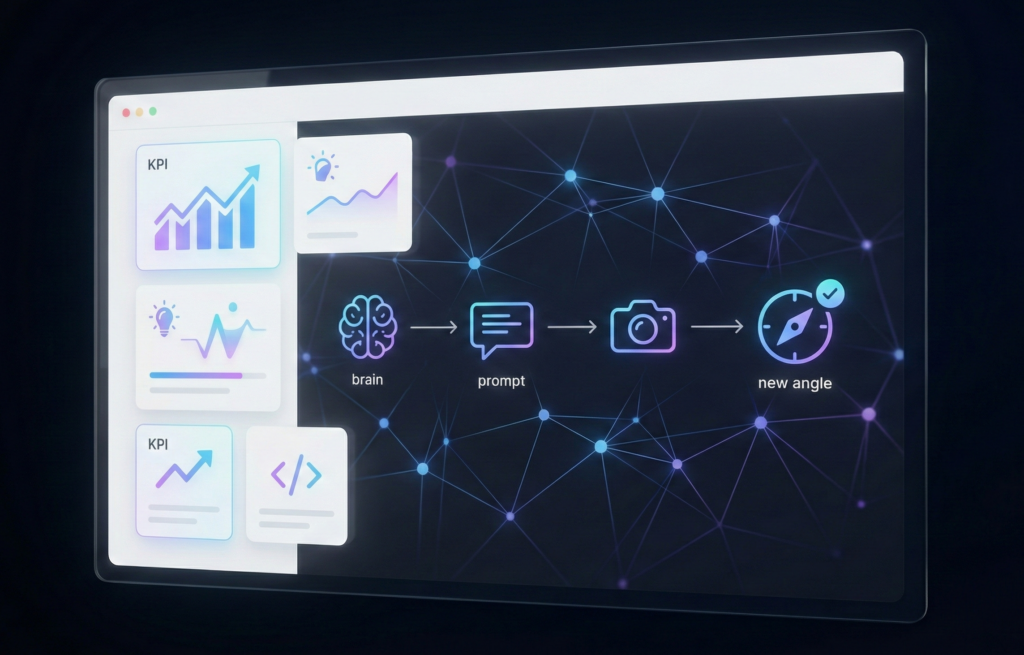
Angles are the perspective you choose to frame your idea. Hooks are the words that pull attention toward that perspective. Together, they act like a door handle. If it looks inviting and easy to grab, people open the door. If it looks dull or confusing, they walk right past it.
The reason angles matter so much today is simple. People are overwhelmed. Feeds are crowded, inboxes are full, and search results are packed with near identical headlines. When everything sounds the same, familiarity becomes invisible. Creativity is no longer optional. It is survival.
A strong angle does three things at once. It signals relevance, creates curiosity, and promises value. When one of these is missing, click-through rates suffer. When all three are present, clicks rise naturally without manipulation or gimmicks.
Here are common reasons content fails to attract clicks even when the topic is strong:
- The angle is too broad and feels generic
- The hook explains too much and removes curiosity
- The promise sounds vague or overused
- The wording focuses on features instead of outcomes
- The angle speaks to everyone and therefore no one
Creative angles are not about being clever for the sake of cleverness. They are about seeing the same idea from a direction your audience has not fully explored yet. Hooks then translate that direction into language that stops the scroll.
Consider how people make click decisions. They do not analyze deeply. They scan. They respond emotionally first, logically second. A hook that sparks recognition or tension will always outperform one that simply informs.
This is where prompts become powerful. Prompts help you generate angles you would not normally think of. Instead of forcing creativity, you guide it. Instead of guessing, you explore structured possibilities.
When you use angle and hook prompts correctly, you are no longer writing headlines randomly. You are systematically testing perspectives that align with how people think, feel, and decide.
In the sections ahead, you will see how different creative angles work, how prompts unlock them, and how to shape hooks that consistently drive higher click-through rates without sacrificing trust or clarity.
Core Creative Angles That Consistently Increase Click-Through Rates
Creative angles are not random. Over time, certain patterns consistently outperform others because they align with human psychology. These angles tap into curiosity, emotion, identity, and self-interest. When used correctly, they feel natural rather than manipulative.
One of the strongest angles is the problem reframing angle. Instead of presenting the obvious problem, you reframe it in a surprising way. This works because people think they already understand the problem. When you show them they might be wrong, curiosity kicks in.
Another powerful angle is the counterintuitive angle. This angle challenges common beliefs. People are drawn to content that promises to overturn what they think they know, especially when it feels safe and credible.
Here are several core angles that consistently drive higher click-through rates:
- Mistake-based angles that highlight what people are doing wrong
- Transformation angles that show before-and-after outcomes
- Curiosity gap angles that hint without fully explaining
- Insider angles that promise behind-the-scenes insight
- Time-saving angles that reduce effort or confusion
- Identity-based angles that speak to who the reader wants to be
- Fear-based angles that warn of consequences without panic
Each of these angles works for a different reason. Mistake-based angles tap into loss aversion. Transformation angles appeal to hope. Insider angles trigger exclusivity. Identity-based angles activate self-image.
What separates high-performing content from average content is not which angle you choose, but how clearly you commit to it. Weak angles often blend too many ideas. Strong angles focus on one clear promise.
Below is a table showing common creative angles, what they trigger psychologically, and when to use them.
| Angle Type | Psychological Trigger | Best Use Case |
|---|---|---|
| Mistake-Based | Loss avoidance | When your audience is frustrated |
| Transformation | Hope and progress | When results are visible and concrete |
| Counterintuitive | Surprise and curiosity | When you can challenge norms safely |
| Insider | Exclusivity | When you have unique experience |
| Time-Saving | Relief | When your audience feels overwhelmed |
| Identity-Based | Self-image | When values and status matter |
Choosing the right angle starts with understanding your audience’s current state. Are they confused, skeptical, hopeful, tired, or curious? The emotional context determines which angle feels most compelling.
For example, if your audience is burned out, a hustle-heavy transformation angle may fall flat. A relief-driven angle that promises ease will perform better. If your audience is confident but curious, counterintuitive angles will spark clicks.
Creative angle prompts help you explore these possibilities without relying on guesswork. Instead of asking “What should I write,” you ask structured questions like:
- What assumption does my audience currently believe?
- What mistake might they not realize they are making?
- What outcome do they want but think is unrealistic?
- What insider detail would surprise them?
Each question opens a different angle. Each angle leads to multiple hooks.
Once the angle is chosen, the next step is translating it into hooks that feel irresistible without overpromising. That is where hook prompts become essential. This is also where creative angles prompts help again: they keep your angle tight, and they keep your hook aligned.
Hook Prompt Frameworks You Can Use Again and Again
Hooks are not just headlines. They are micro-promises. A strong hook makes the reader feel that clicking is the obvious next step. Prompt frameworks help you generate hooks that align tightly with your chosen angle.
One mistake many creators make is trying to write hooks from scratch every time. This leads to repetition and creative fatigue. Framework-based prompts remove that pressure by giving you starting structures that you can adapt endlessly.
A good hook prompt does three things. It defines the audience, highlights the tension, and hints at resolution. When one of these is missing, the hook feels flat.
Below are proven hook prompt frameworks you can reuse across topics.
The Mistake Reveal Prompt:
“What most [audience] get wrong about [topic], and how it’s costing them [undesired outcome].”
This works because it combines curiosity with loss aversion. It makes the reader question their current approach.
The Transformation Prompt:
“How [starting point] turns into [desired result] when you stop doing [common behavior].”
This prompt highlights change while implying simplicity or clarity.
The Curiosity Gap Prompt:
“The surprising reason why [common advice] no longer works for [audience].”
This works best when you genuinely offer a new perspective inside the content.
The Insider Prompt:
“What I learned after [specific experience] that completely changed how I approach [topic].”
This builds trust and personal relevance at the same time.
The Time-Saving Prompt:
“A simpler way to [desired action] without [painful step everyone hates].”
This hook reduces resistance and effort.
You can also stack prompts carefully, but stacking should be subtle. Too many promises reduce credibility. One clear promise beats three vague ones.
Here is a list of practical hook prompts you can adapt immediately:
- “If you feel stuck with [problem], this might be why”
- “Nobody talks about this part of [topic], but it changes everything”
- “I tried [popular method] so you don’t have to”
- “The quiet shift happening in [industry] that most people are missing”
- “Why working harder is not fixing your [problem]”
When writing hooks, clarity always beats cleverness. If the reader has to reread to understand the promise, the hook is too complex. Creative hooks should feel effortless, not intellectual.
Another overlooked element is specificity. Vague hooks attract curiosity but lose trust. Specific hooks build credibility and improve click-through rates because they feel grounded.
Compare these two hooks mentally. One says “How to improve your results.” The other says “How a 10-minute shift improved my results without changing my strategy.” The second one feels more real, even before proof is provided.
Prompts help you add specificity by forcing you to fill in concrete details such as time, audience, outcome, or constraint.
As you practice using hook prompts, you will notice patterns in what performs best for your audience. Those patterns become your personal library of high-converting hooks.
Turning Creative Prompts Into Click-Worthy Headlines Without Losing Trust
High click-through rates mean nothing if readers feel disappointed after clicking. Sustainable success comes from alignment. The hook must match the content. Creative prompts should enhance clarity, not exaggeration.
The goal is not to trick people into clicking. The goal is to help the right people recognize that your content is worth their time.
One way to maintain trust is to ensure every hook answers three silent reader questions:
- Is this for someone like me?
- Will this help me solve a real problem?
- Is this worth my attention right now?
If your hook clearly answers at least two of these, your click-through rate will improve naturally.
Another important step is testing variations. Creative prompts give you options. Instead of settling on one hook, generate five to ten variations from the same angle. Small wording changes can lead to big performance differences.
Here is a simple process you can repeat for any piece of content:
- Choose one primary angle based on audience emotion
- Use three different hook prompts to generate variations
- Remove vague words and add specific outcomes
- Read each hook out loud to test clarity
- Select the one that feels most natural and honest
It is also useful to separate internal clarity from external curiosity. Internally, you should know exactly what the content delivers. Externally, the hook should invite discovery rather than explain everything.
Avoid common trust-breaking habits such as:
- Promising guaranteed results
- Using extreme language without support
- Overusing buzzwords that feel empty
- Creating false urgency that does not exist
Creative hooks do not need hype to perform. They need relevance, clarity, and emotional alignment.
As you build a habit of using creative angle and hook prompts, writing becomes faster and more strategic. Instead of wondering what to say, you focus on how to frame what you already know in a way that resonates.
Over time, this skill compounds. You begin to see angles everywhere. Ordinary topics become interesting because you approach them from a human-centered perspective. Click-through rates rise not because you chase trends, but because you understand attention.
The real power of creative angles prompts lies in consistency. When every piece of content starts with a thoughtful angle and a tested hook, performance becomes predictable rather than accidental.
In a crowded digital space, the creators who win are not always the loudest or the most technical. They are the ones who know how to frame ideas in a way that feels personal, timely, and worth clicking. Creative angles and hooks are not tricks. They are bridges between value and attention.
Related Prompt Libraries
- High-Impact Ad Copy Prompts
- Google Ads Optimization Prompts
- Performance Analytics Prompts
- Prompt Workflow for Improving Conversion Rates
Further Reading
Google Ads Optimization Prompts for Smarter Budget Allocation
Google Ads Optimization Prompts for Smarter Budget Allocation
Table of Contents
If you have ever looked at your Google Ads dashboard and felt unsure where the money is really going, you are not alone. Budget allocation sounds technical, but at its core it is a human problem. You are deciding where to place trust, attention, and resources in hopes of getting meaningful results. Google Ads optimization prompts help bridge that gap between raw data and smart decisions by guiding how you think, analyze, and adjust campaigns.
Most advertisers waste budget not because they lack tools, but because they ask weak questions. They might look at impressions, clicks, or cost per click without asking what those numbers actually mean for growth. Optimization prompts force you to slow down and reframe the problem. Instead of reacting emotionally to performance swings, you learn to analyze patterns and intent.
When you use well-designed prompts, you stop guessing and start directing your budget with purpose. These prompts push you to look beyond surface-level metrics and focus on outcomes that matter. They help you understand why a campaign is burning money or why another is quietly outperforming expectations.
Smarter budget allocation begins with clarity. Optimization prompts give you that clarity by encouraging structured thinking. They help you decide which campaigns deserve more funding, which should be paused, and which need refinement rather than removal.
Here is what makes optimization prompts so powerful in Google Ads budget decisions:
- They turn overwhelming data into focused insights
- They reduce emotional spending decisions
- They highlight inefficiencies you may overlook
- They align budget with real business goals
- They save time by narrowing your analysis
Instead of adjusting bids randomly or increasing spend because a campaign feels promising, prompts help you justify every peso or dollar spent. Over time, this disciplined approach builds confidence and consistency in your advertising strategy. For official guidance you can cross-check your decisions against Google’s documentation in the Google Ads Help Center.
Core Google Ads Optimization Prompts That Guide Budget Decisions
Not all prompts are created equal. Some help with creative direction, while others directly impact how budgets are distributed. The most effective Google Ads optimization prompts focus on intent, performance context, and scalability.
These prompts act like an internal strategist asking the right questions before you touch your budget. They help you understand whether poor performance is a targeting issue, a messaging issue, or a bidding issue. Without this distinction, you risk cutting campaigns that could have been profitable with minor adjustments.
Below are examples of prompt categories that influence smarter budget allocation:
- Performance diagnosis prompts
- Audience efficiency prompts
- Keyword value prompts
- Campaign scaling prompts
- Waste reduction prompts
Each category serves a specific purpose in your optimization workflow. Instead of looking at your account as a single system, prompts help you break it into manageable decision layers.
To make this more practical, here is a table showing example Google Ads optimization prompts and how they guide budget allocation decisions.
| Prompt Focus | Example Optimization Prompt | Budget Impact Insight |
|---|---|---|
| Performance analysis | Analyze which campaigns generate conversions with the lowest cost over the last 30 days | Helps identify where to increase or decrease spend |
| Audience targeting | Identify audience segments with high click volume but low conversion rates | Prevents wasted budget on low-intent users |
| Keyword efficiency | Highlight keywords with high spend but low return on ad spend | Flags areas for pausing or bid reduction |
| Scaling potential | Find campaigns with stable conversion rates that can handle increased budget | Supports confident scaling decisions |
| Waste detection | Detect placements, devices, or locations with poor engagement | Reduces unnecessary spending leaks |
When you use prompts like these consistently, you stop relying on gut feeling. Instead, every adjustment becomes a response to a specific insight. This approach keeps your budget flexible without becoming chaotic.
The real advantage here is repeatability. Once you identify prompts that work for your account, you can reuse them weekly or monthly. Over time, they form a system that protects your budget from impulsive decisions. If you’re using Optimization Score, you can also compare changes against Google’s explanation of recommendations and score behavior in their help docs.
Using Optimization Prompts to Shift Budget Toward High-Intent Traffic
One of the most common budget mistakes in Google Ads is spending too much on volume and too little on intent. High impressions and clicks feel productive, but they do not always translate into conversions. Optimization prompts help you redirect budget toward traffic that actually matters.
High-intent traffic usually reveals itself through behavior patterns. These users search with clarity, engage deeply, and convert with fewer interactions. The challenge is identifying them early enough to allocate more budget in their direction.
Optimization prompts encourage you to look for signals beyond surface metrics. They help you examine search terms, audience behavior, and conversion paths with curiosity instead of assumption.
Here are prompt-driven questions that help shift your budget toward high-intent users:
- Which search queries lead directly to conversions with minimal clicks
- Which campaigns show consistent performance across different days or times
- Which audiences convert faster after first interaction
- Which keywords reflect problem-aware or solution-ready intent
- Which ads attract fewer clicks but higher conversion quality
When you act on these insights, budget allocation becomes more strategic. You stop chasing traffic and start investing in readiness. This shift often results in lower wasted spend and more predictable returns.
Another benefit of intent-focused prompts is stability. High-volume traffic can fluctuate due to trends, seasonality, or competition. High-intent traffic tends to remain more consistent because it is driven by real needs rather than curiosity.
By regularly running intent-based Google Ads optimization prompts, you create a feedback loop. Campaigns that prove their value receive more budget. Those that fail to convert are refined or retired. This disciplined process helps your account mature instead of constantly resetting.
Building a Long-Term Budget Optimization System with Prompts
The true power of Google Ads optimization prompts emerges when they become part of your routine. One-off analysis helps, but long-term success comes from consistency. A prompt-driven system ensures that your budget decisions improve month after month.
Think of prompts as checkpoints rather than emergency tools. You do not wait for performance to collapse before asking questions. Instead, you proactively assess efficiency, scalability, and waste.
A sustainable prompt system usually includes:
- Weekly performance review prompts
- Monthly budget reallocation prompts
- Quarterly scaling evaluation prompts
- Ongoing waste detection prompts
This structure keeps your budget responsive without becoming reactive. You remain in control even when market conditions change.
Over time, prompts also help you document learning. You start noticing patterns like which campaign types scale well or which audiences fatigue quickly. This accumulated knowledge becomes an asset that improves future decision-making.
Another advantage of a prompt-based system is alignment. If you work with a team, prompts create shared language. Everyone evaluates campaigns using the same criteria, reducing confusion and disagreement over budget changes.
Smarter budget allocation is not about perfection. It is about making fewer bad decisions and more informed ones. Optimization prompts support that goal by keeping your thinking structured and your actions intentional.
When you commit to using Google Ads optimization prompts regularly, your budget stops feeling like a risk and starts feeling like a lever. You know when to pull it, when to hold steady, and when to release pressure.
In the long run, this approach builds confidence, efficiency, and scalability. Instead of constantly fixing problems, you spend more time growing what already works. That is the real promise of smarter budget allocation powered by thoughtful optimization prompts.
Related Prompt Libraries
If you want to expand your optimization workflow beyond Google Ads, these internal prompt libraries pair well with this post:
- ROAS Optimization Prompts Every Media Buyer Should Be Using
- The Best Performance Analytics Prompts for Quick Insight Extraction
- The Complete Prompt Workflow for Improving Conversion Rates
- AI Prompts to Scale Campaigns
For external references, you can also review:
High-Impact Ad Copy Prompts for Better CTR and Engagement
25 High-Impact Ad Copy Prompts for Better CTR and Engagement
Table of Contents
High-impact ad copy prompts are the solution when you’ve stared at a blank screen trying to write an ad that actually gets clicks. If you’ve experienced this, you’re not alone. Writing ad copy looks simple on the surface, but in reality it is one of the hardest forms of writing to get right. You have limited space, limited attention, and very little time to make an impression. That is exactly why high-impact ad copy prompts have become such a powerful tool for marketers, founders, and creators.

Why High-Impact Ad Copy Prompts Improve CTR and Engagement
High-impact ad copy prompts help you think faster and more strategically. Instead of guessing what to write, a good prompt gives you a clear angle, a defined audience, and a specific goal. This removes friction from the creative process and allows you to focus on clarity and persuasion. In a crowded digital space where users scroll endlessly, clarity often wins over cleverness.
Another reason prompts matter is consistency. When you rely purely on inspiration, your ad quality will fluctuate. Some days you write strong copy, other days it feels flat. Prompts create a repeatable system. They ensure that every ad you write follows proven psychological triggers such as curiosity, urgency, relevance, or social proof.
High-impact ad copy prompts are especially valuable when you are testing ads. Testing requires volume. You need multiple variations quickly to find what works. Prompts allow you to generate different angles without starting from scratch each time. This is critical for improving click-through rate and engagement because small changes in wording can lead to big performance differences.
Here are some key reasons why prompts directly influence CTR and engagement:
- They force clarity by narrowing the message to one core idea
- They help match the ad to the audience’s awareness level
- They reduce mental friction for both the writer and the reader
- They encourage experimentation without losing structure
- They speed up production while maintaining quality
When ads fail, it is rarely because the product is bad. Most of the time, the message simply does not connect. Prompts help bridge that gap by guiding the copy toward what actually matters to the reader.
Another overlooked benefit of ad copy prompts is alignment. When teams work on ads together, prompts create a shared language. Everyone knows the angle, the goal, and the tone. This reduces revisions and miscommunication, especially in fast-moving campaigns.
At a deeper level, prompts also improve empathy. The best prompts are built around the audience’s problems, fears, desires, and objections. When you write from a prompt like that, you naturally step into the reader’s mindset. That shift alone can dramatically improve engagement because people click on ads that feel like they understand them.
Before moving into specific prompts, it is important to remember one thing. A prompt is not a magic sentence that guarantees results. It is a starting point. The real power comes from how well you adapt the prompt to your product, market, and voice.
CORE PROMPT FRAMEWORKS THAT DRIVE CLICKS
High-impact ad copy prompts are not random. They are built on proven frameworks that have been used in marketing for decades. The difference today is speed and scale. With the right prompts, you can apply these frameworks faster and more consistently.
One of the most effective frameworks is problem-first messaging. This works because people are more motivated to avoid pain than to seek pleasure. A prompt that starts with a clear problem immediately grabs attention, especially when that problem feels specific and familiar.
Another powerful framework is outcome-driven messaging. Instead of focusing on features, the prompt forces you to describe the end result the user wants. This shifts the ad from being product-focused to user-focused, which is critical for engagement.
There is also the curiosity gap framework. This uses incomplete information to spark interest without being misleading. The key here is balance. You want to create curiosity without frustration. A good prompt guides you to tease value while still being clear enough to earn the click.
Below is a table showing core prompt frameworks and how they impact CTR and engagement:
| Framework | What the Prompt Focuses On | Why It Works | Best Use Case |
|---|---|---|---|
| Problem-Solution | A painful or annoying issue the audience faces | Triggers immediate relevance and emotional response | Cold traffic and awareness ads |
| Outcome-Driven | The transformation or result after using the product | Helps users visualize success | Consideration-stage ads |
| Curiosity-Based | A hint of value without full disclosure | Encourages clicks through intrigue | Short-form social ads |
| Social Proof | What others are achieving or saying | Builds trust and reduces doubt | Retargeting and warm audiences |
| Urgency-Based | Time, scarcity, or missed opportunity | Pushes faster decision-making | Promotions and limited offers |
Each framework can be turned into multiple prompts depending on your audience and platform. The key is not to mix too many frameworks in one ad. Focus on one main angle per prompt to keep the message clean and easy to understand.
Here are examples of high-impact prompt structures you can adapt:
- Write an ad that starts with a problem your ideal customer complains about daily
- Create ad copy that focuses only on the end result, not the process
- Write a headline that makes readers think “I need to know this”
- Create ad copy that highlights a common mistake and how to avoid it
- Write an ad that feels like a recommendation from a friend
When using these prompts, always pay attention to language. Simple words usually outperform complex ones. Short sentences create rhythm and make the copy easier to scan. This directly improves engagement, especially on mobile.
Another important factor is specificity. Prompts that include specific scenarios, timeframes, or outcomes tend to perform better. For example, “save hours every week” is more engaging than “save time.” A good prompt nudges you toward that level of detail.
It is also worth noting that different platforms favor different frameworks. What works on search ads may not work on social feeds. Prompts help you adapt quickly by changing the angle without rewriting everything from scratch.
HIGH-IMPACT AD COPY PROMPTS YOU CAN USE IMMEDIATELY
This is where everything comes together. Below are practical, high-impact ad copy prompts designed to improve both CTR and engagement. These are not templates to copy word for word. They are thinking tools that guide you toward stronger messaging.
Problem-Aware Prompts:
- Write an ad that calls out a frustrating problem your audience thinks is “normal”
- Create ad copy that starts with “Still struggling with…” and leads into a solution
- Write an ad that describes the cost of not fixing the problem
- Create ad copy that highlights a daily annoyance your product eliminates
Outcome-Focused Prompts:
- Write an ad that describes life after the problem is solved
- Create ad copy that focuses on how the user will feel after using the product
- Write an ad that starts with “Imagine if…” and paints a clear picture
- Create ad copy that turns a boring feature into a meaningful result
Curiosity and Pattern-Interrupt Prompts:
- Write an ad that challenges a common belief in your industry
- Create ad copy that starts with an unexpected statement
- Write an ad that hints at a shortcut or smarter way
- Create ad copy that asks a question the reader cannot ignore
Social Proof and Trust Prompts:
- Write an ad that highlights a specific result achieved by others
- Create ad copy that sounds like a personal recommendation
- Write an ad that removes a common objection upfront
- Create ad copy that emphasizes credibility without sounding salesy
Urgency and Action Prompts:
- Write an ad that explains what happens if the reader waits
- Create ad copy that highlights limited availability in a natural way
- Write an ad that encourages immediate action without pressure
- Create ad copy that frames action as the smart next step
To get the most out of these prompts, it helps to batch your work. Take one product and run it through several prompts in one sitting. This creates a library of ad variations you can test over time.
It is also important to read your copy out loud. If it sounds awkward or forced, it will likely underperform. High engagement ads often feel conversational and natural, almost like a message from a friend rather than a brand.
Another tip is to pair prompts with real customer language. If you have access to reviews, support tickets, or comments, use that wording inside your prompts. This increases authenticity and can significantly boost engagement.
Do not forget about the call to action. While prompts often focus on the main message, the CTA matters. Prompts that imply a clear next step tend to perform better than vague ones. Instead of telling people to “learn more,” guide them toward what they will gain by clicking.
HOW TO TEST, REFINE, AND SCALE YOUR PROMPTS
Writing strong ad copy is not a one-time effort. It is an ongoing process of testing and refinement. High-impact prompts make this process easier by giving you a structured way to generate and improve ideas.
Start by testing one variable at a time. If you test multiple angles at once, it becomes hard to understand what actually drove the results. Prompts help isolate those angles so you can learn faster.
Pay attention to early signals. CTR tells you if your message is resonating at first glance. Engagement metrics such as comments, saves, or shares tell you if the message goes deeper. A prompt that drives high CTR but low engagement may be too click-focused and not aligned with the landing experience.
Here is a simple refinement process you can follow:
- Launch ads using different prompt frameworks
- Identify which prompts generate the highest CTR
- Analyze the language and angles that perform best
- Refine those prompts with more specificity
- Scale the winning prompts across formats and platforms
Another important step is audience segmentation. The same prompt can perform very differently depending on who sees it. Adjust prompts based on awareness level, demographics, or past interactions. A problem-based prompt may work better for cold audiences, while outcome-based prompts may perform better for warm ones.
Over time, you will start to notice patterns. Certain words, angles, or emotional triggers will consistently outperform others. Document these insights. This turns your ad copy process into a system rather than guesswork.
Scaling does not mean repeating the same ad endlessly. It means expanding the winning idea into new variations. Prompts make this easy because you can explore the same angle from different perspectives without losing the core message.
Finally, remember that engagement is not just about getting attention. It is about setting the right expectations. The best prompts align the ad with the experience that follows. When the message matches the outcome, trust increases and performance improves across the funnel.
High-impact ad copy prompts are not shortcuts. They are tools for better thinking. When used correctly, they help you write ads that feel relevant, human, and worth clicking. Over time, this approach leads to better CTR, stronger engagement, and more sustainable results.
Related Prompt Libraries
If you want to keep building your testing and optimization system, here are a few related posts on Performance Prompts (internal links):
- AI Prompts to Scale Campaigns
- ROAS Optimization Prompts Every Media Buyer Should Be Using
- The Complete Prompt Workflow for Improving Conversion Rates
For platform-specific ad guidance (external links), you can also reference:
Ad Headline Prompts for AI That Will Outperform Competitors
Ad Headline Prompts
Table of Contents
Ad headline prompts is the focus of this guide: a practical set of AI prompt frameworks you can reuse to write clearer, more clickable ad headlines without relying on inspiration.

If you have ever scrolled past an ad without even noticing what it was selling, you already understand how powerful headlines are. In advertising, the headline is not just a line of text. It is the gatekeeper. It decides whether someone stops, reads, clicks, or keeps scrolling like your ad never existed.
Most ads fail not because the product is bad, but because the headline does not create enough curiosity, relevance, or urgency. People today are overwhelmed with content. They are exposed to hundreds, sometimes thousands, of ads every day. This means your headline has about one to three seconds to earn attention. If it does not connect instantly, the ad is dead on arrival.
This is where AI prompts come in. Not because AI magically writes perfect ads, but because the right prompt forces clarity. It helps you think like your audience, frame benefits more sharply, and test angles you might never think of on your own.
Traditional headline writing often follows formulas, but those formulas can get stale. When competitors use the same patterns, audiences become blind to them. AI, when prompted correctly, helps you break patterns while still staying persuasive.
Here is why AI prompts are changing how high-performing headlines are created:
- They speed up idea generation without sacrificing strategy
- They allow rapid testing of multiple emotional angles
- They help remove internal bias from the writing process
- They make it easier to tailor headlines for different platforms
Instead of staring at a blank screen, you start with a strategic instruction. The prompt becomes your creative director. It tells the AI who the audience is, what problem matters most, and what outcome should be promised.
But there is an important detail many people miss. Generic prompts create generic headlines. If you ask AI to “write 10 ad headlines,” you will get safe, predictable lines that sound like everyone else. The advantage comes from precision.
A strong AI prompt includes context, constraints, and intent. It answers questions such as:
- Who exactly is this ad for
- What pain point matters right now
- What makes this offer different from competitors
- What emotion should the headline trigger
For example, compare these two instructions.
The weak one says: write an ad headline for a productivity app.
The strong one says: write five ad headlines for busy managers who feel overwhelmed by meetings, highlighting how this productivity app saves at least one hour per day without adding complexity.
The second prompt forces specificity. Specificity creates relevance. Relevance creates clicks. That is the real value of strong ad headline prompts when you are trying to outperform competitors without being louder.
Before moving on to actual prompts, it is important to understand that outperforming competitors does not mean being louder. It means being clearer, more human, and more emotionally aligned with what people already care about.
AI does not replace human judgment. It amplifies it. The better your thinking, the better the headlines you get back.
Core AI Prompt Frameworks for High-Performing Ad Headlines
To consistently outperform competitors, you need repeatable frameworks. These are not one-off tricks. They are structures you can reuse across campaigns, products, and platforms.
Below are core AI prompt frameworks that consistently produce stronger ad headlines when used correctly.
The Problem Amplification Prompt
This framework works by making the audience feel understood before offering anything. It surfaces a problem they already feel but may not have articulated clearly.
Use this when your competitors focus too much on features instead of pain points.
Prompt structure example:
Write ad headlines that clearly describe the most frustrating problem faced by [specific audience], using emotionally resonant language, without mentioning the solution yet.
Why it works:
People stop scrolling when they feel seen. When a headline mirrors their internal frustration, it earns attention instantly.
Use cases:
- Financial stress
- Time pressure
- Confusion or overwhelm
- Missed opportunities
The Outcome-Focused Prompt
Instead of highlighting features, this framework focuses on life after the solution. It paints a clear picture of improvement.
Prompt structure example:
Generate ad headlines that focus on the ideal outcome [audience] wants after solving [specific problem], emphasizing ease and speed.
Why it works:
People buy outcomes, not tools. When the benefit is crystal clear, objections shrink.
Best situations for this prompt:
- Software tools
- Services with measurable results
- Coaching or education offers
The Competitive Differentiation Prompt
This framework directly helps you stand out in crowded markets. It forces the AI to position your offer against alternatives without naming them.
Prompt structure example:
Create ad headlines that highlight how this offer is different from typical solutions in the market, focusing on what competitors fail to address.
Why it works:
Audiences are already skeptical. They have tried similar offers before. This prompt acknowledges that skepticism instead of ignoring it.
Key elements to include:
- What others do poorly
- What you do differently
- Why that difference matters now
The Curiosity Gap Prompt
This framework leverages open loops. It hints at value without giving everything away.
Prompt structure example:
Write ad headlines that create curiosity around an unexpected insight or result related to [problem], encouraging the reader to click to learn more.
Why it works:
Humans are wired to seek closure. When a headline sparks a question, the click becomes a psychological itch that needs scratching.
When to use this:
- Content-driven ads
- Lead magnets
- Educational offers
The Authority and Credibility Prompt
This framework builds trust quickly by implying expertise, experience, or proof.
Prompt structure example:
Generate ad headlines that position this brand as an experienced authority in solving [problem], without sounding arrogant or salesy.
Why it works:
When audiences do not know you, credibility is currency. Headlines that suggest experience reduce perceived risk.
These frameworks can be mixed and matched. You are not limited to one. In fact, the best-performing ads often combine two, such as problem amplification plus outcome focus.
Advanced AI Prompts That Trigger Emotion, Action, and Memory
Once you master the basics, the real advantage comes from emotional depth. High-performing headlines do not just inform. They trigger feelings. They stick in memory. They create momentum toward action.
Advanced AI prompts are designed to go beyond surface-level benefits.
The Emotion-First Prompt
This prompt forces the AI to lead with a feeling rather than a feature or result.
Prompt structure example:
Write ad headlines that evoke the emotion of [relief, confidence, excitement, security] for [specific audience] dealing with [problem].
Why it works:
Emotion drives action faster than logic. People justify purchases logically, but they decide emotionally.
Emotions that consistently perform well in ads:
- Relief
- Pride
- Control
- Freedom
- Belonging
The Objection-Flipping Prompt
This framework directly addresses the biggest reason people hesitate.
Prompt structure example:
Create ad headlines that gently challenge common objections [audience] has about [type of solution], reframing them as strengths.
Why it works:
Instead of avoiding objections, you neutralize them early. This builds trust and reduces resistance.
Common objections you can flip:
- It takes too much time
- It is too expensive
- It seems complicated
- It did not work before
The Identity-Based Prompt
This prompt speaks to how people see themselves or want to be seen.
Prompt structure example:
Write ad headlines that speak directly to the identity of [audience], reinforcing positive self-image while presenting this offer as a natural fit.
Why it works:
People align actions with identity. When the headline reflects who they believe they are, engagement increases.
Examples of identities:
- Serious professionals
- Smart planners
- Growth-minded entrepreneurs
- Caring parents
The Micro-Story Prompt
This framework compresses a story into a single line.
Prompt structure example:
Generate ad headlines that hint at a short before-and-after story involving [audience] and [problem], without using clichés.
Why it works:
Stories create context. Even a hint of narrative helps the brain process information more deeply.
The Urgency Without Pressure Prompt
This prompt creates momentum without aggressive sales language.
Prompt structure example:
Write ad headlines that create a sense of timely relevance for [offer] without using countdowns or exaggerated scarcity.
Why it works:
Modern audiences are tired of fake urgency. This approach feels respectful while still motivating action.
Advanced prompts require refinement. You rarely use the first output as-is. Instead, you review patterns, spot strong angles, and polish wording.
AI gives you volume. You bring taste.
How to Test, Refine, and Scale Winning AI-Generated Headlines
Writing headlines is only half the work. The real advantage comes from testing and iteration. Even the best headline is still a hypothesis until the market responds.
This is where AI truly shines as a scalable tool.
Start by generating volume with intention. Do not test random headlines. Group them by angle.
For example:
- Five headlines focused on pain
- Five focused on outcome
- Five focused on curiosity
- Five focused on identity
This allows you to learn which emotional drivers work best for your audience.
When reviewing AI-generated headlines, ask these questions:
- Does this sound like something a real person would say
- Is the benefit immediately clear or emotionally felt
- Would this stand out next to competitor ads
- Is the language specific or vague
You should also refine headlines manually. Small edits make a big difference.
Ways to improve AI headlines:
- Shorten them without losing meaning
- Replace generic verbs with vivid ones
- Remove unnecessary adjectives
- Add specificity where possible
Testing should be consistent but focused. Change one variable at a time. If you change the headline, keep the image and copy the same. This helps you isolate what actually caused performance changes.
Over time, patterns will emerge. You may notice that:
- Question-based headlines outperform statements
- Emotional language beats logical framing
- Simpler words get more clicks than clever ones
Feed these insights back into your prompts.
For example, instead of saying:
Write ad headlines for a budgeting app
You evolve to:
Write short, emotionally driven ad headlines for first-time budgeters who feel anxious about money and want a simple starting point.
This creates a feedback loop. Performance informs prompts. Prompts inform headlines. Headlines inform performance.
Finally, remember that outperforming competitors is not about chasing trends endlessly. It is about understanding your audience better than anyone else and expressing that understanding clearly.
AI helps you get there faster. But strategy, empathy, and judgment are still human skills.
When you combine thoughtful prompts with real-world testing, you stop guessing and start engineering better headlines. And in advertising, that edge compounds faster than almost anything else. Use these ad headline prompts as a repeatable system, not a one-time trick.
Related Prompt Libraries
- High-Impact Ad Copy Prompts
- Creative Angles Prompts
- Creative Variation Prompts
- Google Ads Optimization Prompts