Analytics & Insights
Prompts for analysis, reporting, and decision-making: funnel diagnosis, cohort insights, KPI dashboards, attribution thinking, and performance reporting.
Performance Review Prompts to Audit Campaigns Like a Pro
Performance review prompts help you audit campaigns like a pro by turning dashboards into clear decisions. If you have ever sat through a campaign performance review that felt confusing, rushed, or oddly unhelpful, you are not alone. Many reviews focus too much on surface-level numbers and not enough on what those numbers actually mean. You see impressions, clicks, and conversions, but you walk away unsure of what worked, what did not, and what to do next. That is not a real audit. That is just reporting.

Table of Contents
Why Performance Reviews Fail Without Good Questions
The biggest reason campaign reviews fail is the lack of good questions. When you do not ask the right questions, you get shallow insights. You end up reacting instead of learning. This is where performance review prompts make a huge difference. Prompts force clarity. They guide thinking. They help you dig deeper without getting lost in dashboards and spreadsheets.
A prompt is not just a question. It is a structured way of examining performance. Instead of asking, “Did this campaign perform well?” a better prompt would be, “What specific actions taken in this campaign directly influenced the final conversion rate, and which actions had no measurable impact?” That shift alone changes the quality of the conversation.
When you audit campaigns like a pro, you stop treating metrics as final answers. You treat them as clues. A high click-through rate is not automatically good. A low conversion rate is not automatically bad. The real value comes from understanding why those numbers happened and what they tell you about audience behavior, messaging, timing, and execution.
Professional-level audits rely on three core ideas. First, performance must always be reviewed against intent, not just outcomes. Second, every metric should connect to a decision. Third, insights must lead to clear next steps. Prompts help enforce all three.
Common mistakes that happen without strong performance review prompts:
- Reviewing metrics in isolation instead of in sequence
- Comparing campaigns without aligning objectives
- Focusing on wins without understanding trade-offs
- Ignoring underperforming segments instead of learning from them
- Ending reviews without actionable conclusions
Good prompts fix this by slowing the process down in the right way. They help you examine setup, execution, results, and learnings as one continuous story. This turns your review from a post-mortem into a strategic tool.
Another reason prompts matter is consistency. If you review campaigns differently every time, you cannot spot patterns. Prompts create a repeatable framework. Over time, you start seeing trends across campaigns, audiences, creatives, and channels. That is how professionals build intuition that is backed by data, not guesses.
Performance review prompts also make collaboration easier. When everyone on the team uses the same prompts, discussions become clearer and less emotional. Instead of arguing opinions, you analyze evidence together. This is especially important when reviewing campaigns with mixed results.
Most importantly, prompts shift the goal of a review. The goal is no longer to justify results or defend decisions. The goal becomes learning. When learning becomes the focus, improvement follows naturally.
Pre-Campaign and Strategy Audit Prompts That Set the Context
A true campaign audit does not start after the campaign ends. It starts by revisiting how the campaign was planned. Without context, performance numbers are misleading. Before looking at results, you need to understand the original intent and constraints.
This section focuses on prompts that help you audit the strategic foundation of a campaign. These prompts ensure you are not judging outcomes unfairly or overlooking early decisions that shaped performance.
Start by examining the campaign objective. Many campaigns fail because the objective was unclear or poorly defined.
Use prompts like these:
- What was the primary objective of this campaign, and how was success defined before launch?
- Was there a single clear goal, or were multiple goals competing for attention?
- How did this objective align with broader business or marketing goals at the time?
Next, look at the audience strategy. Audience mismatch is one of the most common reasons campaigns underperform.
Ask questions such as:
- Who was the intended audience, and how was this audience selected?
- What assumptions were made about this audience’s needs, pain points, or motivations?
- Did the targeting logic match the campaign objective, or was it based on convenience?
Budget and resource allocation also deserve scrutiny. Many teams review performance without questioning whether the campaign was given a fair chance to succeed.
Key prompts include:
- Was the budget sufficient to test and scale effectively?
- How was the budget distributed across channels, formats, or segments?
- Were there constraints that limited experimentation or optimization?
Creative and messaging decisions are another critical area. A campaign can fail not because of strategy, but because execution did not support it.
Use prompts like:
- What core message was this campaign trying to communicate?
- How clearly did the creative express that message?
- Were there variations designed to test different angles, or was the approach static?
Timing and external factors should also be considered. Performance does not happen in a vacuum.
Ask yourself:
- When did this campaign run, and why was that timing chosen?
- Were there seasonal trends, market changes, or internal events that influenced results?
- How flexible was the campaign plan when conditions changed?
By answering these prompts before reviewing metrics, you build a fair and informed lens. You stop blaming results without understanding the setup. This alone can prevent repeated mistakes across future campaigns.
A professional audit treats strategy as part of performance. If the foundation was weak, even great execution would struggle. These prompts help you identify whether the campaign was set up for success in the first place.
In-Campaign Performance Prompts That Reveal What Really Happened
Once context is clear, it is time to analyze what actually happened during the campaign. This is where most reviews spend all their time, but without structure, the analysis often stays shallow. Performance review prompts bring focus and depth to this stage.
Start with delivery and reach. Before evaluating engagement or conversions, you need to know whether the campaign reached the right people at the right scale.
Helpful prompts include:
- Did the campaign deliver as planned in terms of reach and frequency?
- Which segments received the most exposure, and which were underexposed?
- Were there delivery issues that affected performance early on?
Next, examine engagement behavior. Engagement metrics are only useful when interpreted in context.
Ask questions such as:
- How did different audience segments engage with the campaign?
- Which creatives or messages generated meaningful interaction versus passive views?
- Where did engagement drop off, and what might explain that pattern?
Conversion analysis should go deeper than totals and rates. You want to understand the journey, not just the destination.
Use prompts like:
- Where in the funnel did users convert or drop off?
- Which steps in the process created friction or hesitation?
- Did conversion behavior align with the original user intent?
Optimization decisions made during the campaign deserve careful review. Many insights are hidden in what was changed, not just in final results.
Ask yourself:
- What optimizations were made during the campaign, and why?
- Which changes led to measurable improvements, and which had little effect?
- Were optimizations reactive or based on clear signals?
Channel and format performance is another area where prompts help avoid misleading conclusions.
Consider prompts such as:
- How did each channel contribute to the overall objective?
- Were some channels better at awareness while others drove action?
- Did format performance align with how each channel is typically used?
It is also important to examine what did not happen. Missed opportunities can be just as valuable as wins.
Ask questions like:
- Which ideas or tests were planned but not executed?
- What data was missing that would have improved decision-making?
- Were there warning signs that were ignored or noticed too late?
Throughout this analysis, the goal is not to label performance as good or bad. The goal is to identify cause-and-effect relationships. You want to understand which actions influenced outcomes and why.
A pro-level audit uses prompts to turn raw data into insights. Instead of saying, “This campaign underperformed,” you can say, “This campaign struggled because the message did not match audience intent, and optimization came too late to correct it.” That level of clarity is what separates professionals from amateurs.
Post-Campaign Insight Prompts That Drive Smarter Future Decisions
The final and most important stage of a campaign audit is turning insights into action. Too many reviews end with observations but no follow-through. Performance review prompts ensure that learnings are captured, prioritized, and applied.
Start by identifying key takeaways. Not every insight matters equally.
Use prompts such as:
- What are the top three insights that had the biggest impact on performance?
- Which findings are specific to this campaign, and which are broadly applicable?
- What surprised the team, and why?
Next, focus on decisions. Insights only matter if they influence future choices.
Ask questions like:
- What should we do differently in the next campaign based on these findings?
- What should we repeat because it clearly worked?
- What should we stop doing because it consistently underperforms?
Risk and experimentation should also be reviewed. Growth often comes from smart risks, not safe repetition.
Consider prompts such as:
- Which experiments delivered meaningful learning, even if results were mixed?
- What risks paid off, and what risks failed for understandable reasons?
- How can future tests be designed more efficiently?
Documentation and knowledge sharing are often overlooked but critical.
Ask yourself:
- How are these insights being documented for future reference?
- Who needs access to these learnings beyond the immediate team?
- How can these findings be incorporated into planning frameworks or templates?
Finally, zoom out and evaluate the review process itself.
Use reflective prompts like:
- What worked well in this campaign review process?
- Where did the review feel unclear or rushed?
- How can prompts be improved for the next audit?
This step closes the loop. You are not just auditing campaigns. You are improving how you audit campaigns. Over time, this creates a culture of learning and continuous improvement.
When performance review prompts are used consistently, campaign audits stop being stressful or defensive. They become productive conversations focused on growth. Teams become more confident in their decisions because those decisions are grounded in structured thinking, not guesswork.
Auditing campaigns like a pro is not about having more data. It is about asking better questions. Prompts give you those questions. When used well, they transform reviews into one of the most valuable parts of your marketing process.
Related Performance Prompts Guides
- How to Use PerformancePrompts to Diagnose Failing Ad Campaigns
- The Best Performance Analytics Prompts for Quick Insight Extraction
- The Complete Prompt Workflow for Improving Conversion Rates
External reference: For a practical overview of what to evaluate in marketing measurement and performance analysis, see Google Analytics reporting overview.
FAQs
What are performance review prompts?
Performance review prompts are structured questions used to audit campaign setup, execution, and results so you can understand what drove performance and what to do next.
How do I run a campaign audit like a pro?
Start with context (objective, audience, budget, creative), then analyze in-campaign delivery and funnel behavior, and end by documenting learnings as decisions: repeat, change, stop.
What should a campaign performance review include?
A strong review includes strategy alignment, delivery and engagement analysis, conversion and funnel diagnostics, optimization decisions, and a prioritized action plan for next steps.
How often should I review campaigns?
Run light reviews weekly during active campaigns and deeper audits monthly or after major tests, launches, or budget shifts.
How do prompts improve review quality?
They create consistency, reduce emotional debates, force cause-and-effect thinking, and ensure every metric leads to a clear decision.
How to Use Performance Prompts to Diagnose Failing Ad Campaigns
It’s easier to Diagnose Failing Ad Campaigns when you stop guessing and start interrogating the funnel with structured questions. This guide shows how to use PerformancePrompts to pinpoint where an ad campaign is failing (attention, interest, trust, or action) and what to test next.
Diagnose Failing Ad Campaigns With a Simple Funnel Audit

Table of Contents
Why campaigns fail quietly
If you have ever stared at an ad dashboard wondering why impressions look fine but conversions feel allergic to your offer, you are not alone. Most ad campaigns do not fail loudly. They fail quietly, slowly, and politely while draining budget one click at a time. The real problem is not usually the platform, the audience size, or even the ad format. It is the lack of structured thinking during diagnosis.
This is where PerformancePrompts come in. Think of them as guided conversations with your own data. Instead of guessing why an ad is underperforming, you ask smarter, sharper questions that force clarity. PerformancePrompts are not magic phrases. They are frameworks that push you to isolate variables, challenge assumptions, and surface blind spots you would otherwise miss.
A failing campaign usually gives off subtle signals long before the cost per acquisition spikes. Click through rates might be average but session time is weak. Conversions might happen but not at scale. Frequency might be creeping up while engagement is quietly dropping. Without a system, these signals feel disconnected. With PerformancePrompts, they form a pattern.
One reason campaigns stall is that marketers often diagnose problems in the wrong order. They jump straight to creative changes without confirming audience fit. Or they tweak targeting before understanding intent mismatch. PerformancePrompts force sequence. They slow you down just enough to ask the right question at the right time.
Here is an example of a shallow question versus a PerformancePrompt style question.
A shallow question sounds like, why is this ad not converting?
A PerformancePrompt sounds like, which stage of the user decision process is this ad failing to support and what evidence in the metrics confirms that?
That difference matters. The second question leads you to examine scroll depth, bounce rate, offer clarity, and message alignment instead of randomly swapping headlines.
Another reason campaigns fail is emotional attachment. You like the copy. You love the visuals. You are convinced the offer is solid. PerformancePrompts remove ego from the room. They turn opinions into testable statements.
Before you even touch performance data, PerformancePrompts encourage you to define what success actually means for this campaign. Not in vague terms like more leads or better sales, but in observable behaviors.
Examples include:
- A first click within three seconds of impression
- A landing page scroll depth beyond fifty percent
- A conversion event triggered within a single session
- A return visit within forty eight hours
When you define success behaviorally, failure becomes easier to spot and easier to fix.
PerformancePrompts also help you avoid the common trap of blaming traffic quality without proof. Instead of saying the audience is bad, you ask whether the message assumes a level of awareness the audience does not yet have. That is a very different problem with a very different solution.
This section matters because diagnosis is the foundation. Without it, every optimization is just noise. PerformancePrompts give you a lens that turns confusing data into a clear story. Once you see the story, the fixes become obvious.
Using Performance Prompts to Isolate the Real Point of Failure
Most ad campaigns do not fail everywhere. They fail somewhere specific. The job of PerformancePrompts is to help you find that exact spot instead of guessing.
The four-layer diagnostic model
A clean way to do this is to break the campaign into four functional layers:
- Attention
- Interest
- Trust
- Action
Each layer has its own signals, metrics, and failure modes. PerformancePrompts are designed to interrogate each layer independently.
Start with attention. This is where impressions and clicks live. A common mistake is celebrating clicks without checking context. A PerformancePrompt for this layer might sound like this.
What promise does this ad make in under five seconds, and does the audience have a reason to care right now?
If impressions are high but clicks are low, the issue is not the platform. It is the promise. Either the hook is unclear, irrelevant, or competing with stronger alternatives in the feed.
If clicks are decent but cost per click is high, another prompt applies.
Is this ad attracting curiosity clicks or intent driven clicks, and how can I tell from post click behavior?
You answer that by checking bounce rate, time on page, and next action. Curiosity clicks look good on the surface and die immediately after.
Next comes interest. This is where many campaigns quietly collapse. The ad gets the click, but the landing experience fails to carry momentum.
A useful PerformancePrompt here is:
Does the first screen of the landing page continue the exact conversation started in the ad?
Mismatch kills interest. If the ad promises simplicity and the landing page opens with jargon, you have friction. If the ad promises speed and the page loads slowly, trust erodes instantly.
Interest level prompts also help diagnose information overload. Too many offers, too many buttons, too many explanations. PerformancePrompts push you to ask whether the page is trying to do too much for a cold visitor.
Then comes trust. This is the layer most marketers underestimate. People do not convert because they understand. They convert because they feel safe.
A PerformancePrompt for trust might be:
What objection would a skeptical but interested user have at this exact point, and where is it addressed?
If testimonials are buried, guarantees are vague, or social proof is missing, conversions stall even when interest is high. Trust issues often show up as long session times with no action.
Finally, there is action. This is where clear intent still fails to convert.
A strong PerformancePrompt here is:
Is the call to action the easiest next step or an emotional leap?
If you ask for too much too soon, users hesitate. PerformancePrompts help you see whether the ask matches the level of commitment you have earned.
To make this practical, here is a simple diagnostic flow using PerformancePrompts.
If impressions are low, question targeting and bid competitiveness
If impressions are high but clicks are low, question the hook
If clicks are high but engagement is low, question message match
If engagement is high but conversions are low, question trust and friction
If conversions happen but scale is limited, question offer depth and audience size
Each step uses a different prompt. Each prompt narrows the problem.
This approach saves money because you stop fixing the wrong thing. You do not redesign a landing page when the ad promise is wrong. You do not rewrite copy when the issue is page speed or form friction.
PerformancePrompts turn campaign optimization into a diagnostic discipline instead of a creative guessing game.
Turning PerformancePrompts Into Repeatable Diagnostic Sessions
One of the biggest advantages of PerformancePrompts is that they are reusable. Once you build your prompt set, diagnosing campaigns becomes faster and more consistent.
Think of a PerformancePrompt session as a structured review, not a reaction to panic metrics. You schedule it. You follow steps. You document answers.
A typical session might look like this.
First, define the campaign intent in one sentence. Not what you hope it does, but what it is designed to do.
For example:
This campaign is designed to attract problem aware users and move them to request a demo.
Then you run through prompt categories.
Attention prompts
- What emotional or practical trigger does this ad rely on?
- Is that trigger urgent or passive?
- What competing messages are likely in the same feed?
Interest prompts
- What question does the user expect answered immediately after clicking?
- Does the landing page answer that question without scrolling?
- What distraction exists above the fold?
Trust prompts
- What proof supports the main claim?
- Is the proof specific or generic?
- Does it match the audience’s sophistication level?
Action prompts
- What fear might prevent the click on the call to action?
- Is the call to action framed as gain or risk?
- Is there a lower commitment alternative?
You answer these prompts using real data and real screenshots. Not opinions.
The power comes from pattern recognition over time. When you review multiple campaigns with the same prompts, trends emerge. You might notice that your ads consistently attract clicks but struggle with trust. Or that your offers work well for warm audiences but collapse for cold traffic.
PerformancePrompts also make collaboration easier. Instead of arguing about creative preferences, teams discuss answers to the same questions. That shifts conversations from subjective to diagnostic.
Another benefit is emotional detachment. When a campaign fails, it is easy to feel defensive or frustrated. PerformancePrompts reframe failure as feedback. The campaign is not bad. It is simply answering your prompts honestly.
Over time, you can refine your prompt library. You might add platform specific prompts, like feed fatigue signals or creative rotation thresholds. You might add funnel stage prompts for retargeting campaigns.
The key is consistency. The same prompts used across campaigns create a baseline. That baseline makes anomalies obvious and improvements measurable.
PerformancePrompts also help with documentation. When you log prompt answers before and after changes, you create a learning archive. That archive becomes a strategic asset. New campaigns improve faster because past mistakes are visible.
Instead of asking what should we try next, you ask what did the prompts reveal last time when we saw this pattern.
That shift alone can dramatically reduce wasted spend.
Using PerformancePrompts to Decide What to Fix and What to Leave Alone
Not every underperforming metric deserves intervention. One of the most underrated skills in advertising is knowing what not to touch.
PerformancePrompts help here too.
A common mistake is over optimizing. Changing too many variables at once makes it impossible to know what worked. PerformancePrompts force prioritization.
A useful decision making prompt is:
Which single change would most directly remove the biggest point of friction revealed by the prompts?
This keeps you focused. If trust is the issue, do not rewrite headlines. Add proof. If interest is the issue, do not adjust bids. Fix message continuity.
Another important prompt is:
Is this campaign failing because of execution or because of strategy?
Execution failures are fixable. Strategy failures require a rethink.
Execution failures include:
- Weak hooks
- Poor message match
- Slow landing pages
- Confusing calls to action
Strategy failures include:
- Wrong audience awareness level
- Offer misalignment
- Insufficient differentiation
- Unrealistic conversion expectations
PerformancePrompts help you see which category you are dealing with. That saves time and prevents endless tweaking of a campaign that should simply be paused or restructured.
They also help you decide when to scale. If prompts show that all layers are working and metrics confirm it, the next question is not what to fix but how to expand.
Scaling prompts might include:
- What adjacent audience shares this problem?
- What alternative angle speaks to the same intent?
- What higher commitment offer could this lead into?
By using PerformancePrompts at every stage, you turn ad management into a feedback loop. Launch, diagnose, adjust, document, repeat.
The biggest shift is mental. You stop reacting to dashboards and start interrogating systems. You stop blaming platforms and start refining conversations.
Failing ad campaigns are not enemies. They are data rich teachers. PerformancePrompts simply give you the language to listen.
When you adopt this approach, something interesting happens. Campaigns fail faster, cheaper, and more informatively. Success becomes less mysterious. And optimization stops feeling like guesswork and starts feeling like problem solving.
That is the real value of PerformancePrompts. Not better ads in isolation, but better thinking behind every decision you make.
Related guides on PerformancePrompts
- Performance Review Prompts to Audit Campaigns Like a Pro
- The Best Performance Analytics Prompts for Quick Insight Extraction
- The Complete Prompt Workflow for Improving Conversion Rates
For a solid baseline troubleshooting checklist on measurement (one of the most common “silent failures”), see: Google Ads Help: Troubleshoot conversion tracking.
FAQ
What’s the fastest way to diagnose a failing ad campaign?
Break the funnel into attention, interest, trust, and action. Then use prompts to identify the first layer where behavior stops matching intent.
How do I know if the problem is the ad or the landing page?
If clicks are healthy but engagement and conversions collapse, the issue is usually message match or landing-page friction. Use the interest and trust prompt sets to validate.
Should I pause a failing campaign immediately?
Not always. If the prompts point to execution issues (hook, proof, CTA, page speed), test fixes first. If they point to strategy (wrong audience awareness or offer mismatch), restructure.
How often should I run a diagnostic prompt session?
Weekly for active spend or whenever you see a meaningful shift in ROAS/CPA. Consistency beats “big audits” because patterns show up over time.
What metrics matter most when diagnosing failure?
Start with the inputs that drive outcomes: impressions and CTR (attention), bounce/time-on-page (interest), CVR/AOV (trust/action), plus tracking integrity for attribution.
“
How AI Prompts Can Predict Which Ad Copy Will Win
Ad copy prompts help you move from ‘reporting’ to decisions by forcing clarity, comparison, and next steps. Use this post as a prompt library you can reuse across accounts and platforms.
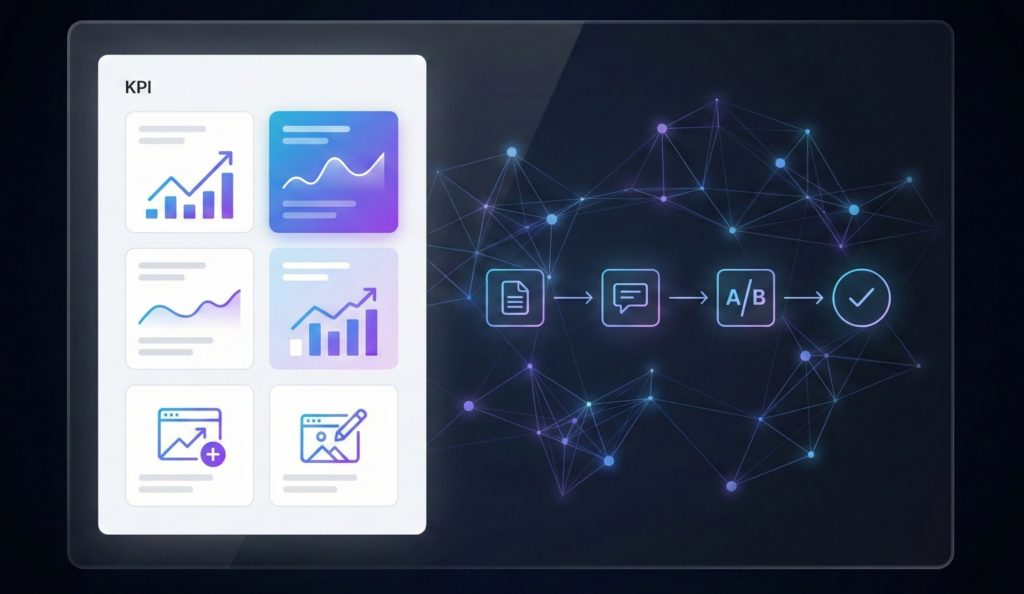
Table of Contents
Ad Copy Prompts: What They Are and How They Work
In the world of marketing and advertising, one of the biggest challenges brands and agencies face is determining which ad copy will resonate most with their audience. Creating great creative work is only half the battle; the other half is predicting whether that creative will perform well once it goes live. Traditionally, advertisers relied on a combination of intuition, past experience, focus groups, and A/B testing to assess the potential success of ad copy. While these methods offer some insight, they are often time-consuming, expensive, and not always accurate.
Enter artificial intelligence. AI has rapidly transformed many industries, and advertising is no exception. AI-driven technologies can now analyze patterns, interpret consumer behavior, and predict outcomes faster and more efficiently than human analysis alone. Ad copy prompts are one of the most practical applications of this technology, allowing marketers to generate and test dozens of headline variations in minutes. Among these technologies, AI prompts—queries or commands given to an AI system to generate a response—are becoming powerful tools for evaluating creative concepts before significant budget is spent.
But the idea of AI predicting which ad concepts will win raises several questions. How does it work? Can it really understand human preferences? What role do human strategists play in the process? And perhaps most importantly, how can marketers use AI prompts to improve decision making and drive better campaign performance?
Before we explore the mechanics and benefits of AI prompts in advertising, we need to recognize the core challenge: advertising is ultimately about people. People are unpredictable, nuanced, and influenced by countless factors. What one group finds compelling, another might see as irrelevant. Historically, marketers have tried to connect with consumers by relying on their own insights, creative agencies’ experience, and sometimes gut instinct. While those elements remain important, AI prompts now add a data-driven layer that enhances our predictive capabilities.
AI doesn’t replace human creativity, but it helps uncover patterns and preferences that may not be immediately obvious. In essence, AI prompts are like having a smart assistant that can simulate how different audiences might respond to various ad ideas. That simulation doesn’t guarantee a hit, but it does improve the odds of choosing ad copy that will perform better in the real world.
In the next sections, we’ll break down the nuts and bolts of how AI prompts work, how they fit into the creative evaluation process, and how marketers can leverage them to make smarter decisions.
How AI Prompts Work in Predicting Ad Performance
At its core, an AI prompt is a carefully crafted instruction given to an AI model to produce a specific response. In the context of advertising, an AI prompt might ask the system to evaluate an ad concept, compare multiple versions, or predict how an audience will respond to a particular message.
To understand how this works, it helps to think about the AI model’s capabilities. Modern AI models are trained on massive amounts of text and data. They learn linguistic patterns, associations between concepts, and even common consumer sentiments, based on what they’ve processed during training. When you give an AI prompt related to advertising, the model uses that learned information to generate predictions that reflect general trends and insights.
For example, an AI prompt could be something like: “Given the target audience of urban millennial professionals, which of these two ad headlines is more likely to drive engagement and why?” The AI can analyze the language of each headline, consider assumptions about the audience’s preferences, and provide a reasoned prediction. This doesn’t happen by the AI thinking in human terms; rather, it’s pattern recognition at scale. The model has seen enough examples of language use, marketing content, and consumer interactions during training to make a statistically grounded prediction.
While not infallible, these predictions can offer valuable directional insight.
Marketers can use AI prompts in several ways:
- First, ad copy prompts can assess individual headlines, descriptions, and calls-to-action across multiple dimensions. Instead of relying purely on internal opinions or limited focus group feedback, teams can ask the AI to evaluate messaging across multiple dimensions—clarity, emotional resonance, perceived value, and audience fit.
- Second, AI prompts can be used to compare variants. If a brand is considering two different taglines, visuals, or calls to action, asking the AI to compare them side-by-side can reveal which one is likely to perform better based on language tone and messaging structure.
- Third, AI prompts can simulate audience feedback. By specifying demographic or psychographic characteristics, marketers can tailor prompts to mimic how specific segments might react. This is akin to having a rapid, low-cost surrogate for qualitative research.
These ad copy prompts work particularly well for platforms like Google Ads and Meta, where character limits and messaging constraints require precision and testing.
Of course, a critical part of using AI prompts effectively is crafting the prompts themselves. A vague or poorly worded prompt will yield unclear or unhelpful results. The best prompts specify context, audience, and the aspect of performance being evaluated. They might ask about emotional response, recall likelihood, or clarity of message. By refining the prompts, marketers can extract richer insight from the AI.
It’s also important to emphasize that AI doesn’t “know” the future. It doesn’t possess foresight or consciousness. What it provides are projections based on learned patterns and probabilities. When integrated thoughtfully into a broader evaluation process, these projections help reduce uncertainty and guide better decisions.
In the next section, we’ll explore how AI prompts fit into the broader creative development and testing workflow.
Integrating AI Prompts into the Creative Workflow
Integrating AI into the creative workflow doesn’t mean replacing existing practices; it means enhancing them. The goal of AI prompts in advertising is to add a predictive lens early in the process so that teams can refine concepts before they invest in production or media spend.
In a traditional workflow, ideas are generated, discussed internally, perhaps tested with small groups, and then rolled out. With AI prompts, an additional step can be inserted: the AI-driven evaluation phase. This occurs after initial concept development but before final testing or production.
Here’s how it typically works:
- First, the creative team generates a set of candidate concepts. These might be different messaging directions, headline options, or visual styles. Usually, this stage involves brainstorming sessions, creative reviews, and iterations.
- Next, instead of immediately testing all these concepts in the market, the team uses ad copy prompts to evaluate headlines, body text, and calls-to-action. They might ask the AI to rank the concepts based on likely engagement, emotional resonance, or clarity. The prompts might incorporate audience specifications: age group, interests, location, or even cultural nuances.
- Once the AI provides its insights, the team can use that information in multiple ways. One approach is to narrow the field. Concepts that AI predicts as weaker can be refined or shelved, allowing the team to focus on the stronger ones. This saves time and reduces the number of concepts that need expensive production or live testing.
- Another approach is iterative refinement. If the AI highlights a particular weakness—say, a concept lacks emotional appeal—the team can revise the messaging and ask the AI to reassess the new version. This creates a feedback loop where AI helps shape the creative.
Even after AI evaluation, human judgment remains critical. Insights from subject matter experts, brand strategists, and cultural context specialists are essential. AI is a tool, not an oracle. It complements human intuition rather than replacing it.
The next step in many workflows is validation through testing. AI predictions can inform whether a concept is likely to succeed, but real-world testing—through controlled A/B tests or market pilots—provides actual performance data. AI can guide which variants to test, making testing more efficient by focusing on the most promising options.
This integrated approach—creative work, AI evaluation, human review, and testing—creates a robust process that blends intuition with data-informed predictions. It reduces the risk of launching underperforming creative and enables quicker learning cycles.
For teams wondering when to introduce AI prompts, the answer is early but not at the expense of creativity. Using AI to shape and prioritize concepts early on prevents wasted effort later. It also enables creative teams to be more strategic about where they allocate their energy.
By running ad copy prompts weekly, teams can maintain a pipeline of tested, optimized messaging ready to deploy.
Now let’s explore the broader implications for marketers and creatives when using AI as a strategic partner in advertising.
The Future of AI-Driven Creative Decision Making
As AI continues to evolve, its role in advertising will expand beyond simple prediction. Already, marketers are experimenting with AI-assisted ideation, automated content generation, and personalized messaging at scale. AI prompts represent a bridge between raw creative thinking and data-driven prediction.
One of the most exciting prospects is the idea of dynamic creative optimization, where AI not only predicts which concept will win but also adjusts creative elements in real time based on audience feedback. For example, if an AI identifies that certain messaging resonates stronger with a specific subgroup, it could automatically tailor ads for that subgroup without manual intervention. Predictive prompts could become part of larger systems that continuously learn and adapt.
Another future development is more sophisticated audience modeling. Today’s AI can approximate audience reactions based on general patterns. In the future, AI models may be able to integrate proprietary data—like past campaign performance, customer purchase behavior, and market trends—to make more precise predictions. This would effectively create a predictive engine tailored to each brand’s unique ecosystem.
There are also ethical considerations as AI becomes more embedded in creative decisions. Questions about bias, transparency, and accountability arise. If an AI model recommends a particular concept, marketers need to understand not just what the recommendation is but why it was made. This requires human oversight and a commitment to ethical use of AI.
For creatives who worry that AI might replace them, it’s important to understand that creativity is inherently human. AI can surface patterns and suggest possibilities, but the emotional depth, cultural insight, and narrative brilliance of great advertising still come from human minds. AI amplifies human potential; it does not replace it.
Adoption of AI prompts also encourages stronger collaboration between teams. Creative departments, data scientists, strategists, and media planners must work together to define effective prompts, interpret results, and make strategic decisions. This interdisciplinary approach leads to richer outcomes and a more unified process.
As organizations become more comfortable with AI-driven insights, we can expect a shift in how campaigns are conceived and optimized. Instead of linear processes, teams will adopt iterative, AI-in-the-loop workflows that allow for rapid experimentation and learning. Predictive prompts will not just foresee which concept might win; they will help guide real-time optimization throughout a campaign’s lifecycle.
There will be challenges along the way. Teams must avoid overreliance on AI predictions without context. They must guard against echo chambers where AI reinforces existing biases. They must ensure that human creativity is still valued and that AI serves as an empowering tool rather than a crutch.
Despite these challenges, the outlook is promising. Marketers who leverage AI prompts effectively will be able to make smarter decisions with greater confidence. They will reduce wasted spend, better anticipate audience reactions, and create work that resonates more deeply.
In the end, advertising is about connection—between a brand and its audience. AI prompts offer a powerful way to understand and predict that connection, blending data-driven insight with human creativity. For teams willing to embrace this technology thoughtfully, the result will be not just better ads, but more meaningful engagement and business impact.
Related Performance Prompts Guides
- Split Testing Prompts to Find Winning Creatives
- Creative Ad Variations Made Easy
- Creative Angles & Hooks Prompts
External reference: For an overview of A/B testing ad copy prompts and experimentation basics, see: https://en.wikipedia.org/wiki/A/B_testing
FAQs
What are ad copy prompts?
Ad copy prompts are structured questions you can reuse to diagnose what’s happening, identify the most likely drivers, and produce testable next steps instead of generic advice.
How do I get better answers from AI?
Add context (platform, objective, timeframe, metrics), add constraints (what you can’t change), and ask for ranked hypotheses plus validation steps.
How often should I run these prompts?
Weekly works best: one diagnostic prompt, one exploration prompt, and one decision prompt. Consistency beats intensity.
What should I do with the output?
Turn outputs into small tests. Pick the top 1–3 recommendations, define success metrics, run controlled experiments, and document what you learn.
The Best Performance Analytics Prompts for Quick Insight Extraction
Performance analytics prompts help you cut through dashboards and extract clear insights fast. If you have ever stared at a dashboard packed with charts, KPIs, and numbers and still felt unsure about what to do next, you are not alone. Performance analytics has never lacked data. What it has always struggled with is clarity. This is where prompts come in, not as a fancy add-on, but as a practical thinking tool. A well-written performance analytics prompt acts like a sharp question asked at the exact right moment. It cuts through clutter and pulls out insight that would otherwise stay buried.

Table of Contents
Why Prompts Beat Passive Reporting
Most teams rely heavily on dashboards because they look authoritative. Charts feel objective. Numbers feel safe. But dashboards rarely explain themselves. They show what is happening, not why it is happening or what deserves attention first. Prompts flip that dynamic. Instead of passively reading data, you actively interrogate it. You ask it to justify itself. You force it to reveal patterns, risks, and opportunities in plain language.
Another reason prompts matter is speed. Decision-makers rarely have time to explore every metric. They need fast signal extraction. A good prompt narrows focus instantly. It says, look here, ignore that, and explain this in terms that matter to action. This is especially powerful in fast-moving environments like marketing campaigns, sales pipelines, product usage analysis, or operational performance reviews.
Prompts also help standardize thinking across teams. When everyone uses the same prompt frameworks, insights become comparable. One analyst’s findings are easier to understand because they follow the same logic as another’s. Over time, this builds a shared analytical language inside the organization. Instead of debating interpretations endlessly, teams spend more time acting on insights.
There is also a psychological advantage. Prompts reduce cognitive overload. Instead of holding ten questions in your head, you externalize them. The prompt becomes a container for your curiosity. This makes analytics less intimidating, especially for non-technical stakeholders. You do not need to know SQL or advanced statistics to ask a good question. You just need a clear prompt.
At their best, performance analytics prompts do three things at once. They define context, they specify intent, and they demand interpretation. Context anchors the data in a time frame, segment, or scenario. Intent clarifies what kind of insight you want, such as diagnosis, comparison, or prediction. Interpretation forces the output to move beyond raw numbers into meaning.
Before we dive into specific prompt types, it helps to understand a simple mental shift. Stop thinking of analytics as reporting. Start thinking of it as a conversation. Prompts are how you steer that conversation. The better your questions, the better the answers you extract.
Performance Analytics Prompts: Core Prompt Frameworks for Rapid Insight Extraction
Not all prompts are created equal. Some generate noise. Others unlock clarity almost instantly. Over time, a few core frameworks consistently outperform generic “analyze this data” requests. These frameworks are reusable, adaptable, and designed for speed.
One of the most effective is the contrast prompt. This framework focuses on differences rather than averages. Instead of asking how something performed, you ask how performance changed between two states. This could be time-based, segment-based, or condition-based. The power lies in forcing comparison.
Examples of contrast-focused prompts include:
- Compare current performance against the previous period and highlight only statistically meaningful changes.
- Identify which segments overperformed and underperformed relative to the overall average.
- Explain why this metric behaved differently in region A versus region B.
Another high-impact framework is the driver prompt. This is all about causality, or at least plausible influence. You are not just observing outcomes. You are hunting for contributors. Driver prompts are especially useful when performance shifts unexpectedly.
Common driver prompt patterns include:
- Identify the top three factors most strongly associated with this performance change.
- Break down this outcome into contributing metrics and rank them by impact.
- Explain which inputs had the largest influence on this result and why.
Then there is the anomaly prompt. This framework is built for detection. It asks the system to look for what does not belong. Humans are surprisingly bad at spotting anomalies in large datasets. Prompts excel here because they can scan broadly without fatigue.
Effective anomaly prompts sound like:
- Flag any metrics that deviated significantly from historical norms.
- Identify outliers in performance and explain what makes them unusual.
- Surface unexpected spikes or drops that warrant investigation.
Another essential framework is the prioritization prompt. Data rarely tells you what to do first. Prioritization prompts force ranking. They are invaluable when resources are limited and trade-offs are unavoidable.
Examples include:
- Rank improvement opportunities by potential impact and effort required.
- Identify which performance issues should be addressed first based on risk.
- Prioritize metrics that have the strongest relationship to revenue or retention.
Narrative prompts are also critical, especially when insights need to be shared. These prompts turn analysis into a story. They are not about being poetic. They are about coherence. A narrative prompt ensures insights flow logically and make sense to humans.
Typical narrative prompts include:
- Summarize the key performance story from this data in plain language.
- Explain what happened, why it happened, and what it means going forward.
- Create a short executive summary highlighting the most important insights.
Finally, there is the decision prompt. This is where analytics meets action. Instead of stopping at insight, you push toward recommendation. This framework is powerful because it forces alignment between data and decisions.
Decision-oriented prompts often look like:
- Based on this performance data, what actions should be taken next?
- What decision would this data support if we had to act today?
- Identify risks and recommended responses implied by these metrics.
Each of these frameworks can stand alone, but they are even more powerful when chained together. You might start with anomaly detection, move into driver analysis, apply prioritization, and end with a decision prompt. This creates a fast but thorough insight pipeline without drowning in data.
Best Performance Analytics Prompts by Use Case
While frameworks are helpful, most people want concrete prompts they can use immediately. The key is tailoring prompts to specific performance contexts. Different domains demand different lenses. Below are practical prompt sets organized by common use cases.
Business and executive performance reviews
For business and executive performance reviews, clarity and relevance matter most. Leaders want to know what changed, why it matters, and what to do next.
- Summarize overall performance this period, focusing only on metrics tied to strategic goals.
- Identify the biggest wins and losses and explain their business impact.
- Highlight any trends that could materially affect the next quarter.
Marketing analytics
In marketing analytics, speed and attribution are critical. Marketers need to understand what is working now, not three months from now.
- Identify which channels drove the highest quality outcomes, not just volume.
- Explain changes in conversion rates by campaign and audience segment.
- Surface underperforming campaigns and suggest likely causes.
Sales performance analytics
Sales performance analytics requires a mix of pipeline visibility and behavioral insight. Numbers alone rarely explain sales outcomes.
- Break down win rates by deal size, industry, and sales stage.
- Identify bottlenecks in the pipeline and their likely root causes.
- Compare top-performing reps against the average and extract best practices.
Product and user analytics
Product and user analytics benefit heavily from behavioral interpretation. You are often dealing with patterns rather than simple totals.
- Identify features most strongly associated with long-term retention.
- Compare behavior of power users versus churned users.
- Highlight friction points in the user journey based on usage data.
Operational and process analytics
Operational and process performance analytics focus on efficiency, reliability, and risk. Small inefficiencies can scale into big problems.
- Identify steps in the process with the highest failure or delay rates.
- Compare actual performance against operational benchmarks.
- Highlight areas where variability poses a risk to consistency.
Financial performance analytics
Financial performance analytics demands precision and caution. Prompts here should emphasize drivers, sustainability, and risk.
- Explain revenue or cost changes by underlying driver rather than category.
- Identify trends that may impact cash flow stability.
- Highlight financial risks emerging from recent performance patterns.
Customer support and service analytics
Customer support and service analytics benefit from sentiment-aware prompts. Numbers alone do not capture customer experience.
- Identify recurring issues driving ticket volume increases.
- Compare resolution times and satisfaction across issue types.
- Highlight signals of customer frustration or churn risk.
Across all these use cases, the most effective prompts share common traits. They are specific without being restrictive. They demand interpretation, not just reporting. And they are written in the language of outcomes, not metrics alone.
How to Write Your Own High-Impact Analytics Prompts
While ready-made prompts are useful, the real skill lies in creating your own. This is where performance analytics becomes a repeatable advantage rather than a one-off exercise. Writing strong prompts is less about technical complexity and more about disciplined thinking.
Start by clearly defining the decision or question that triggered the analysis. If there is no decision, the prompt will drift. Ask yourself what someone is worried about, curious about, or accountable for. Let that shape the prompt.
Next, constrain the scope. Vague prompts produce vague insights. Specify time frames, segments, or conditions whenever possible. This does not limit insight. It sharpens it.
A good habit is to include an explicit instruction for interpretation. Instead of asking for metrics, ask for meaning. Words like explain, highlight, diagnose, and prioritize signal that you want thinking, not dumping.
Another powerful technique is to include an exclusion rule. Tell the prompt what not to focus on. This reduces noise dramatically. For example, you might ask it to ignore minor fluctuations or low-impact metrics.
You should also experiment with layered prompts. Instead of one massive request, break analysis into stages. Start broad, then narrow. This mirrors how humans think and often yields clearer insights.
Common mistakes to avoid include:
- Asking for too much in one prompt, leading to shallow answers.
- Using generic language that fails to anchor context.
- Focusing only on what happened and ignoring why it matters.
- Forgetting to tie insights back to action.
As you refine your prompts, pay attention to output quality. Good prompts produce answers that feel obvious in hindsight but were not obvious before. They reduce debate rather than spark confusion. They lead naturally to next steps.
Over time, you can build a personal or team prompt library. These become analytical shortcuts. Instead of reinventing your thinking each time, you reuse proven questions. This accelerates insight extraction and improves consistency.
Ultimately, performance analytics prompts are about respect for time and attention. They acknowledge that data is abundant but insight is scarce. The right prompt acts like a lens, bringing the most important signals into focus while blurring the rest.
When used well, prompts do not replace human judgment. They amplify it. They help you see faster, think clearer, and decide with more confidence. In a world overflowing with metrics, that is not just useful. It is essential.
Related Performance Prompts Guides
- Performance Review Prompts to Audit Campaigns Like a Pro (turn insight into a repeatable audit process)
- ROAS Optimization Prompts Every Media Buyer Should Be Using (apply analytics insights directly to ROAS decisions)
- How to Build a Data-Driven Ad Strategy Using AI Prompts (connect analysis to strategy, not just reporting)
External reference: If you want a quick refresher on how Google Analytics reports are structured (useful when framing prompts), see Google Analytics reports overview.
FAQs
What are performance analytics prompts?
Performance analytics prompts are structured questions or instructions that force interpretation—so you can identify drivers, anomalies, priorities, and next actions instead of just reading metrics.
Why do performance analytics prompts work better than “analyze this data”?
Because they add context, intent, and constraints. That combination reduces noise and increases decision-ready insight.
Which prompt framework should I use first?
Start with anomaly prompts (what changed), then driver prompts (why it changed), then prioritization prompts (what to do first), and end with a decision prompt (what action to take).
How do I prevent AI from giving generic analytics advice?
Include a specific time window, comparison period, segment, and the exact outcome you care about (revenue, ROAS, retention, pipeline). Also tell it what to ignore.
How often should a team run these prompts?
Weekly for a fast operating cadence, plus a monthly review prompt to capture patterns and build a reusable insight library.