
admin
The Ultimate Performance Optimization Prompt Library for 2025
Performance optimization prompt library users tend to get very different results from the same AI model—some get sharp, fast, reliable output, while others get slow, bloated, or unusable responses. The difference is not luck. It is how the prompt is constructed, especially when performance is the goal.

Table of Contents
Performance Optimization Prompt Library: Overview
If you have been using AI tools for a while, you have probably noticed something interesting. The tools themselves keep getting smarter, but the results people get are wildly different. One person gets sharp, fast, reliable output, while another gets slow, bloated, or unusable responses from the same model. The difference is not luck. It is how the prompt is constructed, especially when performance is the goal.
In 2025, performance optimization is no longer just about speed. It is about efficiency, clarity, cost control, scalability, and consistency. Whether you are building workflows, generating content at scale, coding, analyzing data, or running business operations, poorly optimized prompts quietly drain time and money. They create longer outputs than necessary, cause repeated clarification cycles, and introduce subtle errors that pile up over time.
A performance optimization prompt is designed with intent. It tells the model exactly what to prioritize, what to ignore, and how to deliver results in the most efficient way possible. Instead of hoping the AI figures it out, you guide it with structure, constraints, and context that reduce friction.
Here is why this matters now more than ever:
- AI is embedded in daily workflows, not just experiments
- Token usage and response length directly affect cost and latency
- Teams rely on repeatable outputs, not one-off brilliance
- Automation demands consistency across thousands of runs
- Users expect fast, precise answers, not long explanations
In earlier years, verbose prompts were forgiven. In 2025, verbosity is a liability unless it serves a purpose. Performance optimization prompts focus on doing more with less. Less back-and-forth. Less ambiguity. Less wasted computation.
Another key shift is that optimization is no longer just technical. Writers, marketers, managers, analysts, and educators all need performance-aware prompts. You do not need to be a developer to benefit from optimization thinking. You only need to understand what outcome you want and how to communicate it cleanly.
This performance optimization prompt library exists to give you ready-to-use prompt patterns that are tuned for performance. These are not theoretical examples. They are practical templates you can adapt immediately, whether you are working solo or managing AI-driven systems at scale.
Before diving into the actual prompts, it helps to reset how you think about prompting. A good performance prompt usually does three things:
- It narrows the task instead of expanding it
- It defines success clearly and measurably
- It removes unnecessary creative freedom
That last point often surprises people. Creativity is powerful, but performance optimization often means reducing creative sprawl. When the goal is speed, accuracy, or repeatability, constraints are your best friend.
As you move through this article, you will notice that many prompts look almost blunt. That is intentional. Politeness and flourish do not improve performance. Clarity does.
Core Principles Behind High-Performance Prompt Design
Before you copy and paste any prompt from a library, you need to understand the principles that make it work. Without this foundation, even the best prompt templates will fail once you start modifying them.
High-performance prompt design rests on a few non-negotiable principles. These principles apply regardless of the task, model, or industry.
1) Intent-first framing. The prompt should state the primary goal in the opening line. Not the background. Not the context. The goal. Models perform better when they know immediately what success looks like.
For example, compare these two openings:
“I need help understanding how to improve my workflow using AI tools…”
versus
“Optimize the following workflow to reduce steps and response time.”
The second version immediately signals optimization as the priority. That single shift changes the entire response.
2) Constraint clarity. Performance improves when the model knows its limits. Constraints can include word count, format, tone, processing steps, or exclusions.
Examples of useful constraints include:
- Limit response to 200 words
- Use bullet points only
- Do not explain basic concepts
- Focus on speed over detail
- Assume expert-level reader
Constraints reduce cognitive overhead for the model and eliminate unnecessary branches.
3) Output specificity. Vague outputs produce bloated responses. Specific outputs produce tight ones.
Instead of asking for “ideas,” ask for “five actionable ideas with one sentence each.” Instead of “analyze this,” ask for “identify three bottlenecks and propose one fix per bottleneck.”
4) Role anchoring. Assigning a role helps the model choose the right heuristics. But for performance optimization, roles should be functional, not narrative.
Good examples:
- Act as a performance engineer
- Act as a senior technical editor
- Act as an operations efficiency consultant
Avoid vague or theatrical roles when performance matters.
5) Elimination of optionality. Words like “maybe,” “if possible,” or “feel free to” invite exploration. Exploration costs time and tokens. Remove them.
To make these principles easier to apply, here is a simple table showing how common prompt habits can be upgraded for performance:
| Prompt Habit | Performance-Optimized Alternative |
|---|---|
| Open-ended request | Task-specific instruction |
| Long background paragraph | One-line context summary |
| Multiple goals in one prompt | Single prioritized goal |
| Creative freedom | Clear constraints |
| Implicit output format | Explicit output format |
Once you internalize these principles, you will start seeing inefficiencies everywhere. You will notice prompts that ask for too much, say too little, or leave critical decisions to the model. Performance optimization is about taking those decisions back.
This is also where many people go wrong. They assume more detail always means better performance. In reality, irrelevant detail slows things down. The goal is relevant precision, not volume.
With these principles in mind, you are ready to use the performance optimization prompt library effectively rather than mechanically.
The Performance Optimization Prompt Library for 2025
This section is the heart of the article. Below is a curated performance optimization prompt library of prompt templates you can use across common use cases. Each prompt is written to prioritize efficiency, clarity, and repeatability.
You can copy these directly or adapt them to your workflow.
Workflow Optimization Prompts
Use these when you want to streamline processes, reduce steps, or eliminate inefficiencies.
“Analyze the following workflow and identify the top three inefficiencies. Propose one concrete improvement for each. Keep each improvement under two sentences.”
“Reduce this process to the minimum number of steps without losing functionality. Output only the revised steps as a numbered list.”
“Rewrite this workflow to optimize for speed and simplicity. Remove redundant actions and combine steps where possible.”
Content Performance Prompts
These prompts focus on clarity, scannability, and output efficiency rather than creativity.
“Rewrite the following text to improve clarity and conciseness. Reduce length by 30 percent without removing key information.”
“Summarize this content into five bullet points, each under 15 words. Focus on actionable takeaways only.”
“Edit this content for performance. Remove filler, tighten sentences, and prioritize direct language.”
Code and Technical Optimization Prompts
Designed for developers, analysts, and technical users who care about efficiency and maintainability.
“Review the following code and identify performance bottlenecks. Suggest optimized alternatives without changing functionality.”
“Refactor this function to improve readability and execution efficiency. Explain changes in one short paragraph.”
“Optimize this algorithm for lower time complexity. Focus on practical improvements rather than theoretical ones.”
Decision Support Prompts
Use these when speed and clarity matter more than exhaustive analysis.
“Compare the following options and recommend the best choice based on efficiency and scalability. Limit reasoning to five bullet points.”
“Identify the fastest viable solution to this problem. Ignore edge cases unless critical.”
“Provide a clear recommendation with one supporting reason. Do not list alternatives.”
Automation and System Prompts
These are useful for recurring tasks and AI-driven systems.
“Create a reusable prompt template for this task that prioritizes speed, consistency, and minimal output.”
“Standardize this process into a repeatable format that produces consistent results with minimal variation.”
“Design a lightweight instruction set that can be reused without modification.”
Learning and Skill Acceleration Prompts
Performance is not just output speed. It is also learning efficiency.
“Explain this concept to someone with prior knowledge. Skip basics and focus on advanced insights.”
“Provide a concise mental model for understanding this topic. Limit explanation to three short paragraphs.”
“Highlight the 20 percent of knowledge that delivers 80 percent of results for this skill.”
Each of these prompts is intentionally narrow. They do not ask the model to impress you. They ask it to perform.
If you notice, most prompts include limits on length, scope, or format. This is not restrictive. It is liberating. It allows the model to allocate its effort where it matters most.
You can also combine these prompts into systems. For example, one prompt generates a concise draft, another optimizes it for clarity, and a third checks it for efficiency. This layered approach often outperforms single, complex prompts.
How to Customize and Scale This Prompt Library for Real-World Use
A prompt library is only valuable if it fits your actual workflow. The real power comes from customization and scaling, not from copying templates verbatim.
The first step is to identify your most frequent AI tasks. These are the tasks where performance gains compound over time. Look for activities you repeat daily or weekly.
Common examples include:
- Writing and editing content
- Analyzing reports or data
- Generating summaries or briefs
- Reviewing code or documentation
- Making structured decisions
Once you identify these tasks, audit your current prompts. Ask yourself a few simple questions:
- Is the goal clearly stated in the first line
- Are there unnecessary explanations or background
- Is the output format explicitly defined
- Are there constraints that could tighten results
Most prompts can be improved just by removing excess words.
The next step is parameterization. Instead of rewriting prompts every time, turn them into templates with variables. This makes them reusable and faster to deploy.
Template: “Optimize the following [TASK TYPE] for [PRIMARY GOAL]. Constraints: [LIMITS]. Output format: [FORMAT].”
Another powerful technique is prompt chaining with performance gates. Rather than asking one prompt to do everything, split tasks into stages and enforce criteria at each stage.
For example:
- Stage one generates a concise draft
- Stage two optimizes for clarity and length
- Stage three checks for alignment with goals
Each stage has a clear performance metric, such as word count, number of points, or response time.
You should also document your best-performing prompts. Treat them like internal tools, not casual messages. Name them. Version them. Note what works and what does not.
In team environments, shared prompt libraries can dramatically improve output quality and speed. When everyone uses optimized prompts, results become predictable and scalable.
Finally, revisit your prompts regularly. Models evolve. What works today may be suboptimal tomorrow. Performance optimization is not a one-time setup. It is an ongoing practice.
The good news is that once you adopt this mindset, optimization becomes intuitive. You start thinking in terms of outcomes, constraints, and efficiency by default.
In 2025, the difference between average and exceptional AI users is not access to tools. It is how deliberately they communicate with them. A well-designed performance optimization prompt library is not just a collection of prompts. It is leverage.
This prompt library gives you a starting point, but the real advantage comes from making it your own. Use it, refine it, and let it evolve alongside your work. Over time, you will notice something subtle but powerful. Less friction. Faster results. Better outcomes. And that is what performance optimization is really about.
Related Prompt Playbooks
External Resources
If you want extra depth on prompting principles and testing, these are good references:
The Complete Prompt Workflow for Improving Conversion Rates
Conversion Rate Optimization Prompts
Conversion rate optimization prompts help you engineer clarity and momentum across your pages, ads, and emails—so more visitors take the next step instead of stalling out.
When people talk about conversion rates, the conversation usually drifts toward landing page colors, button placement, pricing psychology, or funnel hacks. Those things matter, but they often distract from the real engine driving results today. The quality of the prompts behind your content, offers, and decision paths is what shapes how clearly your message lands. Prompts decide whether your output feels intentional or random, focused or scattered, persuasive or forgettable.
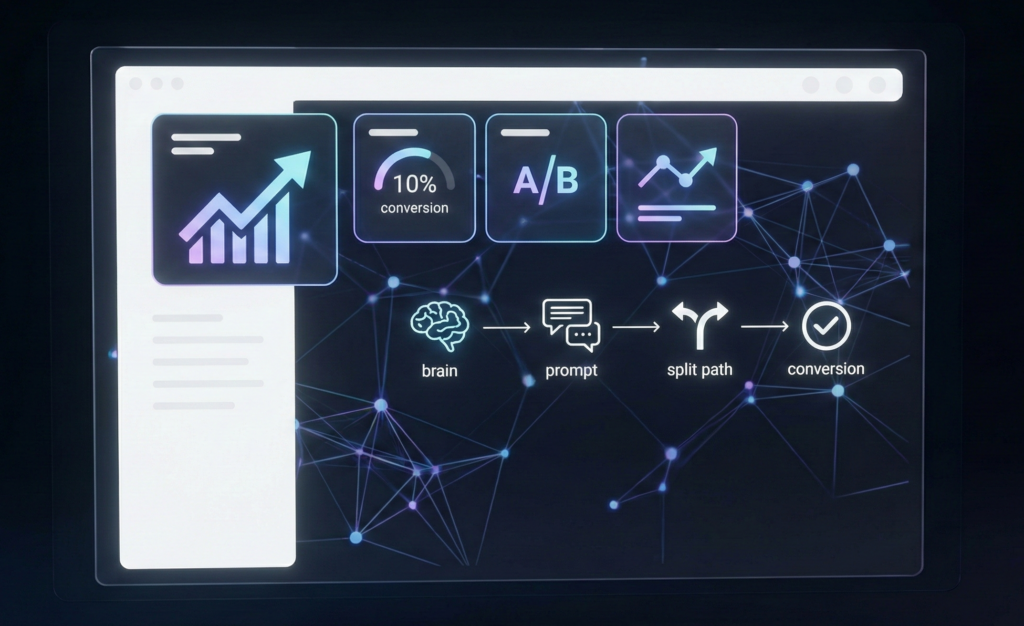
A conversion does not happen because someone clicked a button. It happens because a sequence of thoughts lined up in the reader’s mind. Every prompt you use, whether it is for writing copy, generating email sequences, creating product descriptions, or structuring offers, influences that mental sequence. Weak prompts create vague outputs. Vague outputs create confusion. Confusion kills conversions quietly and consistently.
Most creators and marketers treat prompts as one-off instructions. They open a tool, type something quick, get output, and move on. That approach produces content, but it rarely produces alignment. Conversion-focused work needs continuity. The prompt that generates your headline should connect logically to the prompt that shapes your body copy. The prompt that writes your call to action should understand the objections addressed earlier. Without a workflow, prompts fight each other instead of reinforcing the same decision.
A complete prompt workflow is not about writing longer instructions. It is about designing a chain of conversion rate optimization prompts that mirrors how a human makes decisions. People move from awareness to interest, from interest to trust, and from trust to action. Your prompts should follow that same rhythm. When they do, conversion rates stop feeling unpredictable and start feeling engineered.
Another hidden problem is prompt amnesia. This happens when you forget what the prompt was trying to solve in the first place. You ask for engaging copy, then switch to asking for persuasive copy, then jump to asking for urgency, without anchoring those prompts to the same audience state. The result is mixed messaging. One paragraph reassures while the next pressures. One section educates while the next assumes commitment. Readers feel that mismatch even if they cannot explain it.
Improving conversion rates means tightening the distance between intent and execution. Prompts are the bridge. A strong workflow forces you to clarify intent before you ever generate words. It asks questions like who this is for, what problem they believe they have, what outcome they want, and what fear is holding them back. Once those answers are locked in, every prompt downstream becomes sharper.
This is why conversion-focused teams obsess less over individual outputs and more over systems. They know that one good page does not scale, but a repeatable prompt workflow does. When your conversion rate optimization prompts are designed to work together, you are not guessing what might convert. You are building momentum step by step.
At its core, a conversion is a decision. Decisions happen when friction is removed and clarity is increased. A complete prompt workflow does exactly that. It removes friction from your creation process and injects clarity into the message your audience receives. That combination is what quietly but reliably improves conversion rates across platforms.
Quick-Start: Conversion Rate Optimization Prompts You Can Copy/Paste
Use these conversion rate optimization prompts to quickly tighten messaging, reduce confusion, and increase follow-through:
- Clarity check: “Rewrite this section so a distracted reader understands it in 5 seconds. Keep the same meaning.”
- Objection map: “List the top 7 objections a buyer might have after reading this page, then suggest one line to address each.”
- Message-match audit: “Compare this ad promise to this landing page. Identify mismatches and propose fixes.”
- CTA de-risk: “Rewrite the CTA to reduce hesitation. Include what happens next in one short sentence.”
- Benefit translation: “Turn these features into outcomes a customer can picture in daily life.”
- Friction hunt: “Identify the 5 places a reader might get confused or lose trust, and propose micro-edits.”
- Shorten without loss: “Cut this section by 25% while preserving all key points and keeping a confident tone.”
Building the Foundation Prompts That Shape Buyer Clarity
Every effective prompt workflow starts before you write anything that faces the audience. The foundation layer is internal. These prompts are not meant to generate publishable content. They are meant to shape understanding. Skipping this stage is the fastest way to create content that sounds polished but converts poorly.
Foundation prompts focus on three things: audience reality, problem framing, and desired transformation. These prompts should feel almost uncomfortable because they force specificity. If your answers feel generic, your conversions will be too. Strong conversion rate optimization prompts begin here—because the downstream copy is only as good as the upstream clarity.
A strong foundation prompt might ask you to define the audience in terms of behavior rather than demographics. Instead of age or job title, you focus on habits, frustrations, and patterns of avoidance. This matters because people do not convert because of who they are. They convert because of what they are stuck in.
Another foundational prompt should isolate the core problem from the surface symptoms. Many offers fail because they address what people complain about rather than what actually hurts. For example, someone may complain about low sales, but the deeper problem might be lack of trust or unclear positioning. Your workflow should force you to articulate that deeper layer before moving on.
Transformation prompts are equally important. These define what success looks like in the reader’s own language, not yours. Conversion improves when people can picture the after state clearly. If the transformation feels fuzzy, the decision feels risky. Foundation prompts should describe that outcome in practical, lived-in terms.
Here is what a solid foundation prompt set often includes:
- A prompt that describes the audience’s current situation on a bad day
- A prompt that identifies what they have already tried and why it failed
- A prompt that clarifies what they secretly hope will work
- A prompt that defines the emotional payoff of success
- A prompt that names the main fear or objection blocking action
These prompts are not glamorous, but they are powerful. They align your thinking before you ever ask for copy. When you later generate headlines, emails, or scripts, the output carries a consistent emotional logic because it all traces back to the same foundation.
Many creators rush past this stage because it feels slow. In reality, it saves time. Without foundation prompts, you end up rewriting endlessly because something feels off. With them, your first drafts are closer to the mark because the direction is clear.
Another benefit of strong foundation prompts is adaptability. Once you have them, you can reuse them across channels. A sales page, an email campaign, and a video script can all draw from the same core understanding. This keeps your messaging coherent, which is essential for improving conversion rates over time.
Think of foundation prompts as setting the rules of the game. They define what matters, what does not, and what outcome you are aiming for. Everything else in the workflow builds on this layer. Skip it, and you are guessing. Build it properly, and every prompt after becomes more effective.
The Conversion-Centered Prompt Flow From Attention to Action
Once the foundation is set, the workflow moves into execution. This is where most people start, but now you are entering with clarity. The goal here is to design prompts that guide the reader through a logical and emotional progression that ends in action.
A conversion-centered flow usually follows a consistent sequence: attention, resonance, credibility, resolution, and action. Each stage deserves its own prompt or set of prompts. Trying to compress everything into one instruction often produces shallow results. The best conversion rate optimization prompts separate these jobs on purpose.
Attention prompts focus on interruption. They are not about being clever but about being relevant. A strong attention prompt instructs the system to surface a specific pain point or moment of frustration the audience recognizes instantly. This creates the first micro-commitment: continuing to read.
Resonance prompts deepen the connection. These prompts ask for language that mirrors the reader’s internal dialogue. When done well, this stage makes people feel understood. Conversions increase when readers feel like the message was written for them, not for a general audience.
Credibility prompts establish trust without bragging. They guide the output to demonstrate competence through clarity, examples, or reasoning. This is where you address skepticism indirectly. Instead of claiming authority, you show awareness of nuance and trade-offs.
Resolution prompts introduce your solution as a logical next step, not a pitch. These prompts frame the offer as a response to everything discussed so far. The solution should feel inevitable, not forced.
Action prompts focus on reducing hesitation. They clarify what happens next, what is required, and what risk is minimized. Good action prompts avoid hype and instead emphasize ease and alignment.
To make this more concrete, here is a simplified table showing how a conversion-focused prompt flow maps to output intent:
| Stage | Prompt Purpose | Output Focus |
|---|---|---|
| Attention | Interrupt relevance | Specific pain or moment |
| Resonance | Build connection | Shared language and empathy |
| Credibility | Reduce doubt | Clear reasoning and insight |
| Resolution | Introduce solution | Logical fit and relief |
| Action | Enable decision | Clarity and reassurance |
What makes this workflow powerful is not the structure itself, but the discipline of separation. Each prompt has a job. When you let prompts bleed into each other, you confuse the reader. When each prompt does one thing well, the overall message feels smooth and intentional.
Another key principle here is constraint. Conversion improves when prompts limit scope. Instead of asking for everything, you ask for the next thing. This mirrors how people think. They do not decide all at once. They decide in increments.
This flow also allows for testing and optimization. If conversions drop, you can diagnose where the breakdown happens. Is attention failing? Is trust not being built? Is the action unclear? Because each stage has its own prompts, you can adjust without rebuilding everything.
A complete workflow does not lock you into one style or voice. It gives you a repeatable backbone. You can adapt tone, length, and format while preserving the same decision logic. That consistency is what compounds conversion improvements over time.
When your prompts follow a clear path from attention to action, you stop relying on luck. You start designing outcomes with conversion rate optimization prompts that work together.
Refinement, Testing, and Scaling the Prompt Workflow
The final section of the workflow is where most of the long-term gains come from. Refinement turns a good prompt system into a high-performing one. Testing reveals what actually moves decisions. Scaling ensures that improvements do not stay trapped in one asset or campaign.
Refinement starts with feedback loops. Instead of asking whether content is good, you ask where people disengage or hesitate. You then trace that friction back to the prompt that produced it. This shifts optimization from guessing to diagnosing, which is exactly what conversion rate optimization prompts are meant to enable.
One effective refinement method is prompt contrast testing. You generate two versions of the same stage using different prompt constraints. For example, one resonance prompt might emphasize emotional language, while another emphasizes practical outcomes. You then observe which version produces stronger engagement or conversions.
Another refinement tactic is simplification. As workflows mature, prompts often become bloated. Removing unnecessary instructions can actually improve output clarity. Conversion-focused prompts should be tight, intentional, and aligned with a single objective.
Testing does not require massive traffic to be useful. Even qualitative signals matter. Comments, replies, and direct feedback often reveal whether your prompts are producing clarity or confusion. Look for phrases like “this finally makes sense” or “I was already thinking this.” Those are signs the workflow is aligned.
Scaling is where many workflows break. People try to apply the same prompts everywhere without adjusting for context. A complete workflow scales by preserving logic, not wording. The foundation stays the same, but execution prompts adapt to format and platform.
Here are a few principles that help scale without losing conversion power:
- Keep foundation prompts constant across channels
- Adjust attention prompts to match platform behavior
- Shorten resonance prompts for fast-moving formats
- Maintain credibility prompts even in short content
- Always clarify the next action, even if it is small
Another important scaling consideration is team use. A documented prompt workflow allows multiple people to produce aligned content without constant oversight. This consistency builds brand trust, which indirectly boosts conversion rates over time.
As workflows scale, they also evolve. Market language shifts. Objections change. New competitors emerge. Periodically revisiting foundation prompts ensures that the system stays relevant. Conversion drops are often a sign that the foundation no longer matches reality.
The most mature prompt workflows feel invisible. They do not draw attention to themselves. They simply produce content that feels natural, persuasive, and easy to act on. That ease is not accidental. It is the result of deliberate design.
Improving conversion rates is rarely about finding a single magic phrase. It is about building a process that repeatedly produces clarity, trust, and momentum. A complete prompt workflow does exactly that. It turns conversion from a hopeful outcome into a predictable result driven by structure, intention, and refinement.
Related prompt libraries:
Split Testing Prompts,
Prompts to Lower CPA,
Facebook Ads Prompts
Helpful external references (dofollow):
Nielsen Norman Group,
Baymard Institute,
Google Analytics Help
The Best Performance Analytics Prompts for Quick Insight Extraction
Performance analytics prompts help you cut through dashboards and extract clear insights fast. If you have ever stared at a dashboard packed with charts, KPIs, and numbers and still felt unsure about what to do next, you are not alone. Performance analytics has never lacked data. What it has always struggled with is clarity. This is where prompts come in, not as a fancy add-on, but as a practical thinking tool. A well-written performance analytics prompt acts like a sharp question asked at the exact right moment. It cuts through clutter and pulls out insight that would otherwise stay buried.

Table of Contents
Why Prompts Beat Passive Reporting
Most teams rely heavily on dashboards because they look authoritative. Charts feel objective. Numbers feel safe. But dashboards rarely explain themselves. They show what is happening, not why it is happening or what deserves attention first. Prompts flip that dynamic. Instead of passively reading data, you actively interrogate it. You ask it to justify itself. You force it to reveal patterns, risks, and opportunities in plain language.
Another reason prompts matter is speed. Decision-makers rarely have time to explore every metric. They need fast signal extraction. A good prompt narrows focus instantly. It says, look here, ignore that, and explain this in terms that matter to action. This is especially powerful in fast-moving environments like marketing campaigns, sales pipelines, product usage analysis, or operational performance reviews.
Prompts also help standardize thinking across teams. When everyone uses the same prompt frameworks, insights become comparable. One analyst’s findings are easier to understand because they follow the same logic as another’s. Over time, this builds a shared analytical language inside the organization. Instead of debating interpretations endlessly, teams spend more time acting on insights.
There is also a psychological advantage. Prompts reduce cognitive overload. Instead of holding ten questions in your head, you externalize them. The prompt becomes a container for your curiosity. This makes analytics less intimidating, especially for non-technical stakeholders. You do not need to know SQL or advanced statistics to ask a good question. You just need a clear prompt.
At their best, performance analytics prompts do three things at once. They define context, they specify intent, and they demand interpretation. Context anchors the data in a time frame, segment, or scenario. Intent clarifies what kind of insight you want, such as diagnosis, comparison, or prediction. Interpretation forces the output to move beyond raw numbers into meaning.
Before we dive into specific prompt types, it helps to understand a simple mental shift. Stop thinking of analytics as reporting. Start thinking of it as a conversation. Prompts are how you steer that conversation. The better your questions, the better the answers you extract.
Performance Analytics Prompts: Core Prompt Frameworks for Rapid Insight Extraction
Not all prompts are created equal. Some generate noise. Others unlock clarity almost instantly. Over time, a few core frameworks consistently outperform generic “analyze this data” requests. These frameworks are reusable, adaptable, and designed for speed.
One of the most effective is the contrast prompt. This framework focuses on differences rather than averages. Instead of asking how something performed, you ask how performance changed between two states. This could be time-based, segment-based, or condition-based. The power lies in forcing comparison.
Examples of contrast-focused prompts include:
- Compare current performance against the previous period and highlight only statistically meaningful changes.
- Identify which segments overperformed and underperformed relative to the overall average.
- Explain why this metric behaved differently in region A versus region B.
Another high-impact framework is the driver prompt. This is all about causality, or at least plausible influence. You are not just observing outcomes. You are hunting for contributors. Driver prompts are especially useful when performance shifts unexpectedly.
Common driver prompt patterns include:
- Identify the top three factors most strongly associated with this performance change.
- Break down this outcome into contributing metrics and rank them by impact.
- Explain which inputs had the largest influence on this result and why.
Then there is the anomaly prompt. This framework is built for detection. It asks the system to look for what does not belong. Humans are surprisingly bad at spotting anomalies in large datasets. Prompts excel here because they can scan broadly without fatigue.
Effective anomaly prompts sound like:
- Flag any metrics that deviated significantly from historical norms.
- Identify outliers in performance and explain what makes them unusual.
- Surface unexpected spikes or drops that warrant investigation.
Another essential framework is the prioritization prompt. Data rarely tells you what to do first. Prioritization prompts force ranking. They are invaluable when resources are limited and trade-offs are unavoidable.
Examples include:
- Rank improvement opportunities by potential impact and effort required.
- Identify which performance issues should be addressed first based on risk.
- Prioritize metrics that have the strongest relationship to revenue or retention.
Narrative prompts are also critical, especially when insights need to be shared. These prompts turn analysis into a story. They are not about being poetic. They are about coherence. A narrative prompt ensures insights flow logically and make sense to humans.
Typical narrative prompts include:
- Summarize the key performance story from this data in plain language.
- Explain what happened, why it happened, and what it means going forward.
- Create a short executive summary highlighting the most important insights.
Finally, there is the decision prompt. This is where analytics meets action. Instead of stopping at insight, you push toward recommendation. This framework is powerful because it forces alignment between data and decisions.
Decision-oriented prompts often look like:
- Based on this performance data, what actions should be taken next?
- What decision would this data support if we had to act today?
- Identify risks and recommended responses implied by these metrics.
Each of these frameworks can stand alone, but they are even more powerful when chained together. You might start with anomaly detection, move into driver analysis, apply prioritization, and end with a decision prompt. This creates a fast but thorough insight pipeline without drowning in data.
Best Performance Analytics Prompts by Use Case
While frameworks are helpful, most people want concrete prompts they can use immediately. The key is tailoring prompts to specific performance contexts. Different domains demand different lenses. Below are practical prompt sets organized by common use cases.
Business and executive performance reviews
For business and executive performance reviews, clarity and relevance matter most. Leaders want to know what changed, why it matters, and what to do next.
- Summarize overall performance this period, focusing only on metrics tied to strategic goals.
- Identify the biggest wins and losses and explain their business impact.
- Highlight any trends that could materially affect the next quarter.
Marketing analytics
In marketing analytics, speed and attribution are critical. Marketers need to understand what is working now, not three months from now.
- Identify which channels drove the highest quality outcomes, not just volume.
- Explain changes in conversion rates by campaign and audience segment.
- Surface underperforming campaigns and suggest likely causes.
Sales performance analytics
Sales performance analytics requires a mix of pipeline visibility and behavioral insight. Numbers alone rarely explain sales outcomes.
- Break down win rates by deal size, industry, and sales stage.
- Identify bottlenecks in the pipeline and their likely root causes.
- Compare top-performing reps against the average and extract best practices.
Product and user analytics
Product and user analytics benefit heavily from behavioral interpretation. You are often dealing with patterns rather than simple totals.
- Identify features most strongly associated with long-term retention.
- Compare behavior of power users versus churned users.
- Highlight friction points in the user journey based on usage data.
Operational and process analytics
Operational and process performance analytics focus on efficiency, reliability, and risk. Small inefficiencies can scale into big problems.
- Identify steps in the process with the highest failure or delay rates.
- Compare actual performance against operational benchmarks.
- Highlight areas where variability poses a risk to consistency.
Financial performance analytics
Financial performance analytics demands precision and caution. Prompts here should emphasize drivers, sustainability, and risk.
- Explain revenue or cost changes by underlying driver rather than category.
- Identify trends that may impact cash flow stability.
- Highlight financial risks emerging from recent performance patterns.
Customer support and service analytics
Customer support and service analytics benefit from sentiment-aware prompts. Numbers alone do not capture customer experience.
- Identify recurring issues driving ticket volume increases.
- Compare resolution times and satisfaction across issue types.
- Highlight signals of customer frustration or churn risk.
Across all these use cases, the most effective prompts share common traits. They are specific without being restrictive. They demand interpretation, not just reporting. And they are written in the language of outcomes, not metrics alone.
How to Write Your Own High-Impact Analytics Prompts
While ready-made prompts are useful, the real skill lies in creating your own. This is where performance analytics becomes a repeatable advantage rather than a one-off exercise. Writing strong prompts is less about technical complexity and more about disciplined thinking.
Start by clearly defining the decision or question that triggered the analysis. If there is no decision, the prompt will drift. Ask yourself what someone is worried about, curious about, or accountable for. Let that shape the prompt.
Next, constrain the scope. Vague prompts produce vague insights. Specify time frames, segments, or conditions whenever possible. This does not limit insight. It sharpens it.
A good habit is to include an explicit instruction for interpretation. Instead of asking for metrics, ask for meaning. Words like explain, highlight, diagnose, and prioritize signal that you want thinking, not dumping.
Another powerful technique is to include an exclusion rule. Tell the prompt what not to focus on. This reduces noise dramatically. For example, you might ask it to ignore minor fluctuations or low-impact metrics.
You should also experiment with layered prompts. Instead of one massive request, break analysis into stages. Start broad, then narrow. This mirrors how humans think and often yields clearer insights.
Common mistakes to avoid include:
- Asking for too much in one prompt, leading to shallow answers.
- Using generic language that fails to anchor context.
- Focusing only on what happened and ignoring why it matters.
- Forgetting to tie insights back to action.
As you refine your prompts, pay attention to output quality. Good prompts produce answers that feel obvious in hindsight but were not obvious before. They reduce debate rather than spark confusion. They lead naturally to next steps.
Over time, you can build a personal or team prompt library. These become analytical shortcuts. Instead of reinventing your thinking each time, you reuse proven questions. This accelerates insight extraction and improves consistency.
Ultimately, performance analytics prompts are about respect for time and attention. They acknowledge that data is abundant but insight is scarce. The right prompt acts like a lens, bringing the most important signals into focus while blurring the rest.
When used well, prompts do not replace human judgment. They amplify it. They help you see faster, think clearer, and decide with more confidence. In a world overflowing with metrics, that is not just useful. It is essential.
Related Performance Prompts Guides
- Performance Review Prompts to Audit Campaigns Like a Pro (turn insight into a repeatable audit process)
- ROAS Optimization Prompts Every Media Buyer Should Be Using (apply analytics insights directly to ROAS decisions)
- How to Build a Data-Driven Ad Strategy Using AI Prompts (connect analysis to strategy, not just reporting)
External reference: If you want a quick refresher on how Google Analytics reports are structured (useful when framing prompts), see Google Analytics reports overview.
FAQs
What are performance analytics prompts?
Performance analytics prompts are structured questions or instructions that force interpretation—so you can identify drivers, anomalies, priorities, and next actions instead of just reading metrics.
Why do performance analytics prompts work better than “analyze this data”?
Because they add context, intent, and constraints. That combination reduces noise and increases decision-ready insight.
Which prompt framework should I use first?
Start with anomaly prompts (what changed), then driver prompts (why it changed), then prioritization prompts (what to do first), and end with a decision prompt (what action to take).
How do I prevent AI from giving generic analytics advice?
Include a specific time window, comparison period, segment, and the exact outcome you care about (revenue, ROAS, retention, pipeline). Also tell it what to ignore.
How often should a team run these prompts?
Weekly for a fast operating cadence, plus a monthly review prompt to capture patterns and build a reusable insight library.
The Best AI Prompts to Boost Ad Performance and Lower CPA
Running ads today is not just about having a good product or a catchy headline. Platforms are crowded, attention spans are short, and costs rise fast when performance slips. This is exactly where prompts to lower CPA start to matter. Not because AI magically makes ads profitable, but because the quality of your prompts directly controls the quality of the output you get.
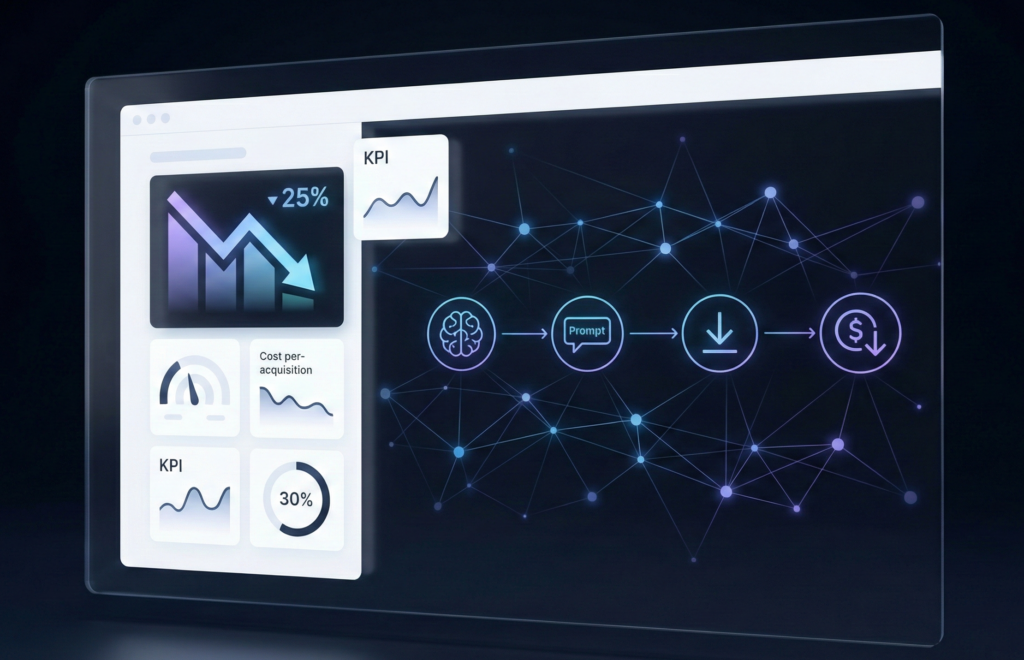
Most advertisers who say AI does not work are really saying their prompts do not work. They type vague instructions, accept generic results, and wonder why their ads feel bland or expensive. When you guide AI with precision, context, and intent, it becomes a powerful assistant that can help improve click through rates, conversion rates, and ultimately lower your CPA.
AI prompts act like a briefing you would give a professional copywriter or strategist. If your briefing is weak, the output is weak. If your briefing is detailed, focused, and aligned with real ad goals, the output improves dramatically. This is especially important for ads where small improvements can create large financial differences. The best prompts to lower CPA do not “sound smart,” they force clarity and make testing easier.
Another reason prompts matter is speed. Traditional ad testing can take days or weeks. With AI, you can generate dozens of angles, hooks, and variations in minutes. The prompt determines whether those variations are usable or useless. If you want faster iteration, you will also want a variation system you can reuse—see creative variation prompts and split testing prompts for that workflow.
AI prompts also help you think more clearly about your audience. When you instruct AI to focus on specific pain points, emotional triggers, objections, or buying stages, you are forced to define those elements clearly. This clarity often improves your ads even before AI produces a single line of copy.
Here are the core reasons AI prompts impact ad performance so heavily:
- They control the clarity and relevance of ad messaging
- They influence emotional resonance with the target audience
- They speed up creative testing without increasing workload
- They help structure offers and calls to action more effectively
- They reduce wasted spend by improving alignment with intent
When advertisers struggle with high CPA, the problem is rarely the platform alone. It is usually mismatched messaging, unclear offers, or weak hooks. Prompts to lower CPA allow you to attack these issues systematically instead of guessing.
This is not about replacing human judgment. It is about enhancing it. The best advertisers use AI as a thinking partner that helps refine ideas, stress test angles, and uncover new perspectives. Prompts are the language that makes that partnership productive.
Before diving into specific prompts, it is important to understand one mindset shift. You are not asking AI to write ads for you. You are asking it to help you think like a better advertiser. That shift alone changes the quality of results you get.
Prompts to Lower CPA: High Performance Prompt Frameworks for Ad Creative
One of the biggest mistakes advertisers make is asking AI for finished ads too early. High performing prompts usually start by shaping thinking before writing copy. This section focuses on prompt frameworks that consistently lead to stronger creative and lower CPA.
A powerful starting point is the audience clarity prompt. Instead of asking for ads, you ask AI to deeply understand who the ad is for. This improves everything that follows.
Examples of audience clarity prompts include:
- Describe the core frustrations of a person actively searching for this product
- List the emotional triggers that push this audience to buy now instead of later
- Identify the biggest objections this audience has before purchasing
- Explain how this product fits into their daily life and priorities
Once the audience is clear, the next framework focuses on hooks. Hooks determine whether people stop scrolling or keep moving. AI is excellent at generating hook variations when guided correctly. If headlines are your bottleneck, pair these prompts to lower CPA with a dedicated headline set like ad headline prompts.
Effective hook prompts include:
- Generate ten scroll stopping opening lines based on fear of loss
- Create curiosity driven hooks without using clickbait language
- Write hooks that mirror the exact thoughts of a frustrated buyer
- Develop hooks that feel conversational and natural, not salesy
Another high impact framework is benefit translation. Features do not sell. Outcomes do. AI can help translate technical or boring features into emotional and practical benefits.
Useful benefit prompts include:
- Turn these features into emotional benefits for a beginner user
- Explain how each feature solves a specific daily problem
- Rewrite this feature list from the perspective of saved time or reduced stress
- Translate this technical feature into a simple everyday advantage
Offer clarity prompts are also critical. Many ads fail not because the product is bad, but because the offer is confusing or weak. AI can help you sharpen and reposition offers quickly.
Strong offer prompts include:
- Rewrite this offer to sound clearer and more valuable
- Suggest ways to reduce perceived risk in this offer
- Identify what makes this offer different from competitors
- Improve this offer by emphasizing immediacy and relevance
Finally, call to action prompts often get overlooked. Small changes here can have an outsized impact on CPA.
Examples include:
- Generate calls to action that feel helpful rather than pushy
- Create calls to action for cold traffic versus warm traffic
- Rewrite this call to action to reduce hesitation
- Suggest alternative calls to action focused on curiosity
These frameworks work because they break ad creation into logical pieces. Instead of hoping AI writes a perfect ad in one shot, you guide it through the same thinking process a skilled advertiser would use.
When you combine these frameworks, you start seeing patterns. Certain hooks consistently perform better. Certain benefits resonate more strongly. Over time, your prompts become assets you can reuse and refine.
Advanced Prompts to Lower CPA for Testing, Scaling, and Lowering CPA
Once you have solid creative foundations, AI prompts become even more valuable during testing and scaling. This is where many advertisers leave money on the table by relying on intuition instead of structured experimentation.
One advanced use of AI is creative variation without creative dilution. Instead of random variations, you use prompts to maintain message consistency while testing different angles. If you want a structured refresh workflow, you can also use ad fatigue detection prompts to catch decay early.
Examples include:
- Create five variations of this ad while keeping the core message intact
- Rewrite this ad for a skeptical audience without changing the offer
- Adapt this ad for mobile first consumption
- Shorten this ad while preserving emotional impact
Another powerful application is angle expansion. Often a product has multiple valid angles, but advertisers focus on only one. AI can help you uncover and organize these angles quickly.
Angle discovery prompts include:
- List different emotional angles for this product
- Identify logical versus emotional selling angles
- Suggest angles based on common customer complaints
- Create ads focused on lifestyle improvement rather than features
AI is also effective for diagnosing poor performance. Instead of guessing why CPA is high, you can ask AI to analyze potential issues. If targeting is the issue, pair these prompts to lower CPA with advanced targeting prompts.
Diagnostic prompts include:
- Analyze this ad copy and suggest why it might not convert
- Identify where this ad may cause confusion or mistrust
- Suggest improvements to align this ad with buyer intent
- Rewrite this ad to address objections more clearly
Scaling prompts are another advanced category. When an ad performs well, scaling often breaks it. AI can help you expand without losing what works.
Scaling focused prompts include:
- Generate new creatives based on this winning ad
- Adapt this ad for a broader audience while keeping relevance
- Create variations that test different emotional intensities
- Rewrite this ad for different stages of awareness
Lowering CPA often requires improving post click alignment as well. Ads do not exist in isolation. AI prompts can help align ad copy with landing pages and funnels.
Alignment prompts include:
- Rewrite this ad to match the tone of the landing page
- Identify mismatches between this ad and the page content
- Suggest headline variations that align with this ad promise
- Improve message consistency across ad and page
One overlooked area is fatigue prevention. Ads often perform well initially and then decay. AI can help refresh creatives without starting over.
Fatigue reduction prompts include:
- Refresh this ad without changing the core message
- Rewrite this ad using different phrasing but same intent
- Create alternative openings for this ad
- Adjust tone slightly to reengage the audience
These advanced prompts turn AI into a performance optimization tool rather than just a writing assistant. Over time, they help you build a repeatable system for creative improvement and lower CPA more consistently.
How to Build a Repeatable Prompt System for Long Term Results
The real power of AI prompts shows up when you stop treating them as one time tools and start treating them as a system. A repeatable prompt system helps you improve ad performance consistently, not just occasionally.
The first step is documenting what works. When a prompt produces strong results, save it. Slightly refine it. Reuse it across campaigns. Over time, you build a personal prompt library tailored to your niche and audience. (If you want a broader system for efficiency and consistency, see performance optimization prompt library.)
A simple system might include:
- Audience research prompts
- Hook generation prompts
- Benefit translation prompts
- Offer optimization prompts
- Scaling and testing prompts
Each category serves a specific purpose. Together, they form a workflow that mirrors professional ad strategy.
The second step is pairing prompts with performance data. AI does not replace metrics. It enhances them. When you feed AI real performance insights, its output becomes sharper.
Examples include:
- Rewrite this ad based on low click through rate
- Improve this ad to increase conversion rate
- Adjust this messaging to reduce CPA
- Analyze what this winning ad does differently
The third step is iteration. Prompts improve with use. You learn which instructions produce usable output and which do not. Over time, you naturally write better prompts without thinking about it.
Another important element is consistency of voice. Many advertisers struggle with AI sounding generic. This usually happens because they do not define tone clearly.
Helpful tone prompts include:
- Write in a conversational and confident tone
- Avoid hype and exaggerated claims
- Sound like a helpful expert, not a salesperson
- Use simple language and short sentences
You can also create prompts that reflect your brand identity. This ensures ads feel cohesive even when generated quickly.
Brand alignment prompts include:
- Write this ad in our brand voice
- Match the tone used in previous winning ads
- Avoid aggressive sales language
- Focus on clarity and trust
Finally, remember that prompts to lower CPA work best when paired with human judgment. You decide what to test, what to keep, and what to discard. AI accelerates the process but does not replace strategic thinking.
When used correctly, AI prompts help you spend less time staring at blank screens and more time optimizing what matters. They allow faster testing, clearer messaging, and smarter scaling. All of this contributes directly to better ad performance and lower CPA.
The advertisers who win are not the ones using the most tools. They are the ones using tools with intention. Strong AI prompts are not about complexity. They are about clarity, structure, and focus.
Once you build a prompt system that fits your workflow, AI stops feeling like a novelty and starts feeling like a competitive advantage. That is when lower CPA stops being a lucky outcome and becomes a predictable result.
Further Reading and Resources
If you want official guidance to pair with these prompts to lower CPA, here are a few helpful references (these are standard links and should count as external links):
Split Testing Prompts That Help You Find Winning Creatives Faster
Split Testing Prompts
If you have ever felt stuck guessing which creative will work, split testing prompts can feel like a breath of fresh air. Instead of relying on instinct or copying what others are doing, you start making decisions based on real responses. This shift alone can save hours of work and reduce frustration. When you split test prompts, you are not just testing ideas. You are testing how people think, react, and engage.
Table of Contents
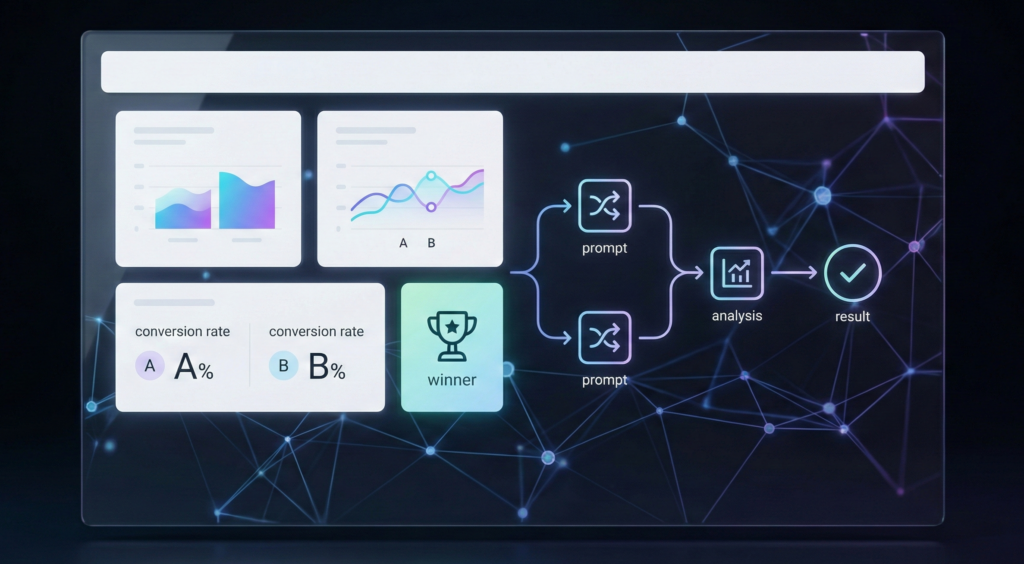
Many creators focus heavily on visuals, hooks, or captions, but the prompt behind the creative often decides the final output. A small wording change can lead to a completely different result. That is why prompt split testing is so powerful. It helps you understand which instructions generate clarity, emotion, and relevance. Over time, this turns creative work into a repeatable process rather than a guessing game.
Another reason split testing prompts matters is speed. Instead of creating ten different creatives from scratch, you can generate variations quickly by adjusting prompts. This allows you to compare outputs side by side and spot patterns faster. You begin to notice which phrases trigger better storytelling, stronger calls to action, or more engaging visuals.
Split testing also removes emotional attachment from the process. When you test prompts, you stop defending ideas just because you like them. The output speaks for itself. This mindset is especially helpful when you are working with clients, brands, or campaigns where results matter more than personal preference.
Here are a few reasons creators rely on split testing prompts:
- It reduces creative burnout by narrowing down what works
- It creates consistency across campaigns
- It reveals hidden patterns in audience preferences
- It speeds up content production
- It improves ROI by focusing on proven directions
At its core, split testing prompts is about control. You control the variables instead of letting randomness dictate results. Once you understand this, creating winning creatives becomes faster and more predictable.
Helpful resources: If you want a clean primer on A/B testing basics (and how to think about variables), this guide is a solid reference: Optimizely’s A/B testing overview. For platform-level experimentation concepts, this is also useful: Meta guidance on testing/experiments.
Also, if you’re pairing prompt tests with creative refresh cycles, you’ll probably want to read these related posts on PerformancePrompts:
How to Structure Split Testing Prompts for Clear Results
Split testing only works when your structure is intentional. Randomly changing words without a plan leads to confusing results. The goal is to isolate one variable at a time so you can clearly see what made the difference. This is where most people go wrong. They change too much at once and end up unsure why one creative performed better.
Start by defining what you are testing. This could be tone, format, audience angle, or storytelling style. Once you choose one variable, everything else stays the same. This creates a clean comparison and makes insights easier to spot.
A simple way to structure split testing prompts is to keep a base prompt and modify only one line per version. For example, the base instruction stays the same, but the emotional angle changes. One version might focus on curiosity, while another leans into urgency. The rest of the prompt remains untouched.
Common prompt elements you can split test include:
- Tone, such as casual versus authoritative
- Perspective, such as first person versus second person
- Length, such as short punchy output versus detailed explanations
- Emotional trigger, such as fear, excitement, or relief
- Format, such as list-based versus narrative
Consistency is critical. Use the same platform, same creative goal, and same evaluation criteria. This way, your comparison remains fair and useful.
Practical Split Testing Prompt Frameworks You Can Reuse
Once you understand the basics, the next step is using frameworks you can repeat. Reusable frameworks save time and reduce decision fatigue. They also help teams stay aligned when multiple people are generating creatives.
One effective framework is the single-variable swap. You create one base prompt and swap out only one line each time. This is ideal for beginners and produces clean data.
Another framework is the audience angle test. In this approach, the prompt remains the same except for who it speaks to. One version might target beginners, another speaks to experienced users. This helps you understand which audience responds more strongly.
A third framework focuses on outcome framing. You test whether people respond better to results-based messaging or process-based messaging. Both can work, but one often outperforms the other depending on the context.
Here are three reusable prompt frameworks you can apply immediately:
Framework 1: Single Variable Swap
- Keep the main instruction the same
- Change only one descriptor such as tone or emotion
- Compare outputs side by side
Framework 2: Audience Angle Test
- Version A speaks to beginners
- Version B speaks to experienced users
- Measure relatability and clarity
Framework 3: Outcome Versus Process
- Version A highlights final results
- Version B explains the journey
- Measure trust and engagement
When using these frameworks, document your results. Even simple notes can reveal trends over time. You might discover that your audience consistently prefers direct language or shorter explanations. These insights become creative shortcuts in future campaigns.
Split testing prompts is not about finding a single perfect prompt. It is about building a library of proven directions. Over time, this library becomes one of your most valuable creative assets.
Turning Split Test Results Into Faster Creative Wins
The real value of split testing prompts comes after the test. Many people stop once they pick a winner, but the deeper insight lies in understanding why it won. This reflection helps you apply the lesson to future projects without starting from zero.
Start by reviewing winning prompts and identifying patterns. Look for repeated elements such as tone, sentence length, or emotional triggers. These patterns become guidelines for future creatives. You no longer need to guess because you have evidence.
Another important step is iteration. A winning prompt is not the end. It becomes the new base for the next test. By stacking small improvements, you gradually refine your creatives until they feel effortless and effective.
To turn results into faster wins, follow this simple process:
- Identify the winning prompt
- Break down what made it effective
- Apply those elements to new prompts
- Test again with a new variable
- Repeat the cycle
Speed improves naturally with practice. As your intuition aligns with data, you will make better decisions faster. You will also waste less time on ideas that do not resonate.
Split testing prompts also improves collaboration. When working with teams or clients, you can show why a creative direction was chosen. This builds trust and reduces back-and-forth revisions. Decisions feel grounded instead of subjective.
In the long run, prompt split testing changes how you think about creativity. You stop chasing trends and start building systems. Winning creatives become less about luck and more about process. When you reach this stage, creating high-performing content feels lighter, faster, and far more sustainable.
By committing to split testing prompts consistently, you give yourself a competitive edge. You move faster, learn quicker, and create with confidence. Over time, that advantage compounds, and finding winning creatives becomes second nature rather than a struggle.