
admin
How AI Prompts Can Predict Which Ad Copy Will Win
Ad copy prompts help you move from ‘reporting’ to decisions by forcing clarity, comparison, and next steps. Use this post as a prompt library you can reuse across accounts and platforms.
Table of Contents
Ad Copy Prompts: What They Are and How They Work
In the world of marketing and advertising, one of the biggest challenges brands and agencies face is determining which ad copy will resonate most with their audience. Creating great creative work is only half the battle; the other half is predicting whether that creative will perform well once it goes live. Traditionally, advertisers relied on a combination of intuition, past experience, focus groups, and A/B testing to assess the potential success of ad copy. While these methods offer some insight, they are often time-consuming, expensive, and not always accurate.
Enter artificial intelligence. AI has rapidly transformed many industries, and advertising is no exception. AI-driven technologies can now analyze patterns, interpret consumer behavior, and predict outcomes faster and more efficiently than human analysis alone. Ad copy prompts are one of the most practical applications of this technology, allowing marketers to generate and test dozens of headline variations in minutes. Among these technologies, AI prompts—queries or commands given to an AI system to generate a response—are becoming powerful tools for evaluating creative concepts before significant budget is spent.
But the idea of AI predicting which ad concepts will win raises several questions. How does it work? Can it really understand human preferences? What role do human strategists play in the process? And perhaps most importantly, how can marketers use AI prompts to improve decision making and drive better campaign performance?
Before we explore the mechanics and benefits of AI prompts in advertising, we need to recognize the core challenge: advertising is ultimately about people. People are unpredictable, nuanced, and influenced by countless factors. What one group finds compelling, another might see as irrelevant. Historically, marketers have tried to connect with consumers by relying on their own insights, creative agencies’ experience, and sometimes gut instinct. While those elements remain important, AI prompts now add a data-driven layer that enhances our predictive capabilities.
AI doesn’t replace human creativity, but it helps uncover patterns and preferences that may not be immediately obvious. In essence, AI prompts are like having a smart assistant that can simulate how different audiences might respond to various ad ideas. That simulation doesn’t guarantee a hit, but it does improve the odds of choosing ad copy that will perform better in the real world.
In the next sections, we’ll break down the nuts and bolts of how AI prompts work, how they fit into the creative evaluation process, and how marketers can leverage them to make smarter decisions.
How AI Prompts Work in Predicting Ad Performance
At its core, an AI prompt is a carefully crafted instruction given to an AI model to produce a specific response. In the context of advertising, an AI prompt might ask the system to evaluate an ad concept, compare multiple versions, or predict how an audience will respond to a particular message.
To understand how this works, it helps to think about the AI model’s capabilities. Modern AI models are trained on massive amounts of text and data. They learn linguistic patterns, associations between concepts, and even common consumer sentiments, based on what they’ve processed during training. When you give an AI prompt related to advertising, the model uses that learned information to generate predictions that reflect general trends and insights.
For example, an AI prompt could be something like: “Given the target audience of urban millennial professionals, which of these two ad headlines is more likely to drive engagement and why?” The AI can analyze the language of each headline, consider assumptions about the audience’s preferences, and provide a reasoned prediction. This doesn’t happen by the AI thinking in human terms; rather, it’s pattern recognition at scale. The model has seen enough examples of language use, marketing content, and consumer interactions during training to make a statistically grounded prediction.
While not infallible, these predictions can offer valuable directional insight.
Marketers can use AI prompts in several ways:
- First, ad copy prompts can assess individual headlines, descriptions, and calls-to-action across multiple dimensions. Instead of relying purely on internal opinions or limited focus group feedback, teams can ask the AI to evaluate messaging across multiple dimensions—clarity, emotional resonance, perceived value, and audience fit.
- Second, AI prompts can be used to compare variants. If a brand is considering two different taglines, visuals, or calls to action, asking the AI to compare them side-by-side can reveal which one is likely to perform better based on language tone and messaging structure.
- Third, AI prompts can simulate audience feedback. By specifying demographic or psychographic characteristics, marketers can tailor prompts to mimic how specific segments might react. This is akin to having a rapid, low-cost surrogate for qualitative research.
These ad copy prompts work particularly well for platforms like Google Ads and Meta, where character limits and messaging constraints require precision and testing.
Of course, a critical part of using AI prompts effectively is crafting the prompts themselves. A vague or poorly worded prompt will yield unclear or unhelpful results. The best prompts specify context, audience, and the aspect of performance being evaluated. They might ask about emotional response, recall likelihood, or clarity of message. By refining the prompts, marketers can extract richer insight from the AI.
It’s also important to emphasize that AI doesn’t “know” the future. It doesn’t possess foresight or consciousness. What it provides are projections based on learned patterns and probabilities. When integrated thoughtfully into a broader evaluation process, these projections help reduce uncertainty and guide better decisions.
In the next section, we’ll explore how AI prompts fit into the broader creative development and testing workflow.
Integrating AI Prompts into the Creative Workflow
Integrating AI into the creative workflow doesn’t mean replacing existing practices; it means enhancing them. The goal of AI prompts in advertising is to add a predictive lens early in the process so that teams can refine concepts before they invest in production or media spend.
In a traditional workflow, ideas are generated, discussed internally, perhaps tested with small groups, and then rolled out. With AI prompts, an additional step can be inserted: the AI-driven evaluation phase. This occurs after initial concept development but before final testing or production.
Here’s how it typically works:
- First, the creative team generates a set of candidate concepts. These might be different messaging directions, headline options, or visual styles. Usually, this stage involves brainstorming sessions, creative reviews, and iterations.
- Next, instead of immediately testing all these concepts in the market, the team uses ad copy prompts to evaluate headlines, body text, and calls-to-action. They might ask the AI to rank the concepts based on likely engagement, emotional resonance, or clarity. The prompts might incorporate audience specifications: age group, interests, location, or even cultural nuances.
- Once the AI provides its insights, the team can use that information in multiple ways. One approach is to narrow the field. Concepts that AI predicts as weaker can be refined or shelved, allowing the team to focus on the stronger ones. This saves time and reduces the number of concepts that need expensive production or live testing.
- Another approach is iterative refinement. If the AI highlights a particular weakness—say, a concept lacks emotional appeal—the team can revise the messaging and ask the AI to reassess the new version. This creates a feedback loop where AI helps shape the creative.
Even after AI evaluation, human judgment remains critical. Insights from subject matter experts, brand strategists, and cultural context specialists are essential. AI is a tool, not an oracle. It complements human intuition rather than replacing it.
The next step in many workflows is validation through testing. AI predictions can inform whether a concept is likely to succeed, but real-world testing—through controlled A/B tests or market pilots—provides actual performance data. AI can guide which variants to test, making testing more efficient by focusing on the most promising options.
This integrated approach—creative work, AI evaluation, human review, and testing—creates a robust process that blends intuition with data-informed predictions. It reduces the risk of launching underperforming creative and enables quicker learning cycles.
For teams wondering when to introduce AI prompts, the answer is early but not at the expense of creativity. Using AI to shape and prioritize concepts early on prevents wasted effort later. It also enables creative teams to be more strategic about where they allocate their energy.
By running ad copy prompts weekly, teams can maintain a pipeline of tested, optimized messaging ready to deploy.
Now let’s explore the broader implications for marketers and creatives when using AI as a strategic partner in advertising.
The Future of AI-Driven Creative Decision Making
As AI continues to evolve, its role in advertising will expand beyond simple prediction. Already, marketers are experimenting with AI-assisted ideation, automated content generation, and personalized messaging at scale. AI prompts represent a bridge between raw creative thinking and data-driven prediction.
One of the most exciting prospects is the idea of dynamic creative optimization, where AI not only predicts which concept will win but also adjusts creative elements in real time based on audience feedback. For example, if an AI identifies that certain messaging resonates stronger with a specific subgroup, it could automatically tailor ads for that subgroup without manual intervention. Predictive prompts could become part of larger systems that continuously learn and adapt.
Another future development is more sophisticated audience modeling. Today’s AI can approximate audience reactions based on general patterns. In the future, AI models may be able to integrate proprietary data—like past campaign performance, customer purchase behavior, and market trends—to make more precise predictions. This would effectively create a predictive engine tailored to each brand’s unique ecosystem.
There are also ethical considerations as AI becomes more embedded in creative decisions. Questions about bias, transparency, and accountability arise. If an AI model recommends a particular concept, marketers need to understand not just what the recommendation is but why it was made. This requires human oversight and a commitment to ethical use of AI.
For creatives who worry that AI might replace them, it’s important to understand that creativity is inherently human. AI can surface patterns and suggest possibilities, but the emotional depth, cultural insight, and narrative brilliance of great advertising still come from human minds. AI amplifies human potential; it does not replace it.
Adoption of AI prompts also encourages stronger collaboration between teams. Creative departments, data scientists, strategists, and media planners must work together to define effective prompts, interpret results, and make strategic decisions. This interdisciplinary approach leads to richer outcomes and a more unified process.
As organizations become more comfortable with AI-driven insights, we can expect a shift in how campaigns are conceived and optimized. Instead of linear processes, teams will adopt iterative, AI-in-the-loop workflows that allow for rapid experimentation and learning. Predictive prompts will not just foresee which concept might win; they will help guide real-time optimization throughout a campaign’s lifecycle.
There will be challenges along the way. Teams must avoid overreliance on AI predictions without context. They must guard against echo chambers where AI reinforces existing biases. They must ensure that human creativity is still valued and that AI serves as an empowering tool rather than a crutch.
Despite these challenges, the outlook is promising. Marketers who leverage AI prompts effectively will be able to make smarter decisions with greater confidence. They will reduce wasted spend, better anticipate audience reactions, and create work that resonates more deeply.
In the end, advertising is about connection—between a brand and its audience. AI prompts offer a powerful way to understand and predict that connection, blending data-driven insight with human creativity. For teams willing to embrace this technology thoughtfully, the result will be not just better ads, but more meaningful engagement and business impact.
Related Performance Prompts Guides
- Split Testing Prompts to Find Winning Creatives
- Creative Ad Variations Made Easy
- Creative Angles & Hooks Prompts
External reference: For an overview of A/B testing ad copy prompts and experimentation basics, see: https://en.wikipedia.org/wiki/A/B_testing
FAQs
What are ad copy prompts?
Ad copy prompts are structured questions you can reuse to diagnose what’s happening, identify the most likely drivers, and produce testable next steps instead of generic advice.
How do I get better answers from AI?
Add context (platform, objective, timeframe, metrics), add constraints (what you can’t change), and ask for ranked hypotheses plus validation steps.
How often should I run these prompts?
Weekly works best: one diagnostic prompt, one exploration prompt, and one decision prompt. Consistency beats intensity.
What should I do with the output?
Turn outputs into small tests. Pick the top 1–3 recommendations, define success metrics, run controlled experiments, and document what you learn.
How AI Performance Prompts Help You Fix Low-Converting Landing Pages
Landing page optimization prompts help you move from “reporting” to decisions by forcing clarity, comparison, and next steps. Use this post as a prompt library you can reuse across accounts and platforms.

Table of Contents
Landing Page Optimization Prompts
If you have ever stared at your landing page analytics and felt confused, you are not alone. The page looks clean, the offer makes sense, the traffic is coming in, yet conversions stay stubbornly low. This is one of the most common frustrations in digital marketing, and it often leads people to chase surface level fixes instead of addressing the real problem. Many landing pages fail not because they are ugly or broken, but because they are unclear.
Visitors arrive with a specific question or need in mind, and the page does not answer it fast enough. When that happens, people bounce even if the product or service is actually a good fit. Clarity beats cleverness every time, yet clarity is surprisingly hard to achieve when you are too close to your own offer.
Another major issue is assumption based messaging. Page owners assume visitors already understand certain things. They assume users know what makes the offer different, why it matters now, or what happens after they click the button. These assumptions create friction. Every unanswered question becomes a reason to leave.
This is where traditional optimization advice often falls short. Generic tips like change the button color, shorten the copy, or add more testimonials can help, but only if they address the actual conversion barrier. Without diagnosing the real problem, you are just guessing. Guessing leads to endless tweaks without meaningful improvement.
AI performance prompts change this process by forcing structured thinking. Instead of asking AI to rewrite your landing page, you ask it to analyze, challenge, and stress test specific parts of the page. These prompts help surface blind spots that humans miss because of familiarity bias.
Low converting pages usually suffer from one or more of the following issues:
- A weak or unclear primary promise
- Messaging that focuses on features instead of outcomes
- Headlines that attract the wrong audience
- Too many competing actions
- Fear or uncertainty not being addressed
- Copy written from the brand perspective instead of the visitor perspective
- Lack of urgency or reason to act now
What makes AI performance prompts powerful is that they target these exact issues in a repeatable way. They act like a neutral reviewer who does not care about your attachment to the page. They only care about whether it works.
Instead of asking why your landing page is failing in a vague way, AI prompts help you ask sharper questions. They turn optimization into a diagnostic process rather than a creative guessing game. This shift alone can dramatically improve results, even before you rewrite a single sentence.
What AI Performance Prompts Are and How They Work in Practice
AI performance prompts are not magic commands that instantly fix your page. They are carefully structured instructions that guide the AI to analyze performance factors tied to conversion psychology. The key difference is intent. You are not asking the AI to sound better. You are asking it to perform better. A basic prompt might ask for a rewrite. A performance prompt asks for diagnosis, prioritization, and justification.
This distinction matters because most landing page problems are not about wording. They are about alignment between message, audience, and action. In practice, a performance prompt focuses on one variable at a time. Instead of dumping the entire page and saying fix this, you isolate elements such as the headline, hero section, call to action, or objection handling. This mirrors how professional conversion rate optimization works, but without needing a full team.
For example, rather than asking the AI to rewrite a headline, you might prompt it to evaluate whether the headline clearly communicates:
- Who the offer is for
- What problem it solves
- What outcome the user gets
- Why it is different from alternatives
The AI then responds with a critique, not just a rewrite. That critique often reveals missing pieces that were never obvious before. Performance prompts also help you step into the visitor’s mindset. AI can simulate different user personas and react to your page as if it were the first time seeing it. This is incredibly valuable because most page owners are incapable of seeing their own copy objectively.
Another advantage is speed. Traditional CRO requires surveys, heatmaps, user recordings, and multiple tests. Those tools are still valuable, but AI prompts allow you to quickly narrow down what to test first. Instead of testing ten ideas, you test two that actually matter.
Well designed AI performance prompts often do the following:
- Identify the most likely conversion blocker
- Explain why that blocker exists
- Suggest a change tied to user psychology
- Predict how the change might affect behavior
- Offer alternative variations based on different visitor motivations
This structured output is what separates performance prompts from generic content prompts. You are not replacing human judgment. You are enhancing it with faster analysis and pattern recognition.
It is also important to understand what AI performance prompts are not. They are not traffic generators. They do not fix a bad offer. They do not replace real user data. What they do is help you make better decisions with the information you already have.
When used correctly, these prompts act like a conversion focused checklist that adapts to your specific page instead of applying generic advice. Over time, this trains you to think more like a conversion strategist, not just a copywriter.
Using AI Performance Prompts to Diagnose and Fix Key Landing Page Elements
The real power of AI performance prompts shows up when you apply them to individual sections of your landing page. Each section plays a different role in the conversion journey, and each one can fail in different ways. Breaking the page down makes optimization more manageable and more effective.
Start with the headline and hero section. This area determines whether visitors stay or leave. A strong performance prompt here asks whether the headline passes the five second test. Can someone instantly understand what is being offered and why it matters? AI often reveals that headlines sound impressive but say very little. Words like ultimate, powerful, and next level feel persuasive but do not communicate value. A performance prompt pushes the AI to strip away fluff and evaluate meaning.
Next comes the supporting copy. This is where many pages overload the visitor with information. AI performance prompts can identify whether the copy answers natural follow up questions or jumps too quickly into features. Visitors want reassurance before details.
Common issues AI identifies in this section include:
- Explaining how before explaining why
- Using internal jargon
- Listing features without connecting them to outcomes
- Assuming trust instead of earning it
The call to action is another critical area. Many low converting pages have weak or confusing CTAs. AI performance prompts can analyze whether the CTA matches the stage of awareness the visitor is in. Asking for a big commitment too early often kills conversions.
For example, a prompt might ask the AI to evaluate whether the CTA feels safe, clear, and reversible. If clicking feels risky, users hesitate. The AI can suggest micro commitment alternatives that reduce friction.
Objection handling is where AI truly shines. Most page owners underestimate the fears and doubts in a visitor’s mind. Performance prompts ask the AI to list the top objections a skeptical user might have and whether the page addresses them clearly.
Typical objections include:
- Will this work for someone like me
- Is this worth the price
- What if it does not work
- How long will it take to see results
- Is this better than what I am using now
AI can flag which objections are missing or poorly handled and suggest where to address them. This often leads to higher conversions without adding more traffic.
Finally, flow and structure matter more than people realize. A performance prompt can analyze whether the page follows a logical persuasion sequence or jumps randomly between ideas. Even good copy can fail if the order is wrong.
By using AI prompts section by section, you turn a vague problem into a series of clear improvements. Each change has a reason behind it, which makes testing and iteration far more effective.
Turning AI Performance Prompts Into a Repeatable Conversion Improvement System
The biggest mistake people make with AI is using it once and moving on. The real value comes from building a repeatable system that improves every landing page you create. AI performance prompts are most powerful when they become part of your standard workflow.
Start by creating a prompt library. Instead of writing new prompts every time, save the ones that consistently deliver insights. Organize them by page element such as headline, offer, CTA, and objections. This turns AI into a consistent reviewer rather than a one time helper.
Next, use prompts before you publish, not just after performance drops. Running your draft through performance prompts before launch can prevent major issues from ever going live. This is especially useful if you launch pages frequently or work with multiple offers.
Another key habit is pairing AI insights with real data. If analytics show a high bounce rate, ask AI prompts focused on first impression clarity. If scroll depth is low, prompt the AI to evaluate engagement and pacing. This alignment makes AI feedback more actionable.
You should also use AI to generate test hypotheses rather than final answers. Let the prompts suggest why something might not be working and what to test. You still decide what goes live. This keeps you in control while benefiting from faster analysis.
Over time, you will notice patterns. Certain issues come up again and again. Weak differentiation, unclear outcomes, and mismatched CTAs are common culprits. AI performance prompts help you recognize these patterns faster and fix them earlier.
To make this sustainable, keep the process simple:
- Identify the underperforming metric
- Select the relevant page section
- Run targeted AI performance prompts
- Extract one or two clear improvement ideas
- Test and observe results
- Refine the prompt based on what worked
This loop turns AI from a novelty into a performance tool. It also reduces emotional attachment to your copy. When changes are driven by analysis instead of ego, results improve faster.
Low converting landing pages are frustrating, but they are rarely hopeless. Most of the time, they just suffer from unseen gaps in clarity, trust, or alignment. AI performance prompts help you see those gaps clearly and fix them with intention. When used thoughtfully, they do not replace strategy. They sharpen it. And in a world where small conversion improvements compound quickly, that edge makes all the difference.
Related Performance Prompts Guides
- Prompt Workflow for Improving Conversion Rates
- Performance Analytics Prompts for Quick Insight Extraction
- Performance Review Prompts to Audit Campaigns
External reference: For a practical, widely-used landing page speed and UX diagnostic, use PageSpeed Insights:
https://pagespeed.web.dev/
FAQs
What are landing page optimization prompts?
Landing Page Optimization Prompts are structured questions you can reuse to diagnose what’s happening, identify the most likely drivers, and produce testable next steps instead of generic advice.
How do I get better answers from AI?
Add context (platform, objective, timeframe, metrics), add constraints (what you can’t change), and ask for ranked hypotheses plus validation steps.
How often should I run these prompts?
Weekly works best: one diagnostic prompt, one exploration prompt, and one decision prompt. Consistency beats intensity.
What should I do with the output?
Turn outputs into small tests. Pick the top 1–3 recommendations, define success metrics, run controlled experiments, and document what you learn.
High-Impact Ad Copy Prompts for Better CTR and Engagement
25 High-Impact Ad Copy Prompts for Better CTR and Engagement
Table of Contents
High-impact ad copy prompts are the solution when you’ve stared at a blank screen trying to write an ad that actually gets clicks. If you’ve experienced this, you’re not alone. Writing ad copy looks simple on the surface, but in reality it is one of the hardest forms of writing to get right. You have limited space, limited attention, and very little time to make an impression. That is exactly why high-impact ad copy prompts have become such a powerful tool for marketers, founders, and creators.

Why High-Impact Ad Copy Prompts Improve CTR and Engagement
High-impact ad copy prompts help you think faster and more strategically. Instead of guessing what to write, a good prompt gives you a clear angle, a defined audience, and a specific goal. This removes friction from the creative process and allows you to focus on clarity and persuasion. In a crowded digital space where users scroll endlessly, clarity often wins over cleverness.
Another reason prompts matter is consistency. When you rely purely on inspiration, your ad quality will fluctuate. Some days you write strong copy, other days it feels flat. Prompts create a repeatable system. They ensure that every ad you write follows proven psychological triggers such as curiosity, urgency, relevance, or social proof.
High-impact ad copy prompts are especially valuable when you are testing ads. Testing requires volume. You need multiple variations quickly to find what works. Prompts allow you to generate different angles without starting from scratch each time. This is critical for improving click-through rate and engagement because small changes in wording can lead to big performance differences.
Here are some key reasons why prompts directly influence CTR and engagement:
- They force clarity by narrowing the message to one core idea
- They help match the ad to the audience’s awareness level
- They reduce mental friction for both the writer and the reader
- They encourage experimentation without losing structure
- They speed up production while maintaining quality
When ads fail, it is rarely because the product is bad. Most of the time, the message simply does not connect. Prompts help bridge that gap by guiding the copy toward what actually matters to the reader.
Another overlooked benefit of ad copy prompts is alignment. When teams work on ads together, prompts create a shared language. Everyone knows the angle, the goal, and the tone. This reduces revisions and miscommunication, especially in fast-moving campaigns.
At a deeper level, prompts also improve empathy. The best prompts are built around the audience’s problems, fears, desires, and objections. When you write from a prompt like that, you naturally step into the reader’s mindset. That shift alone can dramatically improve engagement because people click on ads that feel like they understand them.
Before moving into specific prompts, it is important to remember one thing. A prompt is not a magic sentence that guarantees results. It is a starting point. The real power comes from how well you adapt the prompt to your product, market, and voice.
CORE PROMPT FRAMEWORKS THAT DRIVE CLICKS
High-impact ad copy prompts are not random. They are built on proven frameworks that have been used in marketing for decades. The difference today is speed and scale. With the right prompts, you can apply these frameworks faster and more consistently.
One of the most effective frameworks is problem-first messaging. This works because people are more motivated to avoid pain than to seek pleasure. A prompt that starts with a clear problem immediately grabs attention, especially when that problem feels specific and familiar.
Another powerful framework is outcome-driven messaging. Instead of focusing on features, the prompt forces you to describe the end result the user wants. This shifts the ad from being product-focused to user-focused, which is critical for engagement.
There is also the curiosity gap framework. This uses incomplete information to spark interest without being misleading. The key here is balance. You want to create curiosity without frustration. A good prompt guides you to tease value while still being clear enough to earn the click.
Below is a table showing core prompt frameworks and how they impact CTR and engagement:
| Framework | What the Prompt Focuses On | Why It Works | Best Use Case |
|---|---|---|---|
| Problem-Solution | A painful or annoying issue the audience faces | Triggers immediate relevance and emotional response | Cold traffic and awareness ads |
| Outcome-Driven | The transformation or result after using the product | Helps users visualize success | Consideration-stage ads |
| Curiosity-Based | A hint of value without full disclosure | Encourages clicks through intrigue | Short-form social ads |
| Social Proof | What others are achieving or saying | Builds trust and reduces doubt | Retargeting and warm audiences |
| Urgency-Based | Time, scarcity, or missed opportunity | Pushes faster decision-making | Promotions and limited offers |
Each framework can be turned into multiple prompts depending on your audience and platform. The key is not to mix too many frameworks in one ad. Focus on one main angle per prompt to keep the message clean and easy to understand.
Here are examples of high-impact prompt structures you can adapt:
- Write an ad that starts with a problem your ideal customer complains about daily
- Create ad copy that focuses only on the end result, not the process
- Write a headline that makes readers think “I need to know this”
- Create ad copy that highlights a common mistake and how to avoid it
- Write an ad that feels like a recommendation from a friend
When using these prompts, always pay attention to language. Simple words usually outperform complex ones. Short sentences create rhythm and make the copy easier to scan. This directly improves engagement, especially on mobile.
Another important factor is specificity. Prompts that include specific scenarios, timeframes, or outcomes tend to perform better. For example, “save hours every week” is more engaging than “save time.” A good prompt nudges you toward that level of detail.
It is also worth noting that different platforms favor different frameworks. What works on search ads may not work on social feeds. Prompts help you adapt quickly by changing the angle without rewriting everything from scratch.
HIGH-IMPACT AD COPY PROMPTS YOU CAN USE IMMEDIATELY
This is where everything comes together. Below are practical, high-impact ad copy prompts designed to improve both CTR and engagement. These are not templates to copy word for word. They are thinking tools that guide you toward stronger messaging.
Problem-Aware Prompts:
- Write an ad that calls out a frustrating problem your audience thinks is “normal”
- Create ad copy that starts with “Still struggling with…” and leads into a solution
- Write an ad that describes the cost of not fixing the problem
- Create ad copy that highlights a daily annoyance your product eliminates
Outcome-Focused Prompts:
- Write an ad that describes life after the problem is solved
- Create ad copy that focuses on how the user will feel after using the product
- Write an ad that starts with “Imagine if…” and paints a clear picture
- Create ad copy that turns a boring feature into a meaningful result
Curiosity and Pattern-Interrupt Prompts:
- Write an ad that challenges a common belief in your industry
- Create ad copy that starts with an unexpected statement
- Write an ad that hints at a shortcut or smarter way
- Create ad copy that asks a question the reader cannot ignore
Social Proof and Trust Prompts:
- Write an ad that highlights a specific result achieved by others
- Create ad copy that sounds like a personal recommendation
- Write an ad that removes a common objection upfront
- Create ad copy that emphasizes credibility without sounding salesy
Urgency and Action Prompts:
- Write an ad that explains what happens if the reader waits
- Create ad copy that highlights limited availability in a natural way
- Write an ad that encourages immediate action without pressure
- Create ad copy that frames action as the smart next step
To get the most out of these prompts, it helps to batch your work. Take one product and run it through several prompts in one sitting. This creates a library of ad variations you can test over time.
It is also important to read your copy out loud. If it sounds awkward or forced, it will likely underperform. High engagement ads often feel conversational and natural, almost like a message from a friend rather than a brand.
Another tip is to pair prompts with real customer language. If you have access to reviews, support tickets, or comments, use that wording inside your prompts. This increases authenticity and can significantly boost engagement.
Do not forget about the call to action. While prompts often focus on the main message, the CTA matters. Prompts that imply a clear next step tend to perform better than vague ones. Instead of telling people to “learn more,” guide them toward what they will gain by clicking.
HOW TO TEST, REFINE, AND SCALE YOUR PROMPTS
Writing strong ad copy is not a one-time effort. It is an ongoing process of testing and refinement. High-impact prompts make this process easier by giving you a structured way to generate and improve ideas.
Start by testing one variable at a time. If you test multiple angles at once, it becomes hard to understand what actually drove the results. Prompts help isolate those angles so you can learn faster.
Pay attention to early signals. CTR tells you if your message is resonating at first glance. Engagement metrics such as comments, saves, or shares tell you if the message goes deeper. A prompt that drives high CTR but low engagement may be too click-focused and not aligned with the landing experience.
Here is a simple refinement process you can follow:
- Launch ads using different prompt frameworks
- Identify which prompts generate the highest CTR
- Analyze the language and angles that perform best
- Refine those prompts with more specificity
- Scale the winning prompts across formats and platforms
Another important step is audience segmentation. The same prompt can perform very differently depending on who sees it. Adjust prompts based on awareness level, demographics, or past interactions. A problem-based prompt may work better for cold audiences, while outcome-based prompts may perform better for warm ones.
Over time, you will start to notice patterns. Certain words, angles, or emotional triggers will consistently outperform others. Document these insights. This turns your ad copy process into a system rather than guesswork.
Scaling does not mean repeating the same ad endlessly. It means expanding the winning idea into new variations. Prompts make this easy because you can explore the same angle from different perspectives without losing the core message.
Finally, remember that engagement is not just about getting attention. It is about setting the right expectations. The best prompts align the ad with the experience that follows. When the message matches the outcome, trust increases and performance improves across the funnel.
High-impact ad copy prompts are not shortcuts. They are tools for better thinking. When used correctly, they help you write ads that feel relevant, human, and worth clicking. Over time, this approach leads to better CTR, stronger engagement, and more sustainable results.
Related Prompt Libraries
If you want to keep building your testing and optimization system, here are a few related posts on Performance Prompts (internal links):
- AI Prompts to Scale Campaigns
- ROAS Optimization Prompts Every Media Buyer Should Be Using
- The Complete Prompt Workflow for Improving Conversion Rates
For platform-specific ad guidance (external links), you can also reference:
Google Ads Optimization Prompts for Smarter Budget Allocation
Google Ads Optimization Prompts for Smarter Budget Allocation
Table of Contents
If you have ever looked at your Google Ads dashboard and felt unsure where the money is really going, you are not alone. Budget allocation sounds technical, but at its core it is a human problem. You are deciding where to place trust, attention, and resources in hopes of getting meaningful results. Google Ads optimization prompts help bridge that gap between raw data and smart decisions by guiding how you think, analyze, and adjust campaigns.
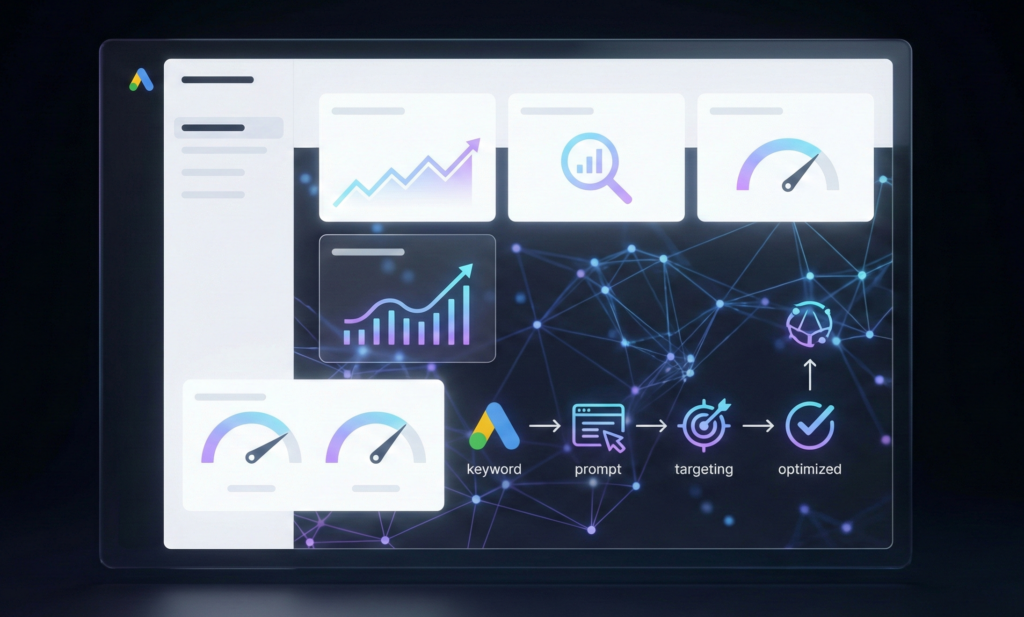
Most advertisers waste budget not because they lack tools, but because they ask weak questions. They might look at impressions, clicks, or cost per click without asking what those numbers actually mean for growth. Optimization prompts force you to slow down and reframe the problem. Instead of reacting emotionally to performance swings, you learn to analyze patterns and intent.
When you use well-designed prompts, you stop guessing and start directing your budget with purpose. These prompts push you to look beyond surface-level metrics and focus on outcomes that matter. They help you understand why a campaign is burning money or why another is quietly outperforming expectations.
Smarter budget allocation begins with clarity. Optimization prompts give you that clarity by encouraging structured thinking. They help you decide which campaigns deserve more funding, which should be paused, and which need refinement rather than removal.
Here is what makes optimization prompts so powerful in Google Ads budget decisions:
- They turn overwhelming data into focused insights
- They reduce emotional spending decisions
- They highlight inefficiencies you may overlook
- They align budget with real business goals
- They save time by narrowing your analysis
Instead of adjusting bids randomly or increasing spend because a campaign feels promising, prompts help you justify every peso or dollar spent. Over time, this disciplined approach builds confidence and consistency in your advertising strategy. For official guidance you can cross-check your decisions against Google’s documentation in the Google Ads Help Center.
Core Google Ads Optimization Prompts That Guide Budget Decisions
Not all prompts are created equal. Some help with creative direction, while others directly impact how budgets are distributed. The most effective Google Ads optimization prompts focus on intent, performance context, and scalability.
These prompts act like an internal strategist asking the right questions before you touch your budget. They help you understand whether poor performance is a targeting issue, a messaging issue, or a bidding issue. Without this distinction, you risk cutting campaigns that could have been profitable with minor adjustments.
Below are examples of prompt categories that influence smarter budget allocation:
- Performance diagnosis prompts
- Audience efficiency prompts
- Keyword value prompts
- Campaign scaling prompts
- Waste reduction prompts
Each category serves a specific purpose in your optimization workflow. Instead of looking at your account as a single system, prompts help you break it into manageable decision layers.
To make this more practical, here is a table showing example Google Ads optimization prompts and how they guide budget allocation decisions.
| Prompt Focus | Example Optimization Prompt | Budget Impact Insight |
|---|---|---|
| Performance analysis | Analyze which campaigns generate conversions with the lowest cost over the last 30 days | Helps identify where to increase or decrease spend |
| Audience targeting | Identify audience segments with high click volume but low conversion rates | Prevents wasted budget on low-intent users |
| Keyword efficiency | Highlight keywords with high spend but low return on ad spend | Flags areas for pausing or bid reduction |
| Scaling potential | Find campaigns with stable conversion rates that can handle increased budget | Supports confident scaling decisions |
| Waste detection | Detect placements, devices, or locations with poor engagement | Reduces unnecessary spending leaks |
When you use prompts like these consistently, you stop relying on gut feeling. Instead, every adjustment becomes a response to a specific insight. This approach keeps your budget flexible without becoming chaotic.
The real advantage here is repeatability. Once you identify prompts that work for your account, you can reuse them weekly or monthly. Over time, they form a system that protects your budget from impulsive decisions. If you’re using Optimization Score, you can also compare changes against Google’s explanation of recommendations and score behavior in their help docs.
Using Optimization Prompts to Shift Budget Toward High-Intent Traffic
One of the most common budget mistakes in Google Ads is spending too much on volume and too little on intent. High impressions and clicks feel productive, but they do not always translate into conversions. Optimization prompts help you redirect budget toward traffic that actually matters.
High-intent traffic usually reveals itself through behavior patterns. These users search with clarity, engage deeply, and convert with fewer interactions. The challenge is identifying them early enough to allocate more budget in their direction.
Optimization prompts encourage you to look for signals beyond surface metrics. They help you examine search terms, audience behavior, and conversion paths with curiosity instead of assumption.
Here are prompt-driven questions that help shift your budget toward high-intent users:
- Which search queries lead directly to conversions with minimal clicks
- Which campaigns show consistent performance across different days or times
- Which audiences convert faster after first interaction
- Which keywords reflect problem-aware or solution-ready intent
- Which ads attract fewer clicks but higher conversion quality
When you act on these insights, budget allocation becomes more strategic. You stop chasing traffic and start investing in readiness. This shift often results in lower wasted spend and more predictable returns.
Another benefit of intent-focused prompts is stability. High-volume traffic can fluctuate due to trends, seasonality, or competition. High-intent traffic tends to remain more consistent because it is driven by real needs rather than curiosity.
By regularly running intent-based Google Ads optimization prompts, you create a feedback loop. Campaigns that prove their value receive more budget. Those that fail to convert are refined or retired. This disciplined process helps your account mature instead of constantly resetting.
Building a Long-Term Budget Optimization System with Prompts
The true power of Google Ads optimization prompts emerges when they become part of your routine. One-off analysis helps, but long-term success comes from consistency. A prompt-driven system ensures that your budget decisions improve month after month.
Think of prompts as checkpoints rather than emergency tools. You do not wait for performance to collapse before asking questions. Instead, you proactively assess efficiency, scalability, and waste.
A sustainable prompt system usually includes:
- Weekly performance review prompts
- Monthly budget reallocation prompts
- Quarterly scaling evaluation prompts
- Ongoing waste detection prompts
This structure keeps your budget responsive without becoming reactive. You remain in control even when market conditions change.
Over time, prompts also help you document learning. You start noticing patterns like which campaign types scale well or which audiences fatigue quickly. This accumulated knowledge becomes an asset that improves future decision-making.
Another advantage of a prompt-based system is alignment. If you work with a team, prompts create shared language. Everyone evaluates campaigns using the same criteria, reducing confusion and disagreement over budget changes.
Smarter budget allocation is not about perfection. It is about making fewer bad decisions and more informed ones. Optimization prompts support that goal by keeping your thinking structured and your actions intentional.
When you commit to using Google Ads optimization prompts regularly, your budget stops feeling like a risk and starts feeling like a lever. You know when to pull it, when to hold steady, and when to release pressure.
In the long run, this approach builds confidence, efficiency, and scalability. Instead of constantly fixing problems, you spend more time growing what already works. That is the real promise of smarter budget allocation powered by thoughtful optimization prompts.
Related Prompt Libraries
If you want to expand your optimization workflow beyond Google Ads, these internal prompt libraries pair well with this post:
- ROAS Optimization Prompts Every Media Buyer Should Be Using
- The Best Performance Analytics Prompts for Quick Insight Extraction
- The Complete Prompt Workflow for Improving Conversion Rates
- AI Prompts to Scale Campaigns
For external references, you can also review:
Creative Angles & Hooks Prompts That Drive Higher Click-Through Rates
Creative Angles Prompts
Table of Contents
Why Creative Angles and Hooks Matter
If you have ever stared at analytics wondering why solid content is getting ignored, the answer usually sits at the very top of the page. Angles and hooks decide the fate of your content long before anyone reads your first paragraph. You can have the best insights, the strongest research, and the clearest writing, but without a compelling angle and hook, none of that matters. People do not click content because it is good. They click because something about it feels immediately relevant, intriguing, or urgent.
That is exactly why creative angles prompts matter. Creative angles prompts help you generate fresh perspectives, and they also help you turn those perspectives into hooks that stop the scroll. When you use creative angles prompts consistently, you stop guessing what will earn attention and start testing angles on purpose.
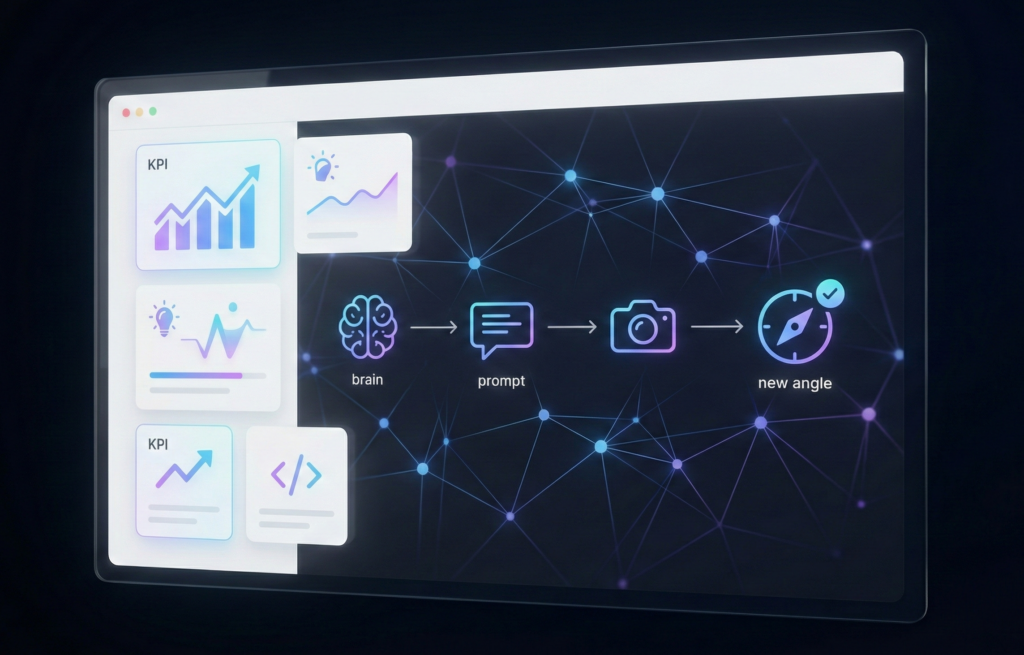
Angles are the perspective you choose to frame your idea. Hooks are the words that pull attention toward that perspective. Together, they act like a door handle. If it looks inviting and easy to grab, people open the door. If it looks dull or confusing, they walk right past it.
The reason angles matter so much today is simple. People are overwhelmed. Feeds are crowded, inboxes are full, and search results are packed with near identical headlines. When everything sounds the same, familiarity becomes invisible. Creativity is no longer optional. It is survival.
A strong angle does three things at once. It signals relevance, creates curiosity, and promises value. When one of these is missing, click-through rates suffer. When all three are present, clicks rise naturally without manipulation or gimmicks.
Here are common reasons content fails to attract clicks even when the topic is strong:
- The angle is too broad and feels generic
- The hook explains too much and removes curiosity
- The promise sounds vague or overused
- The wording focuses on features instead of outcomes
- The angle speaks to everyone and therefore no one
Creative angles are not about being clever for the sake of cleverness. They are about seeing the same idea from a direction your audience has not fully explored yet. Hooks then translate that direction into language that stops the scroll.
Consider how people make click decisions. They do not analyze deeply. They scan. They respond emotionally first, logically second. A hook that sparks recognition or tension will always outperform one that simply informs.
This is where prompts become powerful. Prompts help you generate angles you would not normally think of. Instead of forcing creativity, you guide it. Instead of guessing, you explore structured possibilities.
When you use angle and hook prompts correctly, you are no longer writing headlines randomly. You are systematically testing perspectives that align with how people think, feel, and decide.
In the sections ahead, you will see how different creative angles work, how prompts unlock them, and how to shape hooks that consistently drive higher click-through rates without sacrificing trust or clarity.
Core Creative Angles That Consistently Increase Click-Through Rates
Creative angles are not random. Over time, certain patterns consistently outperform others because they align with human psychology. These angles tap into curiosity, emotion, identity, and self-interest. When used correctly, they feel natural rather than manipulative.
One of the strongest angles is the problem reframing angle. Instead of presenting the obvious problem, you reframe it in a surprising way. This works because people think they already understand the problem. When you show them they might be wrong, curiosity kicks in.
Another powerful angle is the counterintuitive angle. This angle challenges common beliefs. People are drawn to content that promises to overturn what they think they know, especially when it feels safe and credible.
Here are several core angles that consistently drive higher click-through rates:
- Mistake-based angles that highlight what people are doing wrong
- Transformation angles that show before-and-after outcomes
- Curiosity gap angles that hint without fully explaining
- Insider angles that promise behind-the-scenes insight
- Time-saving angles that reduce effort or confusion
- Identity-based angles that speak to who the reader wants to be
- Fear-based angles that warn of consequences without panic
Each of these angles works for a different reason. Mistake-based angles tap into loss aversion. Transformation angles appeal to hope. Insider angles trigger exclusivity. Identity-based angles activate self-image.
What separates high-performing content from average content is not which angle you choose, but how clearly you commit to it. Weak angles often blend too many ideas. Strong angles focus on one clear promise.
Below is a table showing common creative angles, what they trigger psychologically, and when to use them.
| Angle Type | Psychological Trigger | Best Use Case |
|---|---|---|
| Mistake-Based | Loss avoidance | When your audience is frustrated |
| Transformation | Hope and progress | When results are visible and concrete |
| Counterintuitive | Surprise and curiosity | When you can challenge norms safely |
| Insider | Exclusivity | When you have unique experience |
| Time-Saving | Relief | When your audience feels overwhelmed |
| Identity-Based | Self-image | When values and status matter |
Choosing the right angle starts with understanding your audience’s current state. Are they confused, skeptical, hopeful, tired, or curious? The emotional context determines which angle feels most compelling.
For example, if your audience is burned out, a hustle-heavy transformation angle may fall flat. A relief-driven angle that promises ease will perform better. If your audience is confident but curious, counterintuitive angles will spark clicks.
Creative angle prompts help you explore these possibilities without relying on guesswork. Instead of asking “What should I write,” you ask structured questions like:
- What assumption does my audience currently believe?
- What mistake might they not realize they are making?
- What outcome do they want but think is unrealistic?
- What insider detail would surprise them?
Each question opens a different angle. Each angle leads to multiple hooks.
Once the angle is chosen, the next step is translating it into hooks that feel irresistible without overpromising. That is where hook prompts become essential. This is also where creative angles prompts help again: they keep your angle tight, and they keep your hook aligned.
Hook Prompt Frameworks You Can Use Again and Again
Hooks are not just headlines. They are micro-promises. A strong hook makes the reader feel that clicking is the obvious next step. Prompt frameworks help you generate hooks that align tightly with your chosen angle.
One mistake many creators make is trying to write hooks from scratch every time. This leads to repetition and creative fatigue. Framework-based prompts remove that pressure by giving you starting structures that you can adapt endlessly.
A good hook prompt does three things. It defines the audience, highlights the tension, and hints at resolution. When one of these is missing, the hook feels flat.
Below are proven hook prompt frameworks you can reuse across topics.
The Mistake Reveal Prompt:
“What most [audience] get wrong about [topic], and how it’s costing them [undesired outcome].”
This works because it combines curiosity with loss aversion. It makes the reader question their current approach.
The Transformation Prompt:
“How [starting point] turns into [desired result] when you stop doing [common behavior].”
This prompt highlights change while implying simplicity or clarity.
The Curiosity Gap Prompt:
“The surprising reason why [common advice] no longer works for [audience].”
This works best when you genuinely offer a new perspective inside the content.
The Insider Prompt:
“What I learned after [specific experience] that completely changed how I approach [topic].”
This builds trust and personal relevance at the same time.
The Time-Saving Prompt:
“A simpler way to [desired action] without [painful step everyone hates].”
This hook reduces resistance and effort.
You can also stack prompts carefully, but stacking should be subtle. Too many promises reduce credibility. One clear promise beats three vague ones.
Here is a list of practical hook prompts you can adapt immediately:
- “If you feel stuck with [problem], this might be why”
- “Nobody talks about this part of [topic], but it changes everything”
- “I tried [popular method] so you don’t have to”
- “The quiet shift happening in [industry] that most people are missing”
- “Why working harder is not fixing your [problem]”
When writing hooks, clarity always beats cleverness. If the reader has to reread to understand the promise, the hook is too complex. Creative hooks should feel effortless, not intellectual.
Another overlooked element is specificity. Vague hooks attract curiosity but lose trust. Specific hooks build credibility and improve click-through rates because they feel grounded.
Compare these two hooks mentally. One says “How to improve your results.” The other says “How a 10-minute shift improved my results without changing my strategy.” The second one feels more real, even before proof is provided.
Prompts help you add specificity by forcing you to fill in concrete details such as time, audience, outcome, or constraint.
As you practice using hook prompts, you will notice patterns in what performs best for your audience. Those patterns become your personal library of high-converting hooks.
Turning Creative Prompts Into Click-Worthy Headlines Without Losing Trust
High click-through rates mean nothing if readers feel disappointed after clicking. Sustainable success comes from alignment. The hook must match the content. Creative prompts should enhance clarity, not exaggeration.
The goal is not to trick people into clicking. The goal is to help the right people recognize that your content is worth their time.
One way to maintain trust is to ensure every hook answers three silent reader questions:
- Is this for someone like me?
- Will this help me solve a real problem?
- Is this worth my attention right now?
If your hook clearly answers at least two of these, your click-through rate will improve naturally.
Another important step is testing variations. Creative prompts give you options. Instead of settling on one hook, generate five to ten variations from the same angle. Small wording changes can lead to big performance differences.
Here is a simple process you can repeat for any piece of content:
- Choose one primary angle based on audience emotion
- Use three different hook prompts to generate variations
- Remove vague words and add specific outcomes
- Read each hook out loud to test clarity
- Select the one that feels most natural and honest
It is also useful to separate internal clarity from external curiosity. Internally, you should know exactly what the content delivers. Externally, the hook should invite discovery rather than explain everything.
Avoid common trust-breaking habits such as:
- Promising guaranteed results
- Using extreme language without support
- Overusing buzzwords that feel empty
- Creating false urgency that does not exist
Creative hooks do not need hype to perform. They need relevance, clarity, and emotional alignment.
As you build a habit of using creative angle and hook prompts, writing becomes faster and more strategic. Instead of wondering what to say, you focus on how to frame what you already know in a way that resonates.
Over time, this skill compounds. You begin to see angles everywhere. Ordinary topics become interesting because you approach them from a human-centered perspective. Click-through rates rise not because you chase trends, but because you understand attention.
The real power of creative angles prompts lies in consistency. When every piece of content starts with a thoughtful angle and a tested hook, performance becomes predictable rather than accidental.
In a crowded digital space, the creators who win are not always the loudest or the most technical. They are the ones who know how to frame ideas in a way that feels personal, timely, and worth clicking. Creative angles and hooks are not tricks. They are bridges between value and attention.
Related Prompt Libraries
- High-Impact Ad Copy Prompts
- Google Ads Optimization Prompts
- Performance Analytics Prompts
- Prompt Workflow for Improving Conversion Rates
Further Reading
Creative Ad Variations Made Easy With Prompt-Based Ideation
Creative Variation Prompts
Table of Contents
Creative Variation Prompts
Creative variation prompts are a simple way to generate more ad angles, hooks, and headlines without relying on last-minute inspiration. When you use creative variation prompts consistently, ad creation stops feeling like brute force and starts feeling like a repeatable system.

If you have ever stared at a blank screen trying to come up with yet another ad angle, headline, or hook, you already know how real creative fatigue is. It creeps in quietly. One day your ideas feel sharp and effortless, and the next day everything sounds recycled, forced, or strangely familiar. This is not because you suddenly became less creative. It is because modern advertising demands volume, speed, and constant novelty, all at the same time.
Platforms reward freshness. Audiences scroll fast. Attention windows shrink. What worked last month feels stale today, even if it technically performed well. That is why ad variations are no longer optional. They are the engine that keeps campaigns alive. Multiple hooks, multiple emotional angles, multiple visual and copy combinations allow you to test, learn, and adapt without burning everything down and starting over.
The problem is that most people try to create variations by brute force. They tweak a word here, swap an emoji there, change the background color, and call it a new version. Over time, this becomes exhausting. Worse, it leads to shallow variations that look different but feel the same. Audiences can sense that. Algorithms can sense that too.
This is where prompt-based ideation changes the game. Instead of relying on raw inspiration or last-minute pressure, prompts give you a structured way to think creatively. They act like rails that guide your imagination rather than limiting it. A good prompt does not tell you what to create. It tells you how to think about creating.
Prompt-based ideation works because it externalizes the thinking process. Instead of holding everything in your head, you use language frameworks to explore angles, emotions, contexts, and constraints. This reduces cognitive load and increases output quality at the same time. You are no longer asking, “What ad should I make?” You are asking, “What if I approached this ad from curiosity instead of urgency?” or “What would this message sound like if it came from a skeptic instead of a believer?”
When you adopt this mindset, creative fatigue becomes less of a wall and more of a signal. It tells you that you need a new lens, not more effort. Creative variation prompts provide those lenses on demand. It turns ad creation into a repeatable system instead of a daily struggle for inspiration.
Understanding Prompt-Based Ideation Without Making It Complicated
Prompt-based ideation sounds technical, but at its core, it is simple. A prompt is just a structured instruction that nudges your thinking in a specific direction. The magic comes from how specific and intentional that nudge is. Generic prompts lead to generic ideas. Thoughtful prompts lead to surprisingly original outcomes.
Think of prompts as creative constraints. Constraints are powerful because they narrow the field of possibilities. When everything is possible, nothing stands out. When you limit perspective, tone, audience awareness, or emotional intent, your brain starts making interesting connections.
For example, instead of asking for “five ad headlines,” a prompt might ask for “five ad headlines written as if the reader is already skeptical but curious.” That single shift changes word choice, pacing, and emotional weight. Suddenly the ad speaks to resistance instead of ignoring it.
Prompt-based ideation also works because it separates ideation from execution. Most people mix these two stages, judging ideas while they are still forming. Prompts create psychological safety for bad ideas, weird ideas, and half-formed ideas. Once you have volume, you can refine. Without volume, refinement becomes impossible.
Another important aspect is that prompts can be reused, remixed, and stacked. One prompt can generate multiple angles. Multiple prompts can explore the same angle in different ways. Over time, you build a personal prompt library that reflects your brand voice, audience, and goals.
What makes prompt-based ideation especially effective for ads is its adaptability. You can design prompts around emotions like curiosity, fear, relief, pride, or urgency. You can design prompts around formats like testimonials, confessions, contrasts, or micro-stories. You can design prompts around objections, desires, or unspoken frustrations.
Here are some common categories prompts tend to fall into when used for ad variations:
- Perspective-based prompts that change who is speaking or observing
- Emotion-driven prompts that anchor the message to a specific feeling
- Contextual prompts that place the product in a situation or moment
- Constraint prompts that limit length, tone, or structure
- Reversal prompts that flip assumptions or expectations
The goal is not to find the perfect prompt. The goal is to create a system where prompts continuously unlock new angles without draining your creative energy. Once you understand this, ideation stops feeling like guesswork and starts feeling like exploration. That is the real value of creative variation prompts.
Building Ad Variations Systematically Using Creative Variation Prompts
Once you grasp the concept, the next step is turning prompt-based ideation into a repeatable workflow. This is where many people fall back into old habits, using prompts randomly or only when they feel stuck. The real power shows up when creative variation prompts are baked into your creative process from the beginning.
Start by anchoring everything to a single core message. This might be your primary value proposition, offer, or transformation. The mistake is trying to reinvent the core idea for every ad. Instead, you want to keep the core stable and vary the framing around it.
From there, you can generate variations by applying different prompt frameworks to the same core message. Each framework acts like a different lens, revealing aspects you might not have noticed before.
One effective framework is the angle expansion framework. This focuses on how the message is positioned rather than what it says. Prompts here might explore curiosity, urgency, contrast, simplicity, or specificity. The same benefit can sound entirely different depending on which angle you amplify.
Another framework is the audience mirror framework. This forces the ad to reflect how the audience already thinks, speaks, or feels. Prompts might ask you to write as if the reader has already tried alternatives, already failed once, or already doubts bold promises. These variations often feel more authentic and grounded.
You can also use the tension and release framework. This revolves around identifying a friction point and resolving it. Prompts in this category highlight pain, confusion, hesitation, or trade-offs before offering clarity or relief. These ads work well because they feel emotionally complete rather than overly promotional.
Story-driven frameworks are another powerful option. Even short ads can carry narrative weight. Prompts here might compress a before-and-after moment, a single decision point, or a quiet realization. Story-based variations often outperform because they invite the reader to participate mentally.
To make this practical, many creators use a simple system:
- Define one core message
- Choose three to five prompt frameworks
- Generate multiple variations per framework
- Select and refine the strongest options
- Test and iterate based on feedback
The key is that you are not inventing ideas from scratch each time. You are running a creative engine with different inputs. This makes scaling ad production far more sustainable. Creative variation prompts keep the engine running without burning you out.
It also helps to separate idea generation from editing. During ideation, volume matters more than polish. During editing, clarity and alignment matter more than novelty. Prompt-based systems support this separation naturally.
Over time, patterns emerge. You start noticing which prompt types consistently produce strong results for your brand or niche. That insight becomes strategic leverage. You are no longer guessing what might work. You are building on what already does.
Making Prompt-Based Ideation a Long-Term Creative Advantage
The final shift is mindset. Prompt-based ideation is not just a tool for creating ads faster. It is a way of thinking that turns creativity into a renewable resource instead of a limited one. When used consistently, it compounds.
One of the biggest long-term benefits is reduced burnout. When you stop relying on sudden inspiration, creative work feels lighter. You approach it with curiosity instead of pressure. Even on low-energy days, prompts give you a starting point. Momentum follows action, not the other way around.
Another advantage is brand consistency. Because prompts can be designed around your voice and values, variations stay aligned even when they explore different angles. This solves a common problem where ads feel disconnected from each other despite promoting the same thing.
Prompt-based ideation also improves collaboration. Teams can share prompt libraries, frameworks, and results. Instead of debating subjective taste, discussions become more structured. “This version came from a skepticism prompt” is more useful than “I just liked how it sounded.”
There is also a learning loop built into the process. Every campaign teaches you something about which prompts resonate with your audience. That feedback informs future ideation. Over time, your prompts become smarter, sharper, and more predictive.
To make this sustainable, treat prompts as living assets. Review them regularly. Retire the ones that no longer spark good ideas. Evolve the ones that do. Add new prompts based on insights from comments, messages, and performance patterns.
Here are a few habits that help reinforce prompt-based ideation as a long-term advantage:
- Keep a running document of high-performing prompts
- Tag prompts by emotion, format, or objective
- Schedule ideation sessions separate from execution
- Reflect on which prompts feel energizing versus draining
- Continuously refine language to match your audience
When you do this, creative ad variations stop feeling like a chore. They become a natural byproduct of a well-designed thinking system. Instead of asking how to come up with more ideas, you start asking which direction you want to explore next.
That is the real promise of prompt-based ideation. It does not replace creativity. It protects it. It gives structure to imagination and momentum to execution. In a world where attention is scarce and expectations are high, that combination is not just helpful. It is essential.
Related Prompt Libraries
- Creative Angles Prompts
- High-Impact Ad Copy Prompts
- Google Ads Optimization Prompts
- The Complete Prompt Workflow for Improving Conversion Rates
Further Reading
Ad Headline Prompts for AI That Will Outperform Competitors
Ad Headline Prompts
Table of Contents
Ad headline prompts is the focus of this guide: a practical set of AI prompt frameworks you can reuse to write clearer, more clickable ad headlines without relying on inspiration.

If you have ever scrolled past an ad without even noticing what it was selling, you already understand how powerful headlines are. In advertising, the headline is not just a line of text. It is the gatekeeper. It decides whether someone stops, reads, clicks, or keeps scrolling like your ad never existed.
Most ads fail not because the product is bad, but because the headline does not create enough curiosity, relevance, or urgency. People today are overwhelmed with content. They are exposed to hundreds, sometimes thousands, of ads every day. This means your headline has about one to three seconds to earn attention. If it does not connect instantly, the ad is dead on arrival.
This is where AI prompts come in. Not because AI magically writes perfect ads, but because the right prompt forces clarity. It helps you think like your audience, frame benefits more sharply, and test angles you might never think of on your own.
Traditional headline writing often follows formulas, but those formulas can get stale. When competitors use the same patterns, audiences become blind to them. AI, when prompted correctly, helps you break patterns while still staying persuasive.
Here is why AI prompts are changing how high-performing headlines are created:
- They speed up idea generation without sacrificing strategy
- They allow rapid testing of multiple emotional angles
- They help remove internal bias from the writing process
- They make it easier to tailor headlines for different platforms
Instead of staring at a blank screen, you start with a strategic instruction. The prompt becomes your creative director. It tells the AI who the audience is, what problem matters most, and what outcome should be promised.
But there is an important detail many people miss. Generic prompts create generic headlines. If you ask AI to “write 10 ad headlines,” you will get safe, predictable lines that sound like everyone else. The advantage comes from precision.
A strong AI prompt includes context, constraints, and intent. It answers questions such as:
- Who exactly is this ad for
- What pain point matters right now
- What makes this offer different from competitors
- What emotion should the headline trigger
For example, compare these two instructions.
The weak one says: write an ad headline for a productivity app.
The strong one says: write five ad headlines for busy managers who feel overwhelmed by meetings, highlighting how this productivity app saves at least one hour per day without adding complexity.
The second prompt forces specificity. Specificity creates relevance. Relevance creates clicks. That is the real value of strong ad headline prompts when you are trying to outperform competitors without being louder.
Before moving on to actual prompts, it is important to understand that outperforming competitors does not mean being louder. It means being clearer, more human, and more emotionally aligned with what people already care about.
AI does not replace human judgment. It amplifies it. The better your thinking, the better the headlines you get back.
Core AI Prompt Frameworks for High-Performing Ad Headlines
To consistently outperform competitors, you need repeatable frameworks. These are not one-off tricks. They are structures you can reuse across campaigns, products, and platforms.
Below are core AI prompt frameworks that consistently produce stronger ad headlines when used correctly.
The Problem Amplification Prompt
This framework works by making the audience feel understood before offering anything. It surfaces a problem they already feel but may not have articulated clearly.
Use this when your competitors focus too much on features instead of pain points.
Prompt structure example:
Write ad headlines that clearly describe the most frustrating problem faced by [specific audience], using emotionally resonant language, without mentioning the solution yet.
Why it works:
People stop scrolling when they feel seen. When a headline mirrors their internal frustration, it earns attention instantly.
Use cases:
- Financial stress
- Time pressure
- Confusion or overwhelm
- Missed opportunities
The Outcome-Focused Prompt
Instead of highlighting features, this framework focuses on life after the solution. It paints a clear picture of improvement.
Prompt structure example:
Generate ad headlines that focus on the ideal outcome [audience] wants after solving [specific problem], emphasizing ease and speed.
Why it works:
People buy outcomes, not tools. When the benefit is crystal clear, objections shrink.
Best situations for this prompt:
- Software tools
- Services with measurable results
- Coaching or education offers
The Competitive Differentiation Prompt
This framework directly helps you stand out in crowded markets. It forces the AI to position your offer against alternatives without naming them.
Prompt structure example:
Create ad headlines that highlight how this offer is different from typical solutions in the market, focusing on what competitors fail to address.
Why it works:
Audiences are already skeptical. They have tried similar offers before. This prompt acknowledges that skepticism instead of ignoring it.
Key elements to include:
- What others do poorly
- What you do differently
- Why that difference matters now
The Curiosity Gap Prompt
This framework leverages open loops. It hints at value without giving everything away.
Prompt structure example:
Write ad headlines that create curiosity around an unexpected insight or result related to [problem], encouraging the reader to click to learn more.
Why it works:
Humans are wired to seek closure. When a headline sparks a question, the click becomes a psychological itch that needs scratching.
When to use this:
- Content-driven ads
- Lead magnets
- Educational offers
The Authority and Credibility Prompt
This framework builds trust quickly by implying expertise, experience, or proof.
Prompt structure example:
Generate ad headlines that position this brand as an experienced authority in solving [problem], without sounding arrogant or salesy.
Why it works:
When audiences do not know you, credibility is currency. Headlines that suggest experience reduce perceived risk.
These frameworks can be mixed and matched. You are not limited to one. In fact, the best-performing ads often combine two, such as problem amplification plus outcome focus.
Advanced AI Prompts That Trigger Emotion, Action, and Memory
Once you master the basics, the real advantage comes from emotional depth. High-performing headlines do not just inform. They trigger feelings. They stick in memory. They create momentum toward action.
Advanced AI prompts are designed to go beyond surface-level benefits.
The Emotion-First Prompt
This prompt forces the AI to lead with a feeling rather than a feature or result.
Prompt structure example:
Write ad headlines that evoke the emotion of [relief, confidence, excitement, security] for [specific audience] dealing with [problem].
Why it works:
Emotion drives action faster than logic. People justify purchases logically, but they decide emotionally.
Emotions that consistently perform well in ads:
- Relief
- Pride
- Control
- Freedom
- Belonging
The Objection-Flipping Prompt
This framework directly addresses the biggest reason people hesitate.
Prompt structure example:
Create ad headlines that gently challenge common objections [audience] has about [type of solution], reframing them as strengths.
Why it works:
Instead of avoiding objections, you neutralize them early. This builds trust and reduces resistance.
Common objections you can flip:
- It takes too much time
- It is too expensive
- It seems complicated
- It did not work before
The Identity-Based Prompt
This prompt speaks to how people see themselves or want to be seen.
Prompt structure example:
Write ad headlines that speak directly to the identity of [audience], reinforcing positive self-image while presenting this offer as a natural fit.
Why it works:
People align actions with identity. When the headline reflects who they believe they are, engagement increases.
Examples of identities:
- Serious professionals
- Smart planners
- Growth-minded entrepreneurs
- Caring parents
The Micro-Story Prompt
This framework compresses a story into a single line.
Prompt structure example:
Generate ad headlines that hint at a short before-and-after story involving [audience] and [problem], without using clichés.
Why it works:
Stories create context. Even a hint of narrative helps the brain process information more deeply.
The Urgency Without Pressure Prompt
This prompt creates momentum without aggressive sales language.
Prompt structure example:
Write ad headlines that create a sense of timely relevance for [offer] without using countdowns or exaggerated scarcity.
Why it works:
Modern audiences are tired of fake urgency. This approach feels respectful while still motivating action.
Advanced prompts require refinement. You rarely use the first output as-is. Instead, you review patterns, spot strong angles, and polish wording.
AI gives you volume. You bring taste.
How to Test, Refine, and Scale Winning AI-Generated Headlines
Writing headlines is only half the work. The real advantage comes from testing and iteration. Even the best headline is still a hypothesis until the market responds.
This is where AI truly shines as a scalable tool.
Start by generating volume with intention. Do not test random headlines. Group them by angle.
For example:
- Five headlines focused on pain
- Five focused on outcome
- Five focused on curiosity
- Five focused on identity
This allows you to learn which emotional drivers work best for your audience.
When reviewing AI-generated headlines, ask these questions:
- Does this sound like something a real person would say
- Is the benefit immediately clear or emotionally felt
- Would this stand out next to competitor ads
- Is the language specific or vague
You should also refine headlines manually. Small edits make a big difference.
Ways to improve AI headlines:
- Shorten them without losing meaning
- Replace generic verbs with vivid ones
- Remove unnecessary adjectives
- Add specificity where possible
Testing should be consistent but focused. Change one variable at a time. If you change the headline, keep the image and copy the same. This helps you isolate what actually caused performance changes.
Over time, patterns will emerge. You may notice that:
- Question-based headlines outperform statements
- Emotional language beats logical framing
- Simpler words get more clicks than clever ones
Feed these insights back into your prompts.
For example, instead of saying:
Write ad headlines for a budgeting app
You evolve to:
Write short, emotionally driven ad headlines for first-time budgeters who feel anxious about money and want a simple starting point.
This creates a feedback loop. Performance informs prompts. Prompts inform headlines. Headlines inform performance.
Finally, remember that outperforming competitors is not about chasing trends endlessly. It is about understanding your audience better than anyone else and expressing that understanding clearly.
AI helps you get there faster. But strategy, empathy, and judgment are still human skills.
When you combine thoughtful prompts with real-world testing, you stop guessing and start engineering better headlines. And in advertising, that edge compounds faster than almost anything else. Use these ad headline prompts as a repeatable system, not a one-time trick.
Related Prompt Libraries
- High-Impact Ad Copy Prompts
- Creative Angles Prompts
- Creative Variation Prompts
- Google Ads Optimization Prompts
Further Reading
Advanced Targeting Prompts to Improve Audience Quality
Advanced Targeting Prompts
Table of Contents
Advanced Targeting Prompts
If you have ever felt frustrated by high traffic that never converts, then advanced targeting prompts are what you need. Many creators, marketers, and business owners spend years chasing bigger numbers, only to realize that visibility without relevance leads to wasted effort. Audience quality is the difference between people who casually scroll past your content and people who stop, read, engage, and eventually take action. When your audience feels like you are speaking directly to them, trust builds naturally, and trust is what drives meaningful results.
Audience quality matters because attention has become expensive. People are overwhelmed with content, offers, and messages competing for their time. When your message is too broad, it blends into the background noise. When it is precise, it feels personal. Advanced targeting prompts allow you to sharpen your messaging so it resonates with the right people instead of trying to appeal to everyone.
High-quality audiences tend to share common traits. They recognize themselves in your examples. They nod along when you describe a problem. They feel understood rather than sold to. This is not accidental. It is the result of intentional targeting at the prompt level, where you guide the AI to think like your ideal audience member rather than a generic reader.
Another reason audience quality matters is sustainability. A smaller, well-aligned audience often outperforms a massive but disengaged one. These people are more likely to return, recommend you to others, and stick around even when trends shift. Advanced targeting prompts help you build this kind of audience by filtering out mismatched readers before the content is even created.
Some common signs of low audience quality include high bounce rates, vague comments, low retention, and confusion about what you actually offer. On the other hand, high-quality audiences ask thoughtful questions, reference specific points you made, and see your content as relevant to their situation. This is where precise prompts come into play.
To understand the difference, think about the intent behind your content. Are you trying to impress everyone, or are you trying to connect with someone specific? Advanced targeting prompts push you to make that decision early. Instead of asking an AI to write for “business owners,” you guide it to write for a very particular type of person with specific challenges, goals, and constraints.
Here are a few mindset shifts that help clarify why audience quality should be your priority:
- Relevance beats reach every time when the goal is conversion
- Specific language creates emotional connection
- The right audience needs less convincing
- Precision reduces wasted effort
- Clear targeting builds long-term loyalty
When you focus on audience quality, your content feels calmer and more confident. You stop trying to shout louder and start speaking clearer. Advanced targeting prompts are the tool that helps you do exactly that, shaping every piece of content to attract people who are already aligned with what you offer.
What Makes a Targeting Prompt Advanced
Not all prompts are created equal. A basic prompt tells an AI what topic to write about. An advanced targeting prompt tells it who to write for, how to think, what to prioritize, and what to avoid. This difference might seem subtle at first, but it has a massive impact on the final output.
An advanced targeting prompt goes beyond surface-level demographics. Instead of only specifying age or profession, it dives into mindset, emotional triggers, experience level, and real-world context. It treats the audience as a living person rather than a data point.
For example, a simple prompt might say, “Write an article about improving marketing results.” An advanced targeting prompt would guide the AI to speak to a specific reader, such as someone who has already tried multiple strategies, feels burned out, and wants clarity instead of hype. The tone, examples, and structure immediately change.
Advanced targeting prompts also set boundaries. They tell the AI what not to include, which is just as important as what to include. This prevents generic advice, buzzwords, and filler content that dilute audience connection. Clear constraints lead to sharper messaging.
Another key trait of advanced targeting prompts is perspective control. You can instruct the AI to write from a certain point of view, such as a seasoned practitioner speaking to peers or a guide speaking to someone who feels stuck. This helps maintain consistency and credibility throughout the content.
Advanced targeting prompts also account for stage of awareness. Someone who is new to a topic needs reassurance and clarity. Someone experienced needs nuance and validation. Mixing these audiences leads to confusion, so advanced prompts clearly define where the reader stands.
Another element is language calibration. High-quality prompts specify whether the audience prefers simple explanations, strategic depth, or reflective insights. This avoids mismatched tone, such as overly technical content for beginners or oversimplified advice for experts.
To build advanced targeting prompts, you often combine several layers:
- Audience role or identity
- Current challenge or pain point
- Desired outcome or transformation
- Emotional state or motivation
- Preferred tone and depth
When these layers work together, the AI produces content that feels intentional rather than accidental. Readers sense that the message was meant for them, which dramatically improves engagement and retention.
Advanced Targeting Prompt Frameworks You Can Use
Creating advanced targeting prompts does not require guesswork. There are repeatable frameworks you can use to guide the AI toward higher audience quality. These frameworks act as mental checklists that ensure you are not missing critical context.
One effective framework is the “Situation-Emotion-Outcome” model. This approach forces you to think about where the reader is now, how they feel about it, and what they want to achieve. When included in a prompt, it produces content that feels empathetic and purposeful.
Another powerful framework is the “Before and After” perspective. This helps the AI contrast the reader’s current state with their desired future state. The content naturally becomes more motivating and clear because it highlights transformation rather than abstract advice.
You can also use a “Constraints and Reality” framework. This is especially useful for experienced audiences who are tired of unrealistic promises. By acknowledging limitations such as time, budget, or past failures, you immediately build credibility.
Here are several advanced targeting prompts frameworks you can experiment with:
Situation-Emotion-Outcome framework
- Before-and-After transformation framework
- Awareness-level targeting framework
- Constraint-aware realism framework
- Identity and values alignment framework
Each framework serves a different purpose, but all of them improve audience quality by narrowing focus. Instead of writing for an imaginary average reader, you write for a real person in a real situation.
You can also stack frameworks for even stronger results. For example, combining awareness level with constraints creates content that meets readers where they are while respecting their reality. This layered approach often leads to the highest engagement.
Language cues play an important role here. Advanced targeting prompts guide word choice, pacing, and structure. They encourage the AI to use examples that reflect the audience’s world rather than generic scenarios. This is where content starts to feel lived-in instead of theoretical.
Here is an example of how frameworks influence prompt depth:
Basic prompt: Write about improving audience engagement
Advanced prompt: Write for creators who already publish consistently but feel their audience is passive, acknowledge their frustration, avoid hype, and focus on practical shifts they can implement this month
The second version produces content that feels grounded and respectful of the reader’s experience. This is what improves audience quality over time.
Another framework worth mentioning is the “Objection and Belief” model. This helps address unspoken doubts that high-quality audiences often have. By guiding the AI to acknowledge skepticism or past disappointment, you reduce resistance and increase trust.
Advanced targeting prompts are not about complexity for its own sake. They are about clarity. The clearer you are about who you are speaking to, the easier it becomes for the AI to deliver content that attracts the right people and filters out the rest.
Applying Advanced Targeting Prompts for Long-Term Results
Using advanced targeting prompts is not a one-time tactic. It is a habit that shapes your entire content strategy. When applied consistently, it improves not only individual pieces of content but also the overall quality of your audience over time.
One of the biggest long-term benefits is alignment. Your content, offers, and messaging begin to attract people who already resonate with your approach. This reduces friction and shortens the path from discovery to trust. People feel like they know you because your content consistently reflects their reality.
Another benefit is feedback quality. As audience quality improves, so does the feedback you receive. Comments become more thoughtful. Questions become more specific. This creates a positive loop where audience insights help you refine your prompts even further.
Advanced targeting prompts also help you avoid content burnout. When you know exactly who you are writing for, ideas come more easily. You are no longer guessing what might work. Instead, you respond to real needs and patterns you observe in your audience.
To apply these prompts effectively, start by documenting your ideal audience in detail. Not just who they are, but how they think, what frustrates them, and what they value. Use this as a reference when crafting prompts so each piece of content builds on the last.
Here are practical ways to integrate advanced targeting prompts into your workflow:
- Keep a running list of audience pain points and desires
- Update prompts based on audience feedback and behavior
- Use consistent tone and perspective across content
- Review outputs for relevance before publishing
- Refine prompts rather than fixing content after the fact
Consistency is key. One well-targeted article helps, but a series of well-targeted pieces builds authority. Over time, your audience begins to self-select. People who are not aligned drift away, while those who are stay and engage more deeply.
It is also important to revisit and evolve your prompts. As your audience grows or changes, their needs shift. Advanced targeting prompts should be living tools that adapt rather than rigid templates you never touch again.
Another long-term advantage is efficiency. High-quality audiences require less persuasion. Your content does not need to overexplain or oversell. This makes your messaging cleaner and more confident, which further strengthens trust.
In the end, advanced targeting prompts are about respect. Respect for your audience’s time, intelligence, and experience. When people feel respected, they respond with attention and loyalty. That is the foundation of audience quality.
Related Prompt Libraries
- Ad Headline Prompts
- Creative Angles Prompts
- Creative Variation Prompts
- Google Ads Optimization Prompts
Further Reading
Ad Fatigue Detection Prompts to Refresh Your Campaigns in Minutes
Ad Fatigue Detection Prompts
Table of Contents
Ad Fatigue Detection Prompts Overview
Ad fatigue is one of those problems marketers feel before they can clearly explain it. Your ads are still running, the budget is still spending, but results quietly slide downhill. Click through rates dip, conversions slow down, and costs creep higher even though nothing “broke” technically. This is usually the moment when ad fatigue has already set in. Ad fatigue detection prompts can be used to get past this common hurdle.

At its core, ad fatigue happens when the same audience sees the same creative too many times. People stop noticing it, stop trusting it, or actively ignore it. In some cases, they even feel annoyed by it, which can hurt brand perception. The scary part is that ad fatigue rarely announces itself loudly. It shows up as small performance leaks that add up fast.
Many advertisers assume fatigue only affects large accounts running massive budgets. In reality, smaller campaigns can experience fatigue even faster because the audience pool is limited. If you are running ads to a tight interest group or retargeting a warm audience, repetition happens quickly. What worked beautifully for two weeks can suddenly feel invisible.
Traditional ad fatigue detection relies on manually checking dashboards. You watch metrics like frequency, CTR, CPC, CPA, and ROAS. While this works, it takes time and experience to interpret correctly. It also tends to be reactive instead of proactive. By the time you notice fatigue, you have already wasted spend.
This is where AI becomes incredibly useful. AI does not get emotionally attached to winning creatives. It can analyze patterns, compare time windows, and surface early warning signs without bias. When paired with ad fatigue detection prompts, AI can act like a second set of eyes that never gets tired.
Key early warning signs of ad fatigue that AI can help spot include:
- Rising frequency with flat or declining conversions
- Gradual CTR decay over several days
- Increasing CPC without targeting changes
- Stable impressions but declining engagement
- Comments or reactions shifting negative or indifferent
The mistake many marketers make is assuming ad fatigue means “kill the ad.” In reality, most fatigue can be fixed with smart refreshes. Sometimes it is the headline. Sometimes it is the hook in the first three seconds. Sometimes it is simply a new angle that reframes the same offer.
Ad fatigue detection prompts help you detect not just that fatigue is happening, but why it is happening. They give you clarity fast, without needing hours of manual analysis. That speed matters because every extra day of fatigue costs money and momentum.
When you understand ad fatigue as a pattern recognition problem rather than a creative failure, everything changes. Instead of guessing what to fix, you start making informed, fast adjustments. This sets the foundation for using AI prompts effectively.
Using Ad Fatigue Detection Prompts to Diagnose Ad Fatigue in Minutes
The real power of AI in ad fatigue detection is not automation. It is interpretation. AI can read performance data, summarize trends, and highlight anomalies faster than a human scanning dashboards. But it only works well if you ask the right questions.
Most marketers ask AI vague questions like “Why is my ad not performing?” That usually leads to generic answers. Strong prompts are specific, structured, and grounded in real metrics. They guide the AI to look for fatigue signals instead of guessing.
A simple diagnostic workflow starts with exporting recent performance data. This could be a 7 day versus 30 day comparison, or pre fatigue versus current performance. You do not need perfect data. You need directional clarity.
Once you have that data, ad fatigue detection prompts can help you interpret it through focused questions. For example, instead of asking what went wrong, you ask what changed and why it matters. This shift alone produces better insights.
Examples of diagnostic AI prompts include:
- Analyze this ad performance data and identify signs of audience saturation or creative fatigue.
- Compare CTR, CPC, and conversion trends over time and explain which metric indicates fatigue first.
- Based on frequency and engagement decline, estimate whether fatigue is creative, audience based, or offer related.
- Identify which elements of this ad are likely losing attention based on performance decay patterns.
These prompts push AI to act like a performance analyst rather than a copywriter. That distinction is important. At this stage, you are not refreshing ads yet. You are diagnosing the problem accurately.
One underrated advantage of AI is pattern comparison. AI can compare multiple ads or ad sets and tell you which ones are fatiguing faster and why. This helps you avoid blanket changes across campaigns when only one creative is the problem.
You can also use AI to simulate “what if” scenarios. For example, you can ask how performance might change if you refreshed visuals but kept copy the same, or if you expanded the audience but reused the creative. While not perfect, these simulations help guide smarter decisions.
Common fatigue diagnosis mistakes AI helps prevent include:
- Killing ads that are still profitable but temporarily flat
- Refreshing targeting when the issue is creative
- Refreshing creative when the issue is offer mismatch
- Overreacting to short term volatility instead of trends
The speed factor cannot be overstated. A skilled marketer might need 30 to 60 minutes to analyze multiple campaigns thoroughly. AI can surface the same insights in minutes, allowing you to spend your time fixing instead of diagnosing.
Once AI identifies likely fatigue causes, the next step becomes much easier. You are no longer guessing what to refresh. You are acting with direction, supported by ad fatigue detection prompts that keep your analysis structured.
AI Prompts That Instantly Refresh Fatigued Ads
Refreshing ads does not mean starting from scratch. In fact, starting from scratch often wastes valuable learning. The smartest refreshes preserve what works while changing what the audience has grown numb to. Ad fatigue detection prompts are perfect for this kind of controlled creativity.
The first rule of refreshing is to change one major variable at a time. This allows you to measure what actually improves performance. AI can generate variations quickly while staying anchored to proven elements.
Creative refresh prompts focus on specific components. You might refresh the hook, the headline, the visual concept, or the call to action. Each requires a different type of prompt.
Examples of hook focused AI prompts include:
- Rewrite the opening hook of this ad to feel new while keeping the same core promise.
- Generate five alternative first lines that create curiosity without changing the offer.
- Create hooks that target the same audience pain point but use different emotional angles.
Headline refresh prompts are slightly different because they must remain clear and compliant while feeling fresh. Good prompts guide AI toward variety without exaggeration.
Examples of headline refresh prompts include:
- Generate headline variations that keep the same benefit but use different phrasing styles.
- Rewrite this headline using a question based format instead of a statement.
- Create headlines that emphasize speed, ease, or simplicity without changing the claim.
Visual fatigue is often overlooked because performance dashboards focus on text metrics. AI can still help here by suggesting new visual angles rather than designing assets.
Visual refresh prompts include:
- Suggest new visual concepts that communicate the same message differently.
- Generate ideas for pattern interrupts in the first three seconds of a video ad.
- Propose visual storytelling approaches that refresh this ad without reshooting everything.
Offer fatigue is trickier. Sometimes the audience has not lost interest in the message, but in the incentive. AI can help reframe offers without reducing value.
Offer related prompts include:
- Reframe this offer to emphasize outcomes instead of features.
- Suggest alternative bonuses or framing that increase perceived value.
- Rewrite this offer for urgency without adding discounts.
One of the biggest advantages of AI is rapid iteration. You can generate multiple refresh options, review them quickly, and deploy the best ones the same day. This shortens the fatigue recovery cycle dramatically.
When using AI for refreshes, it helps to give it context. Include the original ad, the audience description, and the performance goal. The more grounded the prompt, the better the output.
Effective refresh strategies AI supports include:
- Rotating multiple hooks while keeping the same body copy
- Testing emotional versus logical framing
- Switching from problem focused to outcome focused messaging
- Introducing social proof angles when attention drops
- Refreshing CTAs to reduce friction
The goal is not to overwhelm the system with endless variations. The goal is to restore attention and relevance. AI simply makes that process faster and more systematic, especially when guided by ad fatigue detection prompts that keep your refresh focused.
Building a Repeatable AI Driven Ad Fatigue System
The real win is not fixing ad fatigue once. It is building a system that prevents it from hurting your campaigns long term. AI makes this possible even for small teams or solo marketers.
A repeatable system starts with routine monitoring. Instead of waiting for performance to collapse, you schedule regular AI check ins. This might be daily for high spend campaigns or weekly for smaller budgets.
A simple weekly workflow might look like this:
- Export last 7 days and last 30 days performance data
- Run ad fatigue detection prompts to identify early fatigue signals
- Flag ads approaching fatigue thresholds
- Generate refresh variations in advance
- Rotate refreshed creatives before performance drops
This proactive approach keeps campaigns feeling fresh without constant panic changes. It also helps maintain stable learning in ad platforms.
AI also helps with documentation and learning. You can ask it to summarize which refresh strategies worked best over time. This builds institutional knowledge instead of relying on memory.
Examples of learning focused prompts include:
- Summarize which creative refreshes reduced fatigue fastest in these campaigns.
- Identify patterns in which hooks fatigue faster than others.
- Analyze historical data to recommend ideal refresh timing.
Another powerful use of AI is audience segmentation insights. Fatigue does not always hit all audiences equally. AI can help identify which segments need refreshes sooner.
System level prompts include:
- Identify which audience segments show fatigue earliest and why.
- Recommend different refresh strategies for cold versus warm audiences.
- Analyze whether fatigue is driven by frequency or message mismatch.
Over time, this system changes how you think about ads. Instead of hoping winners last forever, you expect fatigue and plan for it. That mindset alone improves performance consistency.
It also reduces emotional decision making. When performance dips, you already have a playbook. Diagnose, refresh, rotate, measure. No panic, no guessing.
Perhaps the most underrated benefit is speed. Markets move fast. Attention spans are shorter than ever. AI allows you to respond in minutes instead of days, which often makes the difference between a temporary dip and a full blown campaign collapse.
Ad fatigue is not a failure. It is a signal. With the right ad fatigue detection prompts, that signal becomes actionable insight instead of frustration. When you build fatigue detection and refresh into your workflow, campaigns become more resilient, more scalable, and far less stressful to manage.
In the end, the advantage is not that AI replaces creativity. It is that AI protects your creativity from burning out, both for your audience and for you.
Related Prompt Libraries
Further Reading
The Ultimate Prompt Toolkit for High-Performance Facebook Ads
If you have run Facebook ads for any length of time, you already know that the platform is not what it used to be. Costs are higher, competition is tighter, and attention spans are shorter than ever. The old approach of writing a catchy headline and hoping for the best does not cut it anymore. What separates high-performance campaigns from average ones today is precision. That precision starts with facebook ads prompts you can reuse, refine, and scale.
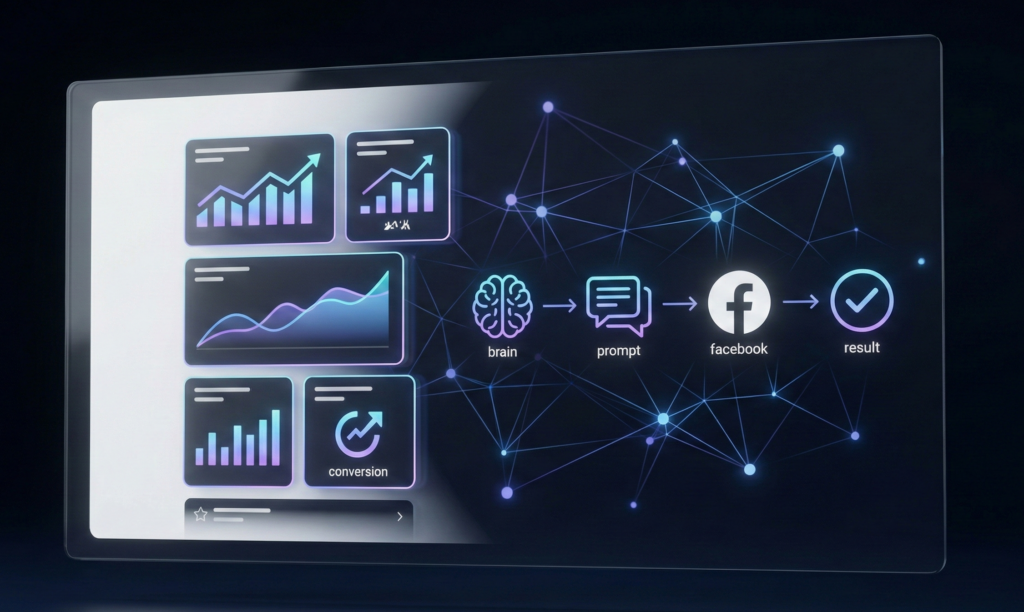
Prompts are the instructions you give to AI tools to generate ideas, copy, angles, hooks, and variations. Think of them as the strategy layer behind the words people actually see in the ad. A weak prompt produces generic, forgettable copy. A strong facebook ads prompts toolkit produces messaging that feels human, relevant, and persuasive. When used correctly, facebook ads prompts become a repeatable system for performance, not just a creative shortcut.
Facebook ads are especially sensitive to messaging quality because users are not there to shop. They are scrolling to relax, connect, or kill time. Your ad interrupts that experience. Facebook ads prompts help you design that interruption in a way that feels natural instead of annoying. They force you to clarify who you are talking to, what problem you are solving, and why it matters right now.
Another reason facebook ads prompts matter is speed. Facebook rewards rapid testing. You cannot rely on one ad idea and hope it scales forever. You need multiple hooks, formats, and angles running at the same time. Writing all of that manually slows you down. A solid prompt toolkit allows you to generate variations quickly while keeping message quality consistent—especially when you pair it with Meta Ads Manager and a clean testing routine.
Prompts also reduce creative fatigue. Many advertisers hit a wall after writing ads for the same product over and over. You feel like you have already said everything. Facebook ads prompts push you to explore new perspectives, emotions, objections, and benefits that you might overlook on your own. They act like a creative partner that never gets tired. (If you’re actively seeing performance decay, you’ll also want to review ad fatigue detection prompts alongside this toolkit.)
To understand the real value of facebook ads prompts, it helps to look at what high-performance Facebook ads have in common. They usually share these traits:
- They speak directly to a specific person, not a broad audience.
- They focus on one main problem or desire at a time.
- They use simple, conversational language.
- They lead with emotion before logic.
- They test multiple hooks instead of relying on one idea.
Facebook ads prompts help you bake all of these traits into your ad creation process. Instead of guessing, you are guiding the output intentionally. Over time, this turns your Facebook ads into a system instead of a guessing game.
Facebook Ads Prompts: Core Prompt Categories Every Facebook Advertiser Needs
A high-performance facebook ads prompts toolkit is not just a random collection of instructions. It is organized by purpose. Each category supports a specific part of the Facebook ad creation process. When you understand these categories, you can quickly pull the right facebook ads prompts for the job instead of forcing one prompt to do everything.
The first essential category is audience clarity prompts. These prompts help you define exactly who you are talking to. Facebook ads fail most often because the message is too vague. Audience prompts force specificity. They focus on demographics, psychographics, daily frustrations, desires, and language patterns.
Examples of what audience clarity prompts aim to uncover include:
- What keeps this person up at night.
- What they have already tried that failed.
- What they secretly want but rarely say out loud.
- What words they naturally use to describe their problem.
Once the audience is clear, the next category is problem and pain point prompts. These go deeper than surface-level issues. Instead of saying someone wants to lose weight, you explore why. Is it confidence, health, social pressure, or energy levels? Facebook ads prompts perform better when they connect to emotional pain, not just logical needs.
Problem prompts often explore:
- The consequences of not solving the problem.
- The frustration of repeated failure.
- The emotional weight of the issue.
- The urgency of the situation.
The third category is hook and scroll-stopper prompts. These are designed for the first one to three lines of your ad. This is where attention is won or lost. Hook prompts help you experiment with different opening styles, such as curiosity, shock, relatability, or direct benefit.
Common hook prompt angles include:
- Calling out a specific mistake.
- Asking a bold question.
- Sharing an unexpected insight.
- Highlighting a counterintuitive result.
Next are benefit and transformation prompts. These focus on outcomes, not features. People do not care about what your product is. They care about what life looks like after using it. Facebook ads prompts help translate features into real-world improvements.
Transformation prompts often highlight:
- Before and after scenarios.
- Time saved or stress reduced.
- Emotional relief or confidence gained.
- Tangible results that feel achievable.
Another critical category is objection-handling prompts. Every audience has doubts. They worry about price, time, trust, or whether something will work for them. High-performance ads address these concerns directly instead of pretending they do not exist. Objection prompts help you surface and respond to resistance within the ad copy itself.
Typical objections explored include:
- “This won’t work for someone like me.”
- “I’ve tried similar things before.”
- “I don’t have the time or skills.”
- “It sounds too good to be true.”
Finally, you need call-to-action prompts. These guide the reader toward the next step without sounding pushy. Facebook users resist hard selling, but they respond well to clear and confident direction. CTA-focused facebook ads prompts help you strike that balance.
Strong CTA prompts focus on:
- Low-friction next steps.
- Clear expectations.
- Emotional reassurance.
- A sense of momentum.
When these categories work together, your ads feel cohesive and intentional. You are not just throwing copy into the feed. You are guiding the reader through a short but powerful journey, from attention to action.
Facebook Ads Prompts: High-Performance Prompt Frameworks You Can Reuse
The real power of facebook ads prompts comes from frameworks. A framework is a repeatable structure that you can apply across products, offers, and niches. Instead of reinventing the wheel every time, you tweak inputs while keeping the underlying logic the same. This section breaks down prompt frameworks that consistently perform well in Facebook advertising.
One of the most effective frameworks is the problem agitation solution framework. The prompt instructs the AI to first describe a relatable problem, then intensify the emotional discomfort, and finally introduce the solution. This works because people take action to escape pain more than to chase pleasure.
A typical prompt using this framework focuses on:
- Describing the problem in the audience’s own words.
- Highlighting the frustration of staying stuck.
- Positioning the offer as relief, not hype.
Another strong framework is the before after bridge framework. This one paints a clear picture of life before the product and life after the product, then explains how the transition happens. It is especially effective for products with visible or emotional transformations.
This framework emphasizes:
- A vivid but realistic before state.
- A desirable and believable after state.
- A simple bridge that connects the two.
The curiosity gap framework is also powerful for Facebook ads. Instead of giving away everything upfront, the prompt instructs the AI to hint at an insight or result without fully explaining it. This encourages clicks and engagement.
Curiosity-based prompts often include:
- An unexpected statement.
- A partial explanation.
- A reason to keep reading or click.
Another high-performing framework is the authority and credibility framework. This is useful in competitive or trust-sensitive markets. The prompt focuses on experience, results, or unique perspectives that build confidence without bragging.
Authority prompts usually highlight:
- Lessons learned from experience.
- Mistakes made and corrected.
- Insights gained from real-world use.
- Proof through specificity rather than claims.
The social proof framework is closely related. Humans look to others when making decisions. Prompts based on this framework ask the AI to frame the ad around shared experiences, testimonials, or common success stories, even without naming specific people.
Social proof prompts often explore:
- “People like you” scenarios.
- Common patterns among successful users.
- Group identity and belonging.
- Normalizing success.
Below is a simple table showing how these frameworks map to ad goals:
Framework Name | Best Used For | Emotional Trigger | Ideal Funnel Stage
Problem Agitation Solution | Cold traffic | Relief and urgency | Awareness
Before After Bridge | Warm traffic | Hope and clarity | Consideration
Curiosity Gap | Cold to warm | Intrigue | Awareness
Authority and Credibility | Competitive niches | Trust | Consideration
Social Proof | Retargeting | Belonging | Conversion
The key is not to rely on just one framework. High-performance advertisers rotate these frameworks to avoid fatigue and reach different segments of their audience. Facebook ads prompts make it easier to rotate frameworks quickly without losing consistency. (If you want to formalize this, pair these frameworks with split testing prompts so you can isolate what actually drives results.)
When you build facebook ads prompts around frameworks, you also gain better control over testing. You are not just testing random ads. You are testing ideas, emotions, and structures. That makes optimization much easier and more strategic. For additional policy-safe guidance on creative best practices, Meta’s guidance is a useful baseline: Meta Business Help Center.
How to Build and Scale Your Own Prompt Toolkit
Building your own facebook ads prompts toolkit is not about collecting hundreds of prompts. It is about creating a small, flexible library that you can adapt over time. The goal is usability and performance, not volume. This section walks through how to build, refine, and scale a toolkit that supports high-performance Facebook ads.
Start by documenting what already works. Look at your best-performing ads and break them down. Identify the hook style, emotional angle, audience language, and structure. Then reverse-engineer facebook ads prompts that could recreate those elements. This ensures your toolkit is grounded in real results, not theory.
Next, standardize your prompts. A good prompt should be clear, specific, and reusable. Avoid one-off instructions that only work for a single product. Instead, create templates where you can swap inputs like audience, product, or outcome.
For example, a standardized hook prompt might include:
- Target audience description.
- Main pain point.
- Desired emotional response.
- Tone and length guidance.
Organization is critical. Store your facebook ads prompts by category and framework. This saves time and reduces friction when creating ads under pressure. Many advertisers fail here and end up rewriting prompts every time instead of building systems.
Another important step is version control. As you test ads, note which prompts lead to strong performance. Update those prompts with small improvements. Over time, your toolkit evolves based on data, not guesswork.
Scaling your toolkit also means adapting it to different ad formats. Facebook supports images, videos, carousels, and text-heavy ads. Your prompts should account for format differences. A video hook prompt may focus on spoken language and pacing, while a text ad prompt may focus on scannability.
As you scale, avoid the trap of overcomplicating. More complex facebook ads prompts do not always produce better ads. In many cases, simpler prompts lead to clearer, more relatable copy. The best toolkits balance structure with flexibility.
Finally, treat your prompt toolkit as a living asset. Markets change, audiences evolve, and platform dynamics shift. Revisit your prompts regularly. Remove what no longer works and refine what does. This mindset keeps your Facebook ads fresh and competitive.
A high-performance Facebook ad strategy is no longer just about targeting and budgets. It is about messaging at scale. Facebook ads prompts give you leverage. They allow you to think once and execute many times. When built correctly, a prompt toolkit becomes one of the most valuable assets in your advertising stack.