The Ultimate Prompt Toolkit for High-Performance Facebook Ads
If you have run Facebook ads for any length of time, you already know that the platform is not what it used to be. Costs are higher, competition is tighter, and attention spans are shorter than ever. The old approach of writing a catchy headline and hoping for the best does not cut it anymore. What separates high-performance campaigns from average ones today is precision. That precision starts with facebook ads prompts you can reuse, refine, and scale.
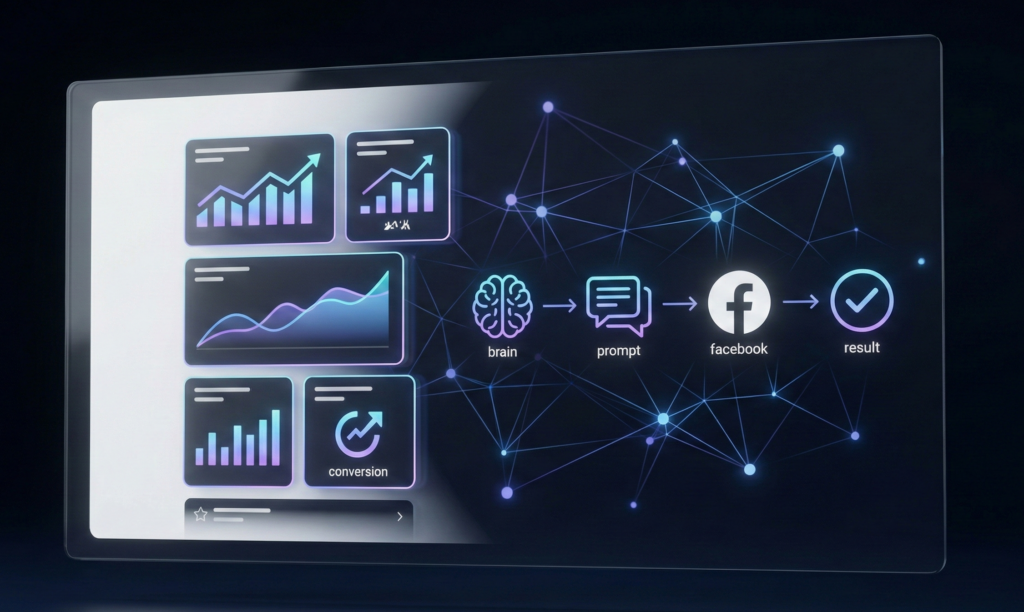
Prompts are the instructions you give to AI tools to generate ideas, copy, angles, hooks, and variations. Think of them as the strategy layer behind the words people actually see in the ad. A weak prompt produces generic, forgettable copy. A strong facebook ads prompts toolkit produces messaging that feels human, relevant, and persuasive. When used correctly, facebook ads prompts become a repeatable system for performance, not just a creative shortcut.
Facebook ads are especially sensitive to messaging quality because users are not there to shop. They are scrolling to relax, connect, or kill time. Your ad interrupts that experience. Facebook ads prompts help you design that interruption in a way that feels natural instead of annoying. They force you to clarify who you are talking to, what problem you are solving, and why it matters right now.
Another reason facebook ads prompts matter is speed. Facebook rewards rapid testing. You cannot rely on one ad idea and hope it scales forever. You need multiple hooks, formats, and angles running at the same time. Writing all of that manually slows you down. A solid prompt toolkit allows you to generate variations quickly while keeping message quality consistent—especially when you pair it with Meta Ads Manager and a clean testing routine.
Prompts also reduce creative fatigue. Many advertisers hit a wall after writing ads for the same product over and over. You feel like you have already said everything. Facebook ads prompts push you to explore new perspectives, emotions, objections, and benefits that you might overlook on your own. They act like a creative partner that never gets tired. (If you’re actively seeing performance decay, you’ll also want to review ad fatigue detection prompts alongside this toolkit.)
To understand the real value of facebook ads prompts, it helps to look at what high-performance Facebook ads have in common. They usually share these traits:
- They speak directly to a specific person, not a broad audience.
- They focus on one main problem or desire at a time.
- They use simple, conversational language.
- They lead with emotion before logic.
- They test multiple hooks instead of relying on one idea.
Facebook ads prompts help you bake all of these traits into your ad creation process. Instead of guessing, you are guiding the output intentionally. Over time, this turns your Facebook ads into a system instead of a guessing game.
Facebook Ads Prompts: Core Prompt Categories Every Facebook Advertiser Needs
A high-performance facebook ads prompts toolkit is not just a random collection of instructions. It is organized by purpose. Each category supports a specific part of the Facebook ad creation process. When you understand these categories, you can quickly pull the right facebook ads prompts for the job instead of forcing one prompt to do everything.
The first essential category is audience clarity prompts. These prompts help you define exactly who you are talking to. Facebook ads fail most often because the message is too vague. Audience prompts force specificity. They focus on demographics, psychographics, daily frustrations, desires, and language patterns.
Examples of what audience clarity prompts aim to uncover include:
- What keeps this person up at night.
- What they have already tried that failed.
- What they secretly want but rarely say out loud.
- What words they naturally use to describe their problem.
Once the audience is clear, the next category is problem and pain point prompts. These go deeper than surface-level issues. Instead of saying someone wants to lose weight, you explore why. Is it confidence, health, social pressure, or energy levels? Facebook ads prompts perform better when they connect to emotional pain, not just logical needs.
Problem prompts often explore:
- The consequences of not solving the problem.
- The frustration of repeated failure.
- The emotional weight of the issue.
- The urgency of the situation.
The third category is hook and scroll-stopper prompts. These are designed for the first one to three lines of your ad. This is where attention is won or lost. Hook prompts help you experiment with different opening styles, such as curiosity, shock, relatability, or direct benefit.
Common hook prompt angles include:
- Calling out a specific mistake.
- Asking a bold question.
- Sharing an unexpected insight.
- Highlighting a counterintuitive result.
Next are benefit and transformation prompts. These focus on outcomes, not features. People do not care about what your product is. They care about what life looks like after using it. Facebook ads prompts help translate features into real-world improvements.
Transformation prompts often highlight:
- Before and after scenarios.
- Time saved or stress reduced.
- Emotional relief or confidence gained.
- Tangible results that feel achievable.
Another critical category is objection-handling prompts. Every audience has doubts. They worry about price, time, trust, or whether something will work for them. High-performance ads address these concerns directly instead of pretending they do not exist. Objection prompts help you surface and respond to resistance within the ad copy itself.
Typical objections explored include:
- “This won’t work for someone like me.”
- “I’ve tried similar things before.”
- “I don’t have the time or skills.”
- “It sounds too good to be true.”
Finally, you need call-to-action prompts. These guide the reader toward the next step without sounding pushy. Facebook users resist hard selling, but they respond well to clear and confident direction. CTA-focused facebook ads prompts help you strike that balance.
Strong CTA prompts focus on:
- Low-friction next steps.
- Clear expectations.
- Emotional reassurance.
- A sense of momentum.
When these categories work together, your ads feel cohesive and intentional. You are not just throwing copy into the feed. You are guiding the reader through a short but powerful journey, from attention to action.
Facebook Ads Prompts: High-Performance Prompt Frameworks You Can Reuse
The real power of facebook ads prompts comes from frameworks. A framework is a repeatable structure that you can apply across products, offers, and niches. Instead of reinventing the wheel every time, you tweak inputs while keeping the underlying logic the same. This section breaks down prompt frameworks that consistently perform well in Facebook advertising.
One of the most effective frameworks is the problem agitation solution framework. The prompt instructs the AI to first describe a relatable problem, then intensify the emotional discomfort, and finally introduce the solution. This works because people take action to escape pain more than to chase pleasure.
A typical prompt using this framework focuses on:
- Describing the problem in the audience’s own words.
- Highlighting the frustration of staying stuck.
- Positioning the offer as relief, not hype.
Another strong framework is the before after bridge framework. This one paints a clear picture of life before the product and life after the product, then explains how the transition happens. It is especially effective for products with visible or emotional transformations.
This framework emphasizes:
- A vivid but realistic before state.
- A desirable and believable after state.
- A simple bridge that connects the two.
The curiosity gap framework is also powerful for Facebook ads. Instead of giving away everything upfront, the prompt instructs the AI to hint at an insight or result without fully explaining it. This encourages clicks and engagement.
Curiosity-based prompts often include:
- An unexpected statement.
- A partial explanation.
- A reason to keep reading or click.
Another high-performing framework is the authority and credibility framework. This is useful in competitive or trust-sensitive markets. The prompt focuses on experience, results, or unique perspectives that build confidence without bragging.
Authority prompts usually highlight:
- Lessons learned from experience.
- Mistakes made and corrected.
- Insights gained from real-world use.
- Proof through specificity rather than claims.
The social proof framework is closely related. Humans look to others when making decisions. Prompts based on this framework ask the AI to frame the ad around shared experiences, testimonials, or common success stories, even without naming specific people.
Social proof prompts often explore:
- “People like you” scenarios.
- Common patterns among successful users.
- Group identity and belonging.
- Normalizing success.
Below is a simple table showing how these frameworks map to ad goals:
Framework Name | Best Used For | Emotional Trigger | Ideal Funnel Stage
Problem Agitation Solution | Cold traffic | Relief and urgency | Awareness
Before After Bridge | Warm traffic | Hope and clarity | Consideration
Curiosity Gap | Cold to warm | Intrigue | Awareness
Authority and Credibility | Competitive niches | Trust | Consideration
Social Proof | Retargeting | Belonging | Conversion
The key is not to rely on just one framework. High-performance advertisers rotate these frameworks to avoid fatigue and reach different segments of their audience. Facebook ads prompts make it easier to rotate frameworks quickly without losing consistency. (If you want to formalize this, pair these frameworks with split testing prompts so you can isolate what actually drives results.)
When you build facebook ads prompts around frameworks, you also gain better control over testing. You are not just testing random ads. You are testing ideas, emotions, and structures. That makes optimization much easier and more strategic. For additional policy-safe guidance on creative best practices, Meta’s guidance is a useful baseline: Meta Business Help Center.
How to Build and Scale Your Own Prompt Toolkit
Building your own facebook ads prompts toolkit is not about collecting hundreds of prompts. It is about creating a small, flexible library that you can adapt over time. The goal is usability and performance, not volume. This section walks through how to build, refine, and scale a toolkit that supports high-performance Facebook ads.
Start by documenting what already works. Look at your best-performing ads and break them down. Identify the hook style, emotional angle, audience language, and structure. Then reverse-engineer facebook ads prompts that could recreate those elements. This ensures your toolkit is grounded in real results, not theory.
Next, standardize your prompts. A good prompt should be clear, specific, and reusable. Avoid one-off instructions that only work for a single product. Instead, create templates where you can swap inputs like audience, product, or outcome.
For example, a standardized hook prompt might include:
- Target audience description.
- Main pain point.
- Desired emotional response.
- Tone and length guidance.
Organization is critical. Store your facebook ads prompts by category and framework. This saves time and reduces friction when creating ads under pressure. Many advertisers fail here and end up rewriting prompts every time instead of building systems.
Another important step is version control. As you test ads, note which prompts lead to strong performance. Update those prompts with small improvements. Over time, your toolkit evolves based on data, not guesswork.
Scaling your toolkit also means adapting it to different ad formats. Facebook supports images, videos, carousels, and text-heavy ads. Your prompts should account for format differences. A video hook prompt may focus on spoken language and pacing, while a text ad prompt may focus on scannability.
As you scale, avoid the trap of overcomplicating. More complex facebook ads prompts do not always produce better ads. In many cases, simpler prompts lead to clearer, more relatable copy. The best toolkits balance structure with flexibility.
Finally, treat your prompt toolkit as a living asset. Markets change, audiences evolve, and platform dynamics shift. Revisit your prompts regularly. Remove what no longer works and refine what does. This mindset keeps your Facebook ads fresh and competitive.
A high-performance Facebook ad strategy is no longer just about targeting and budgets. It is about messaging at scale. Facebook ads prompts give you leverage. They allow you to think once and execute many times. When built correctly, a prompt toolkit becomes one of the most valuable assets in your advertising stack.