Creative Angles & Hooks Prompts That Drive Higher Click-Through Rates
Creative Angles Prompts
Table of Contents
Why Creative Angles and Hooks Matter
If you have ever stared at analytics wondering why solid content is getting ignored, the answer usually sits at the very top of the page. Angles and hooks decide the fate of your content long before anyone reads your first paragraph. You can have the best insights, the strongest research, and the clearest writing, but without a compelling angle and hook, none of that matters. People do not click content because it is good. They click because something about it feels immediately relevant, intriguing, or urgent.
That is exactly why creative angles prompts matter. Creative angles prompts help you generate fresh perspectives, and they also help you turn those perspectives into hooks that stop the scroll. When you use creative angles prompts consistently, you stop guessing what will earn attention and start testing angles on purpose.
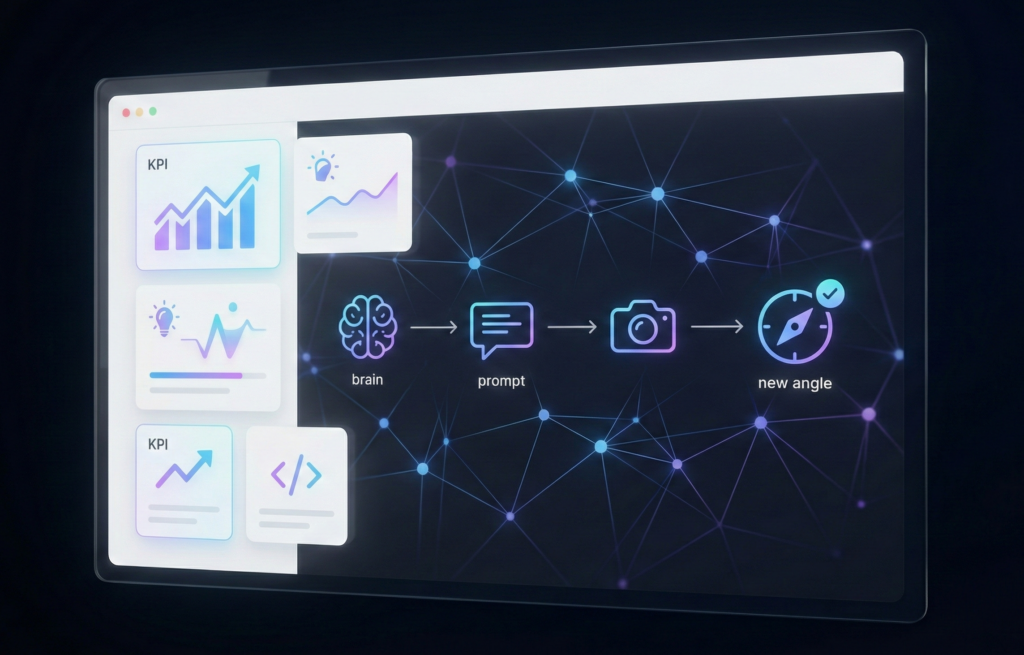
Angles are the perspective you choose to frame your idea. Hooks are the words that pull attention toward that perspective. Together, they act like a door handle. If it looks inviting and easy to grab, people open the door. If it looks dull or confusing, they walk right past it.
The reason angles matter so much today is simple. People are overwhelmed. Feeds are crowded, inboxes are full, and search results are packed with near identical headlines. When everything sounds the same, familiarity becomes invisible. Creativity is no longer optional. It is survival.
A strong angle does three things at once. It signals relevance, creates curiosity, and promises value. When one of these is missing, click-through rates suffer. When all three are present, clicks rise naturally without manipulation or gimmicks.
Here are common reasons content fails to attract clicks even when the topic is strong:
- The angle is too broad and feels generic
- The hook explains too much and removes curiosity
- The promise sounds vague or overused
- The wording focuses on features instead of outcomes
- The angle speaks to everyone and therefore no one
Creative angles are not about being clever for the sake of cleverness. They are about seeing the same idea from a direction your audience has not fully explored yet. Hooks then translate that direction into language that stops the scroll.
Consider how people make click decisions. They do not analyze deeply. They scan. They respond emotionally first, logically second. A hook that sparks recognition or tension will always outperform one that simply informs.
This is where prompts become powerful. Prompts help you generate angles you would not normally think of. Instead of forcing creativity, you guide it. Instead of guessing, you explore structured possibilities.
When you use angle and hook prompts correctly, you are no longer writing headlines randomly. You are systematically testing perspectives that align with how people think, feel, and decide.
In the sections ahead, you will see how different creative angles work, how prompts unlock them, and how to shape hooks that consistently drive higher click-through rates without sacrificing trust or clarity.
Core Creative Angles That Consistently Increase Click-Through Rates
Creative angles are not random. Over time, certain patterns consistently outperform others because they align with human psychology. These angles tap into curiosity, emotion, identity, and self-interest. When used correctly, they feel natural rather than manipulative.
One of the strongest angles is the problem reframing angle. Instead of presenting the obvious problem, you reframe it in a surprising way. This works because people think they already understand the problem. When you show them they might be wrong, curiosity kicks in.
Another powerful angle is the counterintuitive angle. This angle challenges common beliefs. People are drawn to content that promises to overturn what they think they know, especially when it feels safe and credible.
Here are several core angles that consistently drive higher click-through rates:
- Mistake-based angles that highlight what people are doing wrong
- Transformation angles that show before-and-after outcomes
- Curiosity gap angles that hint without fully explaining
- Insider angles that promise behind-the-scenes insight
- Time-saving angles that reduce effort or confusion
- Identity-based angles that speak to who the reader wants to be
- Fear-based angles that warn of consequences without panic
Each of these angles works for a different reason. Mistake-based angles tap into loss aversion. Transformation angles appeal to hope. Insider angles trigger exclusivity. Identity-based angles activate self-image.
What separates high-performing content from average content is not which angle you choose, but how clearly you commit to it. Weak angles often blend too many ideas. Strong angles focus on one clear promise.
Below is a table showing common creative angles, what they trigger psychologically, and when to use them.
| Angle Type | Psychological Trigger | Best Use Case |
|---|---|---|
| Mistake-Based | Loss avoidance | When your audience is frustrated |
| Transformation | Hope and progress | When results are visible and concrete |
| Counterintuitive | Surprise and curiosity | When you can challenge norms safely |
| Insider | Exclusivity | When you have unique experience |
| Time-Saving | Relief | When your audience feels overwhelmed |
| Identity-Based | Self-image | When values and status matter |
Choosing the right angle starts with understanding your audience’s current state. Are they confused, skeptical, hopeful, tired, or curious? The emotional context determines which angle feels most compelling.
For example, if your audience is burned out, a hustle-heavy transformation angle may fall flat. A relief-driven angle that promises ease will perform better. If your audience is confident but curious, counterintuitive angles will spark clicks.
Creative angle prompts help you explore these possibilities without relying on guesswork. Instead of asking “What should I write,” you ask structured questions like:
- What assumption does my audience currently believe?
- What mistake might they not realize they are making?
- What outcome do they want but think is unrealistic?
- What insider detail would surprise them?
Each question opens a different angle. Each angle leads to multiple hooks.
Once the angle is chosen, the next step is translating it into hooks that feel irresistible without overpromising. That is where hook prompts become essential. This is also where creative angles prompts help again: they keep your angle tight, and they keep your hook aligned.
Hook Prompt Frameworks You Can Use Again and Again
Hooks are not just headlines. They are micro-promises. A strong hook makes the reader feel that clicking is the obvious next step. Prompt frameworks help you generate hooks that align tightly with your chosen angle.
One mistake many creators make is trying to write hooks from scratch every time. This leads to repetition and creative fatigue. Framework-based prompts remove that pressure by giving you starting structures that you can adapt endlessly.
A good hook prompt does three things. It defines the audience, highlights the tension, and hints at resolution. When one of these is missing, the hook feels flat.
Below are proven hook prompt frameworks you can reuse across topics.
The Mistake Reveal Prompt:
“What most [audience] get wrong about [topic], and how it’s costing them [undesired outcome].”
This works because it combines curiosity with loss aversion. It makes the reader question their current approach.
The Transformation Prompt:
“How [starting point] turns into [desired result] when you stop doing [common behavior].”
This prompt highlights change while implying simplicity or clarity.
The Curiosity Gap Prompt:
“The surprising reason why [common advice] no longer works for [audience].”
This works best when you genuinely offer a new perspective inside the content.
The Insider Prompt:
“What I learned after [specific experience] that completely changed how I approach [topic].”
This builds trust and personal relevance at the same time.
The Time-Saving Prompt:
“A simpler way to [desired action] without [painful step everyone hates].”
This hook reduces resistance and effort.
You can also stack prompts carefully, but stacking should be subtle. Too many promises reduce credibility. One clear promise beats three vague ones.
Here is a list of practical hook prompts you can adapt immediately:
- “If you feel stuck with [problem], this might be why”
- “Nobody talks about this part of [topic], but it changes everything”
- “I tried [popular method] so you don’t have to”
- “The quiet shift happening in [industry] that most people are missing”
- “Why working harder is not fixing your [problem]”
When writing hooks, clarity always beats cleverness. If the reader has to reread to understand the promise, the hook is too complex. Creative hooks should feel effortless, not intellectual.
Another overlooked element is specificity. Vague hooks attract curiosity but lose trust. Specific hooks build credibility and improve click-through rates because they feel grounded.
Compare these two hooks mentally. One says “How to improve your results.” The other says “How a 10-minute shift improved my results without changing my strategy.” The second one feels more real, even before proof is provided.
Prompts help you add specificity by forcing you to fill in concrete details such as time, audience, outcome, or constraint.
As you practice using hook prompts, you will notice patterns in what performs best for your audience. Those patterns become your personal library of high-converting hooks.
Turning Creative Prompts Into Click-Worthy Headlines Without Losing Trust
High click-through rates mean nothing if readers feel disappointed after clicking. Sustainable success comes from alignment. The hook must match the content. Creative prompts should enhance clarity, not exaggeration.
The goal is not to trick people into clicking. The goal is to help the right people recognize that your content is worth their time.
One way to maintain trust is to ensure every hook answers three silent reader questions:
- Is this for someone like me?
- Will this help me solve a real problem?
- Is this worth my attention right now?
If your hook clearly answers at least two of these, your click-through rate will improve naturally.
Another important step is testing variations. Creative prompts give you options. Instead of settling on one hook, generate five to ten variations from the same angle. Small wording changes can lead to big performance differences.
Here is a simple process you can repeat for any piece of content:
- Choose one primary angle based on audience emotion
- Use three different hook prompts to generate variations
- Remove vague words and add specific outcomes
- Read each hook out loud to test clarity
- Select the one that feels most natural and honest
It is also useful to separate internal clarity from external curiosity. Internally, you should know exactly what the content delivers. Externally, the hook should invite discovery rather than explain everything.
Avoid common trust-breaking habits such as:
- Promising guaranteed results
- Using extreme language without support
- Overusing buzzwords that feel empty
- Creating false urgency that does not exist
Creative hooks do not need hype to perform. They need relevance, clarity, and emotional alignment.
As you build a habit of using creative angle and hook prompts, writing becomes faster and more strategic. Instead of wondering what to say, you focus on how to frame what you already know in a way that resonates.
Over time, this skill compounds. You begin to see angles everywhere. Ordinary topics become interesting because you approach them from a human-centered perspective. Click-through rates rise not because you chase trends, but because you understand attention.
The real power of creative angles prompts lies in consistency. When every piece of content starts with a thoughtful angle and a tested hook, performance becomes predictable rather than accidental.
In a crowded digital space, the creators who win are not always the loudest or the most technical. They are the ones who know how to frame ideas in a way that feels personal, timely, and worth clicking. Creative angles and hooks are not tricks. They are bridges between value and attention.
Related Prompt Libraries
- High-Impact Ad Copy Prompts
- Google Ads Optimization Prompts
- Performance Analytics Prompts
- Prompt Workflow for Improving Conversion Rates