How AI Prompts Can Predict Which Ad Copy Will Win
Ad copy prompts help you move from ‘reporting’ to decisions by forcing clarity, comparison, and next steps. Use this post as a prompt library you can reuse across accounts and platforms.
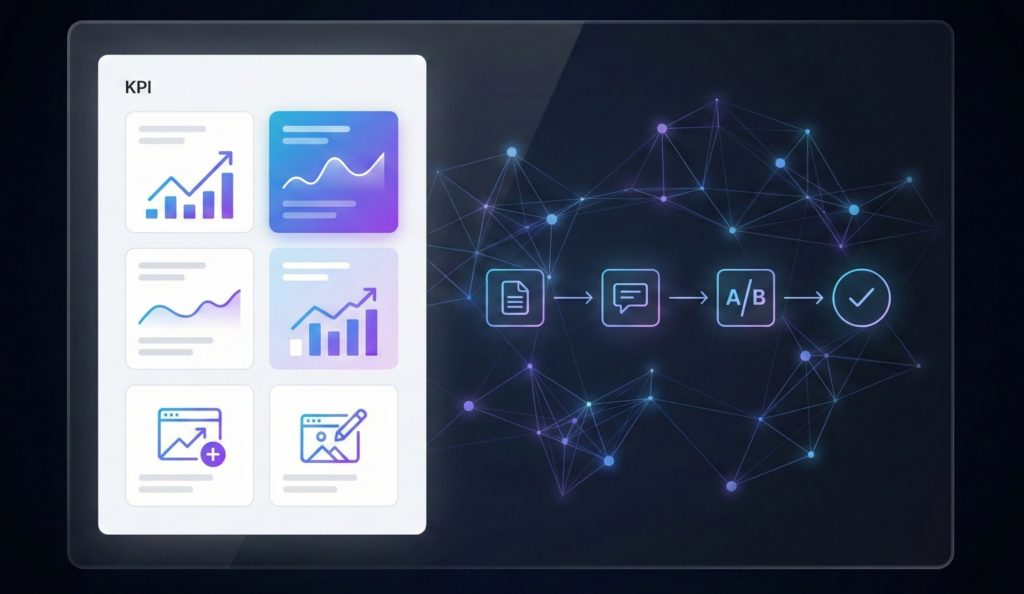
Table of Contents
Ad Copy Prompts: What They Are and How They Work
In the world of marketing and advertising, one of the biggest challenges brands and agencies face is determining which ad copy will resonate most with their audience. Creating great creative work is only half the battle; the other half is predicting whether that creative will perform well once it goes live. Traditionally, advertisers relied on a combination of intuition, past experience, focus groups, and A/B testing to assess the potential success of ad copy. While these methods offer some insight, they are often time-consuming, expensive, and not always accurate.
Enter artificial intelligence. AI has rapidly transformed many industries, and advertising is no exception. AI-driven technologies can now analyze patterns, interpret consumer behavior, and predict outcomes faster and more efficiently than human analysis alone. Ad copy prompts are one of the most practical applications of this technology, allowing marketers to generate and test dozens of headline variations in minutes. Among these technologies, AI prompts—queries or commands given to an AI system to generate a response—are becoming powerful tools for evaluating creative concepts before significant budget is spent.
But the idea of AI predicting which ad concepts will win raises several questions. How does it work? Can it really understand human preferences? What role do human strategists play in the process? And perhaps most importantly, how can marketers use AI prompts to improve decision making and drive better campaign performance?
Before we explore the mechanics and benefits of AI prompts in advertising, we need to recognize the core challenge: advertising is ultimately about people. People are unpredictable, nuanced, and influenced by countless factors. What one group finds compelling, another might see as irrelevant. Historically, marketers have tried to connect with consumers by relying on their own insights, creative agencies’ experience, and sometimes gut instinct. While those elements remain important, AI prompts now add a data-driven layer that enhances our predictive capabilities.
AI doesn’t replace human creativity, but it helps uncover patterns and preferences that may not be immediately obvious. In essence, AI prompts are like having a smart assistant that can simulate how different audiences might respond to various ad ideas. That simulation doesn’t guarantee a hit, but it does improve the odds of choosing ad copy that will perform better in the real world.
In the next sections, we’ll break down the nuts and bolts of how AI prompts work, how they fit into the creative evaluation process, and how marketers can leverage them to make smarter decisions.
How AI Prompts Work in Predicting Ad Performance
At its core, an AI prompt is a carefully crafted instruction given to an AI model to produce a specific response. In the context of advertising, an AI prompt might ask the system to evaluate an ad concept, compare multiple versions, or predict how an audience will respond to a particular message.
To understand how this works, it helps to think about the AI model’s capabilities. Modern AI models are trained on massive amounts of text and data. They learn linguistic patterns, associations between concepts, and even common consumer sentiments, based on what they’ve processed during training. When you give an AI prompt related to advertising, the model uses that learned information to generate predictions that reflect general trends and insights.
For example, an AI prompt could be something like: “Given the target audience of urban millennial professionals, which of these two ad headlines is more likely to drive engagement and why?” The AI can analyze the language of each headline, consider assumptions about the audience’s preferences, and provide a reasoned prediction. This doesn’t happen by the AI thinking in human terms; rather, it’s pattern recognition at scale. The model has seen enough examples of language use, marketing content, and consumer interactions during training to make a statistically grounded prediction.
While not infallible, these predictions can offer valuable directional insight.
Marketers can use AI prompts in several ways:
- First, ad copy prompts can assess individual headlines, descriptions, and calls-to-action across multiple dimensions. Instead of relying purely on internal opinions or limited focus group feedback, teams can ask the AI to evaluate messaging across multiple dimensions—clarity, emotional resonance, perceived value, and audience fit.
- Second, AI prompts can be used to compare variants. If a brand is considering two different taglines, visuals, or calls to action, asking the AI to compare them side-by-side can reveal which one is likely to perform better based on language tone and messaging structure.
- Third, AI prompts can simulate audience feedback. By specifying demographic or psychographic characteristics, marketers can tailor prompts to mimic how specific segments might react. This is akin to having a rapid, low-cost surrogate for qualitative research.
These ad copy prompts work particularly well for platforms like Google Ads and Meta, where character limits and messaging constraints require precision and testing.
Of course, a critical part of using AI prompts effectively is crafting the prompts themselves. A vague or poorly worded prompt will yield unclear or unhelpful results. The best prompts specify context, audience, and the aspect of performance being evaluated. They might ask about emotional response, recall likelihood, or clarity of message. By refining the prompts, marketers can extract richer insight from the AI.
It’s also important to emphasize that AI doesn’t “know” the future. It doesn’t possess foresight or consciousness. What it provides are projections based on learned patterns and probabilities. When integrated thoughtfully into a broader evaluation process, these projections help reduce uncertainty and guide better decisions.
In the next section, we’ll explore how AI prompts fit into the broader creative development and testing workflow.
Integrating AI Prompts into the Creative Workflow
Integrating AI into the creative workflow doesn’t mean replacing existing practices; it means enhancing them. The goal of AI prompts in advertising is to add a predictive lens early in the process so that teams can refine concepts before they invest in production or media spend.
In a traditional workflow, ideas are generated, discussed internally, perhaps tested with small groups, and then rolled out. With AI prompts, an additional step can be inserted: the AI-driven evaluation phase. This occurs after initial concept development but before final testing or production.
Here’s how it typically works:
- First, the creative team generates a set of candidate concepts. These might be different messaging directions, headline options, or visual styles. Usually, this stage involves brainstorming sessions, creative reviews, and iterations.
- Next, instead of immediately testing all these concepts in the market, the team uses ad copy prompts to evaluate headlines, body text, and calls-to-action. They might ask the AI to rank the concepts based on likely engagement, emotional resonance, or clarity. The prompts might incorporate audience specifications: age group, interests, location, or even cultural nuances.
- Once the AI provides its insights, the team can use that information in multiple ways. One approach is to narrow the field. Concepts that AI predicts as weaker can be refined or shelved, allowing the team to focus on the stronger ones. This saves time and reduces the number of concepts that need expensive production or live testing.
- Another approach is iterative refinement. If the AI highlights a particular weakness—say, a concept lacks emotional appeal—the team can revise the messaging and ask the AI to reassess the new version. This creates a feedback loop where AI helps shape the creative.
Even after AI evaluation, human judgment remains critical. Insights from subject matter experts, brand strategists, and cultural context specialists are essential. AI is a tool, not an oracle. It complements human intuition rather than replacing it.
The next step in many workflows is validation through testing. AI predictions can inform whether a concept is likely to succeed, but real-world testing—through controlled A/B tests or market pilots—provides actual performance data. AI can guide which variants to test, making testing more efficient by focusing on the most promising options.
This integrated approach—creative work, AI evaluation, human review, and testing—creates a robust process that blends intuition with data-informed predictions. It reduces the risk of launching underperforming creative and enables quicker learning cycles.
For teams wondering when to introduce AI prompts, the answer is early but not at the expense of creativity. Using AI to shape and prioritize concepts early on prevents wasted effort later. It also enables creative teams to be more strategic about where they allocate their energy.
By running ad copy prompts weekly, teams can maintain a pipeline of tested, optimized messaging ready to deploy.
Now let’s explore the broader implications for marketers and creatives when using AI as a strategic partner in advertising.
The Future of AI-Driven Creative Decision Making
As AI continues to evolve, its role in advertising will expand beyond simple prediction. Already, marketers are experimenting with AI-assisted ideation, automated content generation, and personalized messaging at scale. AI prompts represent a bridge between raw creative thinking and data-driven prediction.
One of the most exciting prospects is the idea of dynamic creative optimization, where AI not only predicts which concept will win but also adjusts creative elements in real time based on audience feedback. For example, if an AI identifies that certain messaging resonates stronger with a specific subgroup, it could automatically tailor ads for that subgroup without manual intervention. Predictive prompts could become part of larger systems that continuously learn and adapt.
Another future development is more sophisticated audience modeling. Today’s AI can approximate audience reactions based on general patterns. In the future, AI models may be able to integrate proprietary data—like past campaign performance, customer purchase behavior, and market trends—to make more precise predictions. This would effectively create a predictive engine tailored to each brand’s unique ecosystem.
There are also ethical considerations as AI becomes more embedded in creative decisions. Questions about bias, transparency, and accountability arise. If an AI model recommends a particular concept, marketers need to understand not just what the recommendation is but why it was made. This requires human oversight and a commitment to ethical use of AI.
For creatives who worry that AI might replace them, it’s important to understand that creativity is inherently human. AI can surface patterns and suggest possibilities, but the emotional depth, cultural insight, and narrative brilliance of great advertising still come from human minds. AI amplifies human potential; it does not replace it.
Adoption of AI prompts also encourages stronger collaboration between teams. Creative departments, data scientists, strategists, and media planners must work together to define effective prompts, interpret results, and make strategic decisions. This interdisciplinary approach leads to richer outcomes and a more unified process.
As organizations become more comfortable with AI-driven insights, we can expect a shift in how campaigns are conceived and optimized. Instead of linear processes, teams will adopt iterative, AI-in-the-loop workflows that allow for rapid experimentation and learning. Predictive prompts will not just foresee which concept might win; they will help guide real-time optimization throughout a campaign’s lifecycle.
There will be challenges along the way. Teams must avoid overreliance on AI predictions without context. They must guard against echo chambers where AI reinforces existing biases. They must ensure that human creativity is still valued and that AI serves as an empowering tool rather than a crutch.
Despite these challenges, the outlook is promising. Marketers who leverage AI prompts effectively will be able to make smarter decisions with greater confidence. They will reduce wasted spend, better anticipate audience reactions, and create work that resonates more deeply.
In the end, advertising is about connection—between a brand and its audience. AI prompts offer a powerful way to understand and predict that connection, blending data-driven insight with human creativity. For teams willing to embrace this technology thoughtfully, the result will be not just better ads, but more meaningful engagement and business impact.
Related Performance Prompts Guides
- Split Testing Prompts to Find Winning Creatives
- Creative Ad Variations Made Easy
- Creative Angles & Hooks Prompts
External reference: For an overview of A/B testing ad copy prompts and experimentation basics, see: https://en.wikipedia.org/wiki/A/B_testing
FAQs
What are ad copy prompts?
Ad copy prompts are structured questions you can reuse to diagnose what’s happening, identify the most likely drivers, and produce testable next steps instead of generic advice.
How do I get better answers from AI?
Add context (platform, objective, timeframe, metrics), add constraints (what you can’t change), and ask for ranked hypotheses plus validation steps.
How often should I run these prompts?
Weekly works best: one diagnostic prompt, one exploration prompt, and one decision prompt. Consistency beats intensity.
What should I do with the output?
Turn outputs into small tests. Pick the top 1–3 recommendations, define success metrics, run controlled experiments, and document what you learn.